

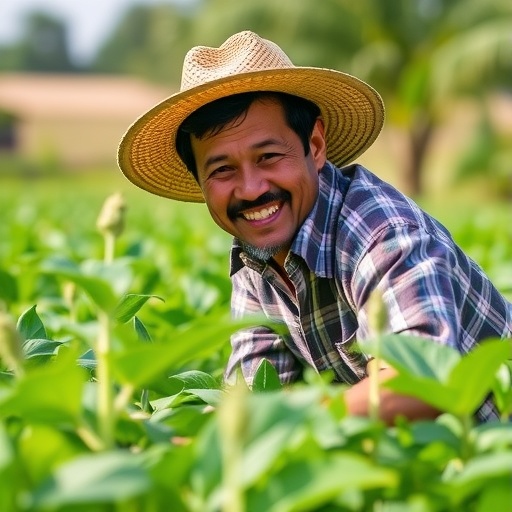
Recent research conducted by Washington State University (WSU) has illuminated the potential of cover crops in enhancing soil health and as viable sources of biofuel. The study, which has garnered attention for its implications in sustainable agriculture, reveals that certain cover crops grown in Washington’s off season do not detrimentally affect soil quality and can be commercially viable as biofuels. By addressing a critical gap in agricultural practices, this study provides a promising outlook for farmers looking to maximize land productivity during fallow periods.
Traditionally, farmland lies dormant after the harvest of cash crops, resulting in potential soil erosion, weed proliferation, and a lack of income for farmers during this period. The introduction of cover crops serves as a strategy to mitigate these issues; however, farmers have often hesitated to adopt this practice due to concerns over soil quality, cash crop competition, and economic returns. The research team sought to directly address these challenges by evaluating the performance of four selected cover crops over multiple growing seasons.
Among the cover crops studied, triticale—a hybrid of wheat and rye—emerged as the star performer, yielding the highest biomass and showcasing its potential as a biofuel feedstock. Meanwhile, hairy vetch, a nitrogen-fixing legume, also proved to offer stable yields at minimal costs, enhancing soil health by replenishing nitrogen levels. The findings indicate that these crops not only improve soil quality but also present an opportunity for farmers to diversify their income through sales of biofuel.
Graduate student Miki Santosa, who led the research, expressed the intent behind the study: to unlock new sources of biomass without compromising the economic viability for farmers. This initiative aligns with broader efforts to integrate agricultural practices with renewable energy solutions, reflecting a growing trend toward sustainability in farming. Santosa emphasized the importance of finding cover crops that could benefit farmers economically while also enriching the soil.
The research involved interdisciplinary collaboration between WSU and the Pacific Northwest National Laboratory, bringing together agricultural science and chemical engineering. The study’s comprehensive approach included investigating the potential for biofuel production from these cover crops, utilizing a breakthrough technology known as hydrothermal liquefaction. This process allows for the conversion of biomass into renewable fuels, thus supporting the study’s goals of providing a dual benefit to farmers: enhancing soil health and creating a new income stream.
Chad Kruger, director of WSU’s Center for Sustaining Agriculture and Natural Resources, highlighted the research’s relevance to both agricultural practices and biofuel production. The ability to homogenize different biomass types for fuel production signifies a shift in how biofuels could be sourced, enabling a wider variety of crops to be considered for energy purposes. This innovation could pave the way for more resilient agricultural ecosystems and reduce dependency on singular cash crops.
Furthermore, the study raises essential questions regarding the sustainability of agricultural practices, particularly around the practice of removing biomass. Farmers frequently worry that harvesting cover crops could deplete soil nutrients or moisture levels, ultimately impacting their primary crops’ performance. However, the research team found that removing biomass from productive cover crops like triticale did not harm the soil’s integrity. This discovery is pivotal in promoting the adoption of cover crops among farmers who typically prioritize immediate economic returns over long-term soil health.
The potential market for biofuels derived from cover crops could incentivize farmers to adopt these practices more widely. As traditional methods of biofuel production require specific processes for different crops, the innovative hydrothermal liquefaction technique offers a multifaceted solution, allowing for various types of biomass to be processed together. This flexibility could lead to more efficient use of agricultural resources, ultimately benefitting both producers and consumers.
The implications of this research extend beyond the fields of Washington State. As global initiatives to reduce carbon footprints and develop renewable energy sources grow increasingly urgent, the adaptation of sustainable agricultural practices that facilitate biofuel production could contribute significantly to these goals. The synergy between enhancing soil health and generating renewable energy presents a compelling case for a paradigm shift in how farmers view cover crops.
As the team continues to analyze the long-term effects of these practices, there is optimistic anticipation regarding their findings. The potential for farmers not only to cultivate crops that benefit the soil but also to generate income from their sales is a considerable advancement in agricultural sustainability. As Kruger aptly noted, previously growers cultivated cover crops primarily for soil health. Now, they may also see a financial return, making sustainability a quintessential component of modern agricultural practices.
In conclusion, the revelations brought forth in this study mark a significant step toward integrating biofuel production into traditional farming practices. By unveiling the possibilities associated with cover crops like triticale and hairy vetch, WSU’s research provides a blueprint for a more sustainable and economically viable agricultural future. The ongoing dialogue around biofuels and sustainable farming practices will undoubtedly evolve as farmers begin to embrace these principles, steering agriculture towards a more renewable and resilient future.
Subject of Research: Viability of cover crops as biofuel sources and their impact on soil health
Article Title: Unlocking the biofuel power of cover crop in Washington State: Enhancing potential through hydrothermal liquefaction
News Publication Date: 25-Aug-2025
Web References: Biomass and Bioenergy
References: DOI: 10.1016/j.biombioe.2025.108311
Image Credits: Photo courtesy of Chad Kruger/WSU
Keywords
biofuel, cover crops, triticale, hairy vetch, soil health, sustainable agriculture, biomass, hydrothermal liquefaction, renewable energy, Washington State University, agricultural sustainability, nitrogen fixation.


