

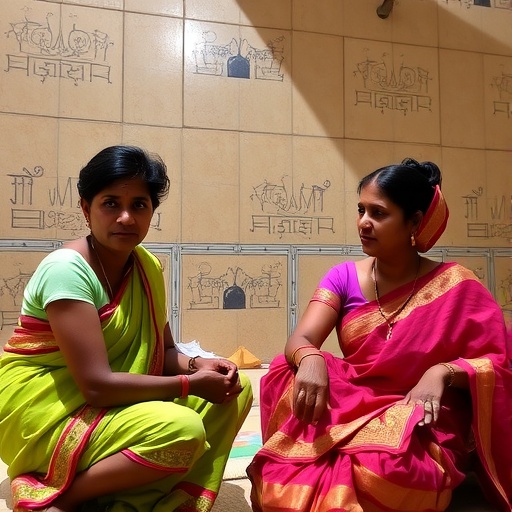
In a pivotal research endeavor led by esteemed scholars H. Silveru and L.R. Sankineni, the sociology of Dalit women takes center stage in a compelling exploration of self-help groups (SHGs) in India. This ground-breaking study illuminates a critical intersection of social identity, economic empowerment, and communal resilience within one of the most marginalized groups in Indian society. The researchers delve deep into the transformative impact of SHGs on the lives of Dalit women, uncovering narratives that not only challenge societal norms but also inspire hope and change.
The significance of this study lies in its micro-level analysis, which offers a nuanced understanding of how SHGs function as a catalyst for socio-economic transformation among Dalit women. These groups represent a collective response to systemic oppression and economic disenfranchisement faced by Dalits, particularly women, who often bear the brunt of socio-economic inequalities. By focusing on individual experiences within SHGs, the research captures the complexity of empowerment in a context where traditional patriarchal structures remain deeply entrenched.
One of the key findings of this research is the dual role that self-help groups play in fostering both economic and social empowerment. As members of these groups engage in various income-generating activities, they not only gain financial independence but also enhance their social standing within the community. The research reveals that through collective action, Dalit women are able to challenge patriarchal norms, thereby redefining their roles and positions both at home and in society at large. This transformation is not merely personal but collective, as these women uplift each other and assert their rights within a historically oppressive framework.
Furthermore, the study highlights the psychological benefits associated with participation in SHGs. The solidarity and support that emanate from these groups foster self-esteem and resilience among Dalit women. As they share their struggles and successes, they build a sense of community that is vital for personal and collective growth. This emotional dimension of empowerment is often overlooked in traditional economic analyses but is essential for understanding the multifaceted impacts of self-help groups.
A critical aspect of Silveru and Sankineni’s work is their exploration of the challenges and barriers that Dalit women encounter within self-help groups. Despite the positive outcomes, the road to empowerment is fraught with difficulties. Issues such as caste discrimination, financial instability, and lack of access to resources can hinder the progress of SHGs. The researchers acknowledge these challenges while also emphasizing the resilience of Dalit women who consistently seek to overcome them through innovation and determination.
Moreover, the study situates the empowerment of Dalit women within a broader socio-political context. It examines how policies and governmental support can either facilitate or hinder the success of SHGs. The researchers advocate for more inclusive and targeted policies that recognize the unique challenges faced by Dalit women in their quest for economic self-sufficiency. This advocacy is essential not only for the sustainability of SHGs but also for the broader movement towards gender equality in India.
In addition to policy implications, the research also contributes to the academic discourse on caste and gender studies. By foregrounding the experiences of Dalit women, it challenges existing narratives that often marginalize their voices. The study serves as a call to action for scholars, policymakers, and activists to prioritize the intersectionality of caste and gender in their work and to amplify the voices of those who are often silenced.
The methodology employed in this research further underscores its credibility and rigor. By utilizing qualitative methods, the researchers were able to capture the nuanced experiences of Dalit women in their own words. This approach not only enriches the findings but also empowers the participants, giving them agency in the narrative surrounding their lives. The use of interviews and focus groups provides a rich tapestry of lived experiences that quantitative methods might overlook.
As the study unfolds, it delves into specific case studies that exemplify the transformative power of self-help groups. These case studies provide a vivid portrayal of how Dalit women leverage the resources and support from SHGs to initiate change within their households and communities. From embarking on small businesses to advocating for their rights, these women embody the spirit of resilience and empowerment that the research seeks to highlight.
In conclusion, the study conducted by H. Silveru and L.R. Sankineni is a significant contribution to understanding the multifaceted dimensions of Dalit women’s lives in India. By examining the role of self-help groups, the research not only sheds light on economic empowerment but also reveals a broader narrative of social change and resilience. It is a testament to the strength and agency of Dalit women, who continue to forge pathways to empowerment despite systemic obstacles. This research is not merely an academic exercise; it serves as a beacon of hope for marginalized communities and underscores the importance of inclusive and equitable development in the quest for gender justice.
The findings of this study hold significant implications for future research, policy-making, and community activism. The need for continued exploration of the intersection of caste, gender, and economic empowerment is paramount in order to build a more just society. As the voices of Dalit women resonate through this research, they remind us of the power of collective action and the potential for change when communities come together to uplift each other. The journey towards empowerment is ongoing, and this study represents a critical step in acknowledging and addressing the challenges faced by Dalit women in India.
Subject of Research: Sociology of Dalit women and the role of self-help groups in India.
Article Title: Sociology of Dalit women: a micro-level study of self-help groups in India.
Article References: Silveru, H., Sankineni, L.R. Sociology of Dalit women: a micro-level study of self-help groups in India. Discov glob soc 3, 170 (2025). https://doi.org/10.1007/s44282-025-00303-4
Image Credits: AI Generated
DOI: https://doi.org/10.1007/s44282-025-00303-4
Keywords: Dalit women, self-help groups, empowerment, India, sociology, caste, gender equality, community resilience, qualitative research, social change, economic independence.


