

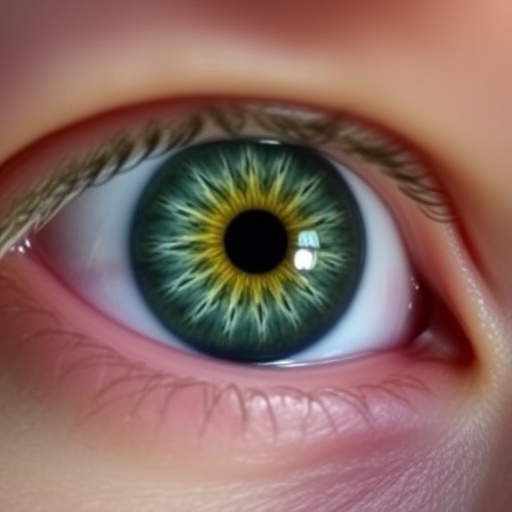
In the evolving landscape of infectious diseases, a startling new threat has emerged, linking environmental changes and human activities to the unsuspected origin of a human ocular disease. A recently identified condition, termed persistent ocular hypertensive viral anterior uveitis (POH-VAU), has baffled clinicians and researchers alike due to its obscure etiology and unusual clinical features. Cutting-edge research now reveals a compelling connection between this emerging ocular disease and covert mortality nodavirus (CMNV), an aquatic virus previously confined to marine environments. This revelation not only transforms our understanding of POH-VAU but also signals a broader, more unsettling trend of zoonotic spillovers originating from aquatic reservoirs.
POH-VAU manifests as a persistent inflammation of the anterior segment of the eye, coupled with elevated intraocular pressure, posing significant risks of vision impairment if untreated. Unlike common uveitic conditions, the persistence and hypertensive components distinguish this clinical entity. Despite its growing incidence worldwide, especially in regions with intense aquaculture and seafood consumption, the causative agent remained elusive until this investigative study linked it to CMNV. This virus, known primarily for infecting a wide range of farmed and wild aquatic animals, appears to have breached species barriers to affect humans via direct or indirect exposure pathways.
The ubiquity of CMNV in aquatic environments is well documented, with surveillance data indicating widespread prevalence in aquaculture settings and wild populations globally. The virus’s robust adaptability and capacity to infect diverse aquatic hosts underline its potential for zoonotic transmission. Nevertheless, human infection was previously unrecognized. Through comprehensive serological analyses and molecular detection techniques, researchers identified the presence of CMNV within ocular tissues of 70 individuals diagnosed with POH-VAU. The detection of viral RNA in conjunction with seroconversion unequivocally confirmed active infection and immunological response in these patients.
To elucidate the epidemiology behind this emerging disease, investigators employed extensive exposure assessments and logistic regression modeling. These analyses underscored the critical role of frequent CMNV exposure in elevating the risk of developing POH-VAU. Particularly noteworthy were individuals involved in unprotected handling of aquatic animals and those consuming raw or undercooked seafood, experiences collectively accounting for over 70% of exposure instances among the study cohort. This finding implicates common cultural practices and occupational hazards as significant contributors to zoonotic spillover events.
Mechanistic exploration into viral pathogenesis was conducted using murine models subjected to CMNV challenge tests. Here, infected mice exhibited hallmark features akin to human POH-VAU, including sustained intraocular pressure elevation and profound pathological alterations within ocular tissues. Histopathological examination revealed cellular disruptions, inflammatory cell infiltrations, and structural damage within the anterior chamber. Remarkably, CMNV demonstrated a capacity to invade and replicate within mammalian ocular cells in vitro, confirming the virus’s cross-species infectivity and tropism beyond its aquatic origin.
The implications of this study extend far beyond the clinic, urging a reassessment of public health strategies concerning zoonoses. The observed zoonotic potential of an aquatic virus reflects an intricate intersection of environmental disruption, human behavior, and viral evolution. Climate change and unsustainable exploitation of marine ecosystems have intensified viral proliferation and facilitated closer contact between humans and aquatic pathogens. Such ecological perturbations are fostering novel transmission vectors, underscoring the necessity for interdisciplinary vigilance and proactive mitigation.
Virologically, CMNV belongs to a group of nodaviruses characterized by non-enveloped icosahedral virions with segmented positive-sense RNA genomes. These features contribute to high mutation rates and recombination potential, enabling swift adaptation to new hosts. The virus’s newfound adaptability to mammalian ocular cells suggests it may possess or acquire molecular mechanisms facilitating receptor binding and cellular entry in human tissues. Understanding these viral-host interactions at the molecular level will be pivotal in devising therapeutic and preventive countermeasures against this emerging threat.
Clinicians are now alerted to consider CMNV infection in the differential diagnosis of unexplained ocular uveitis presenting with elevated intraocular pressure. Current diagnostic protocols should be expanded to integrate molecular assays capable of detecting CMNV RNA alongside serological markers. Early identification of viral involvement may influence treatment regimens, particularly given the potential for CMNV-associated inflammation to cause irreversible ocular damage if untreated or mismanaged.
Epidemiological surveillance must also adapt, incorporating aquatic animal reservoirs as critical nodes in zoonotic disease control frameworks. This entails coordinated monitoring of viral prevalence in aquaculture systems and wild fisheries, coupled with stringent biosecurity measures to mitigate virus transmission during processing and consumption of aquatic products. Public education campaigns emphasizing safe handling and thorough cooking of seafood could substantially reduce exposure risks and protect vulnerable populations.
The study underscores the pressing need to understand the broader ecological context in which zoonotic infections emerge. Environmental factors such as rising water temperatures, altered salinity, and pollution—all consequences of climate change—may be amplifying viral replication rates and transmission efficiency. These dynamic drivers of disease ecology necessitate integrated research approaches combining virology, epidemiology, environmental science, and social behavior analysis to anticipate and thwart future spillover events.
From a global health perspective, the emergence of POH-VAU linked to CMNV exemplifies the complexities introduced by cross-ecosystem viral transmission. It challenges the conventional paradigms that often focus on terrestrial reservoirs and demands heightened awareness of aquatic viral threats. The scientific community must prioritize investigations into understudied aquatic viruses, which, as demonstrated, possess considerable zoonotic potential capable of triggering novel human diseases.
Pharmaceutical research is similarly called upon to accelerate the development of antiviral agents targeting nodaviruses, currently excluded from standard antiviral drug pipelines. Immunological studies exploring host responses to CMNV could unveil vulnerable points in viral life cycles or host defense mechanisms, opening avenues for vaccine development or immune-modulating therapies. Early interventions could mitigate disease progression and prevent complications such as glaucoma resulting from sustained ocular hypertension.
On a technological front, the integration of next-generation sequencing and metagenomic analyses facilitated the rapid identification of CMNV in human ocular tissues. These methodologies underscore the transformative role of advanced diagnostics in uncovering hidden viral infections and characterizing their genetic diversity. Continuous application of such innovative tools will be vital in monitoring viral evolution, especially amid shifting environmental conditions and human-animal interfaces.
In summation, the identification of CMNV as a causative agent in persistent ocular hypertensive viral anterior uveitis represents a paradigm shift in understanding zoonotic diseases emerging from aquatic environments. It calls for a multidisciplinary response encompassing clinical vigilance, environmental stewardship, virological research, and public health intervention. As we grapple with the expanding frontiers of viral zoonoses, this discovery illuminates both the vulnerabilities and opportunities inherent in our global ecosystem, emphasizing the interconnectedness of human health and the natural world.
Subject of Research: Emerging human ocular disease and its association with zoonotic infection from an aquatic virus
Article Title: An emerging human eye disease is associated with aquatic virus zoonotic infection
Article References:
Liu, S., Hu, D., Xu, T. et al. An emerging human eye disease is associated with aquatic virus zoonotic infection. Nat Microbiol (2026). https://doi.org/10.1038/s41564-026-02266-x
Image Credits: AI Generated
DOI: https://doi.org/10.1038/s41564-026-02266-x


