

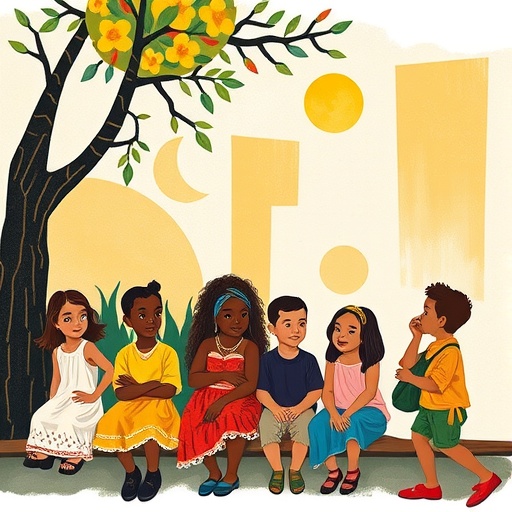
Culturally responsive pedagogy has emerged as a vital focus within urban early childhood education, playing a crucial role in bridging cultural divides and enhancing instructional practices. Recent findings from a study conducted by Davis and Subramaniam shed light on how urban early childhood teachers perceive culturally responsive teaching methods and their impacts on student engagement and learning outcomes. This exploration uncovers not merely theoretical implications but also practical applications for educators navigating diverse classrooms in diverse urban landscapes.
As educational institutions evolve in response to shifting demographics, the necessity for educators to develop a nuanced understanding of their students’ diverse cultural backgrounds becomes increasingly pressing. Urban early childhood teachers, often faced with varying levels of cultural capital among their students, have a unique opportunity to leverage these differences into effective teaching strategies. This study emphasizes the importance of recognizing and utilizing cultural assets present in students’ lives, thus enhancing the educational experience for both teachers and learners.
Culturally responsive pedagogy is defined as an approach that recognizes the importance of including students’ cultural references in all aspects of learning. This pedagogy prioritizes the diverse identities and experiences of students, advocating for a shift away from a one-size-fits-all teaching model. By incorporating students’ cultural narratives, educators can foster a learning environment that not only respects but also celebrates diversity, encouraging students to engage more deeply with the curriculum.
One of the central themes explored by Davis and Subramaniam is the role of cultural capital in shaping instructional practices. Cultural capital refers to the non-financial social assets that promote social mobility in a society. For teachers, recognizing students’ diverse backgrounds can help to tailor instructional strategies that resonate with their students, making learning more relevant and impactful. This personalized approach can enhance student motivation, participation, and ultimately academic success, especially in an urban setting where students might face additional socio-economic challenges.
Teachers participating in this study expressed varying degrees of awareness regarding culturally responsive teaching. Some educators demonstrated a robust understanding of the principles of culturally responsive pedagogy, actively implementing strategies that resonate with their students’ unique cultural identities. Others, however, conveyed a lack of training or support in this area, suggesting that professional development must prioritize culturally responsive practices to better equip teachers for the challenges they face.
Furthermore, the study highlighted the importance of collaboration among educators in cultivating a deep understanding of their students’ cultures. Many teachers found that sharing experiences and methodologies with peers led to enriched conversations about culturally responsive practices. Such collaboration not only fosters a supportive professional community but also provides diverse perspectives that can enhance teaching strategies and contribute to individual professional growth.
In urban classroom settings, where diversity is often the norm, it becomes essential for educators to create inclusive environments. Davis and Subramaniam reported that teachers who employed culturally responsive techniques witnessed enhanced student engagement and participation. Students expressed a greater sense of belonging and validation when their cultural backgrounds were acknowledged and integrated into the learning process. This sense of inclusion is critical in not only developing academic competencies but also fostering social-emotional growth among students.
The findings underscore the critical need for educational systems to support teachers in developing and honing their understanding of culturally responsive pedagogy. Continuous professional development workshops, peer mentoring, and resource sharing are vital in equipping educators with the tools they need to implement culturally relevant practices effectively. As teachers become more adept at recognizing and valuing their students’ cultural backgrounds, they can cultivate pedagogical approaches that turn these backgrounds into central components of the learning experience.
Culturally responsive pedagogy is not merely a teaching strategy; it is a transformative movement in education that has the potential to reshape urban classrooms. As urban centers become increasingly diverse, the responsibility of educators to understand, respect, and incorporate this diversity into their teaching practices grows. This shift is not only beneficial for educators and students; it has far-reaching implications for society as a whole, promoting equity and inclusivity within educational systems and beyond.
In summary, the study by Davis and Subramaniam illuminates the perceptions of urban early childhood teachers toward culturally responsive pedagogy. It emphasizes the need for ongoing professional development in this area and highlights the benefits of leveraging students’ cultural capital to foster engagement and enhance educational outcomes. By embracing culturally responsive practices, educators can create inclusive learning environments where all students feel valued and empowered.
As the education landscape continues to evolve, the emphasis on culturally responsive pedagogy will likely increasingly take center stage. Educators, administrators, and policymakers must work collaboratively to ensure that the diverse voices of students are not only heard but truly integrated into the framework of teaching and learning. This is not just about improving educational practices; it’s about creating a future where every student has the opportunity to succeed in a world that honors their unique cultural narrative.
The implications of this study extend beyond individual classrooms, as they resonate throughout educational systems and communities. By prioritizing culturally responsive practices, educators can contribute to a more equitable and inclusive society, one where all students can thrive and achieve their full potential, informed by their rich cultural backgrounds.
Thus, the drive towards culturally responsive pedagogy represents a significant step towards innovation within educational practices, setting the stage for a future where teaching is as diverse as the students it serves. By committing to this approach, educators can empower younger generations, instilling in them a sense of pride in their cultural identities, and equipping them with the skills necessary to navigate an increasingly complex world.
Subject of Research: Teachers’ perceptions of culturally responsive pedagogy in urban early childhood education
Article Title: Urban early childhood teachers’ perceptions of culturally responsive pedagogy: leveraging students’ cultural capital for instruction
Article References:
Davis, V.D., Subramaniam, K. Urban early childhood teachers’ perceptions of culturally responsive pedagogy: leveraging students’ cultural capital for instruction. IJEC (2026). https://doi.org/10.1007/s13158-026-00484-2
Image Credits: AI Generated
DOI: https://doi.org/10.1007/s13158-026-00484-2
Keywords: Culturally responsive pedagogy, urban education, cultural capital, early childhood education, teacher perceptions.


