

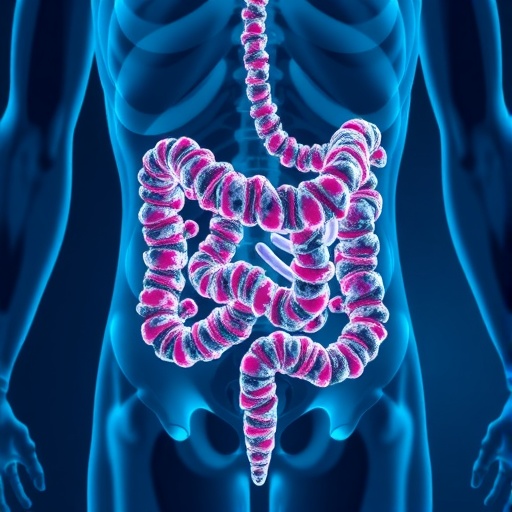
In the rapidly evolving landscape of microbiome research, two groundbreaking studies involving a cohort of 28,000 individuals have unveiled compelling insights into the intricate interplay between human genetics and the gut microbiome. These investigations, led by eminent researchers from Uppsala University, University of Gothenburg, and the Norwegian University of Science and Technology (NTNU), have identified 11 distinct genomic regions that exert significant influence on the composition and functional dynamics of gut bacterial populations. Until now, only two such genetic loci were consistently linked to gut microbiome variation, making this discovery a pivotal advancement in our understanding of microbial-host interactions at the molecular level.
The gut microbiome, a dense and diverse microbial ecosystem residing within the human gastrointestinal tract, is recognized as a crucial determinant of health and disease. Despite accumulating evidence associating microbial communities with myriad health outcomes, the extent to which host genetics governs microbiome composition has remained enigmatic. Previous genome-wide association studies (GWAS) were limited by smaller sample sizes and the complex, multifactorial nature of the microbiome, making robust genetic correlation a formidable challenge. The present large-scale analyses surmount these obstacles by integrating extensive genomic data with comprehensive microbiome profiling from thousands of participants.
Researchers obtained genetic and microbial datasets from over 28,000 individuals originating from well-characterized Nordic population cohorts, including Swedish studies at Lund University and Uppsala University and the Trøndelag Health Study in Norway. This scope provided unparalleled statistical power to detect subtle yet biologically meaningful associations between host genomic variants and gut bacterial taxa. The participants’ gut ecosystems were meticulously cataloged, revealing hundreds of diverse bacterial species per individual, underscoring the complexity and individuality of human microbiota.
Leveraging sophisticated genome-wide association methodologies, the teams pinpointed 11 genomic loci where genetic variation corresponds with both the abundance and functionality of specific gut bacteria. These loci encompass genes implicated in essential gastrointestinal processes such as nutrient absorption mechanisms, mucosal immune responses, and molecular interactions at the intestinal epithelial surface. Notably, several identified genes encode cell surface molecules that serve as substrates or recognition targets for gut microbes, effectively shaping the microbial niche environment.
Professor Tove Fall from Uppsala University emphasizes the biological specificity revealed by these genetic connections. The findings shed light on how particular molecular components on gut cells dictate bacterial feeding strategies and how the host’s immune milieu responds to bacterial metabolites. This molecular dialogue between host tissue and microbiota is central to maintaining homeostasis and may be disrupted in disease states.
Intriguingly, some of the newly identified genetic variants correlate with increased predispositions to common conditions such as gluten intolerance, hemorrhoidal disease, and cardiovascular pathologies. This suggests that genetic modulation of the gut microbiome may be an intermediate mechanistic pathway linking heredity and disease risk. The potential causal interplay offers promising avenues for personalized interventions targeting microbial communities to mitigate inherited disease vulnerabilities.
Professor Claes Ohlsson of the University of Gothenburg highlights the translational implications of these findings, proposing that manipulating the gut microbiome might enhance disease prevention and therapeutic strategies. By integrating genetic risk profiling with gut microbial analyses, clinicians could refine prognostic models and develop targeted microbiome-modulating treatments tailored to individual genetic backgrounds.
The amassed datasets contribute to one of the world’s largest gut microbiome biobanks, establishing a valuable resource for future multi-omic investigations. Such repositories facilitate longitudinal and functional studies to decipher causal relationships and biological pathways underpinning host-microbe interactions. The researchers underscore the importance of expanding biobank resources to encompass diverse populations and environmental contexts for broader generalizability.
Fundamentally, these studies illustrate the critical role of the intestinal molecular milieu in shaping microbiota variation. They challenge simplistic views of the microbiome as solely environmentally determined and underscore its regulation by host genetics at multiple levels—from gene expression to molecular interfaces. This paradigm shift prompts a more nuanced appreciation of gut ecosystems as dynamic entities molded by both host and microbial genomes.
While observational by design, the research employs robust statistical controls and replication cohorts to affirm the validity of the associations. Future work is necessary to elucidate causal pathways and mechanistic details through experimental validations, including functional genomics and microbiome engineering approaches. Such endeavors will inform the development of microbiome-based diagnostics and therapeutics.
Overall, these pioneering genome-wide association analyses open new horizons in microbiome science. By unveiling genetic architectures influencing gut microbial ecologies, they provide a framework for integrating genetic, microbial, and clinical data. This integrative perspective holds transformative potential for precision medicine and personalized nutrition.
The collaboration of Nordic researchers exemplifies the power of large, harmonized cohorts combined with cutting-edge genomic technologies. As these multidisciplinary efforts progress, they promise to unravel fundamental principles governing human health and disease through the lens of host-microbiome interactions.
Subject of Research: People
Article Title: Genome-wide association analyses highlight the role of the intestinal molecular environment in human gut microbiota variation
News Publication Date: 13-Feb-2026
Web References: http://dx.doi.org/10.1038/s41588-026-02512-2
Image Credits: Tove Fall, Uppsala University
Keywords: Gut microbiome, human genetics, genome-wide association study, intestinal molecular environment, gut bacteria, microbial diversity, genetic loci, host-microbe interactions, disease risk, personalized medicine


