

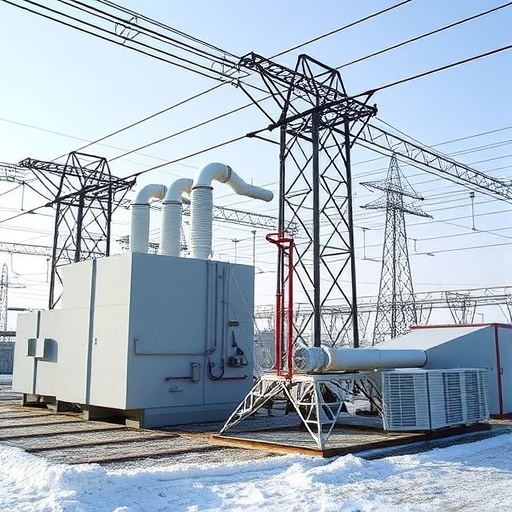
Insulating materials are indispensable to the functionality and efficiency of power systems that are foundational to modern life. As the demand for electrical energy surges, the quest for reliable and robust insulating materials intensifies. Historically, however, many of these materials have posed significant environmental challenges. As the world increasingly turns its attention towards sustainability, the urgency to innovate and deploy sustainable insulating materials has never been more paramount. This pursuit is not merely an academic concern; it plays a crucial role in achieving our collective aspirations for a greener future.
The spectrum of insulating materials spans diverse forms, including gases, liquids, and solids. Each type serves unique purposes within the framework of power systems, whether in generation, transmission, or conversion of electrical energy. Traditional insulation solutions, such as mineral oils and polystyrenes, were long favored for their performance metrics. Still, the negative environmental implications associated with their production and disposal cannot be overlooked. Multiple studies have documented the ecological footprint of these materials, revealing that reliance on conventional insulation could lead to prolonged detrimental effects on our ecosystems.
Gaseous insulating materials, commonly used in high-voltage applications, present their own set of challenges and benefits. While gases such as sulfur hexafluoride (SF6) have excellent insulating properties, they are also potent greenhouse gases. Mitigating this environmental impact is pivotal in the evolution of insulating technologies. Researchers and engineers are investigating alternative gases, such as dry air or other inert gases, which might fulfill similar roles without the same level of ecological consequence. Toward this goal, innovative engineering solutions that facilitate the transition from SF6 to more sustainable alternatives are critical.
Liquid insulating materials play a pivotal role in power transformers and switchgear, where thermal management is equally essential as insulation effectiveness. Conventional oils pose risk factors, including flammability, toxicity, and environmental pollution. This awareness has spurred significant research into biodegradable and non-toxic insulating oils derived from renewable resources. The incorporation of plant-based oils not only showcases an opportunity for material substitution but also aligns with the growing emphasis on circular economy principles. Promoting such materials allows for energy efficiency while improving sustainability metrics within power systems.
Solid insulators, including polymeric materials and ceramics, are beachheads of innovation across countless applications. Their development has traditionally favored durability and mechanical strength. However, with an increasing emphasis on sustainability, a novel approach toward design that prioritizes eco-friendliness is required. This paradigm shift involves sourcing raw materials from renewable resources, leveraging biopolymers, and implementing life-cycle assessments in material selection. The evolution of solid insulating materials is poised to combine performance with environmental conscientiousness, allowing the entire power sector to reap the rewards of innovation.
As researchers push toward developing sustainable alternatives, they also face significant scientific and technological challenges. Dynamic changes in operating environments, particularly under elevated temperatures and voltages, necessitate a deep understanding of the material properties at play. The complexity amplifies as multi-functional properties, such as thermal conductance and mechanical integrity, must coalesce within a single substance. Achieving this will require interdisciplinary collaboration, enlisting chemists, engineers, and environmental scientists to pursue novel solutions holistically.
Waste management remains a pressing concern as well. The lifecycle of insulating materials does not end with their application; it extends into post-utilization stages where disposal methods carry heavy environmental burdens. Improving recyclability and end-of-life resource conversion is essential. Innovations that allow for the reclamation of materials used in insulation, or that convert end-of-life insulators into useful constituents, could mitigate waste’s enduring effects on our ecosystems. The transition toward a circular economy in the insulating material sphere is not just desirable but imperative.
Government policies and industry standards will equally play a critical role in steering the direction of sustainable insulating materials. Rigorous regulatory frameworks need to incentivize research and development in sustainability-linked methodologies. Additionally, embracing stringent standards can compel industries to adopt greener practices that prioritize innovation while fulfilling energy demands. As global stakeholders unite towards net-zero goals, the anticipated deployment of innovative insulating solutions must align with supportive legislation that encourages sustainable advancements.
The advancement in technology maturity is crucial for bringing cutting-edge sustainable solutions from the lab to real-world applications. Bridging the gap between research breakthroughs and commercial viability necessitates a robust infrastructure and investment in pilot programs. Collaboration between industry and academia will be essential in scaling sustainable insulation solutions, ensuring that when they reach the market, they uphold the stringent requirements of power systems without compromising performance.
Moreover, a pivotal aspect of this transition includes raising awareness and acceptance among key decision-makers within industries. Engaging in dialogues about the benefits and possibilities of sustainable insulating materials can catalyze initiatives that lead to widespread change. The technological landscape is rife with potential; by sharing success stories and case studies, industry leaders can inspire collective action and usher in a new era characterized by sustainable innovation.
As the discourse on sustainability intensifies, understanding the implications of insulating material choices will determine the path forward for power systems globally. The transition towards sustainable options will contribute significantly not only to reducing carbon footprints but also to ensuring a resilient energy infrastructure capable of adapting to future societal needs. The pursuit of sustainable insulating materials is not simply an option but a necessity for long-term ecological health and societal stability. By aligning scientific advancements and technological maturity, we can foster a future where power systems function efficiently and sustainably, benefitting our world for generations to come.
In conclusion, the next frontiers of insulating material research hold immense promise. As scientists, engineers, and policymakers collaborate, the evolution of insulating materials will not only reflect advancements in technology but also resonate with our broader commitment to a sustainable future. The path towards developing sustainable insulating materials is laden with challenges, yet it ultimately presents an unparalleled opportunity—one that can transform the landscape of power systems while addressing pressing environmental concerns effectively.
Subject of Research: Sustainable Insulating Materials in Power Systems
Article Title: Sustainable Insulating Materials in Power Systems
Article References: Li, Y., Chen, J., Shi, S. et al. Sustainable insulating materials for power systems. Nat Rev Electr Eng (2026). https://doi.org/10.1038/s44287-025-00254-7
Image Credits: AI Generated
DOI:
Keywords: Sustainable insulating materials, power systems, environmental impact, circular economy, biodegradable oils, renewable resources, recycling, waste management, legislative frameworks.


