

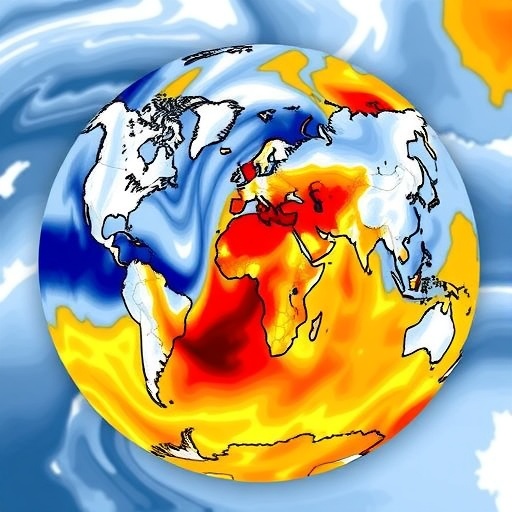
For the first time in meteorological research and operational forecasting history, the European Centre for Medium-Range Weather Forecasts (ECMWF) has made its OpenIFS model openly available to the global community. OpenIFS is a portable adaptation of ECMWF’s flagship Integrated Forecasting System (IFS), which underpins medium-range weather forecasts worldwide. Previously restricted to licensed institutional use, this transition to open-source availability signals a profound shift in how meteorological modeling resources can be accessed, adapted, and advanced collaboratively by researchers, educators, and even industry partners alike.
OpenIFS serves as a critical bridge between state-of-the-art operational weather forecasting and scientific investigation. The IFS itself is a highly sophisticated numerical weather prediction model that simulates the atmosphere’s dynamics and thermodynamics on a global scale. Its development has been a collective achievement—a legacy built over decades of cooperation among ECMWF’s Member and Co-operating States, including influential partners such as Météo-France. The release of OpenIFS as open source thus represents not only a technical milestone but also a reaffirmation of shared scientific endeavor and innovation within the meteorological community.
The granular complexity of the IFS system involves dynamically resolving atmospheric processes on grid scales as fine as a few kilometers in operational versions. In the exemplar comparison, OpenIFS’s storm event simulation from September 2016, run at a horizontal grid spacing of 78 km, can be directly compared to ECMWF’s operational forecast conducted on a much finer 9 km resolution grid. This contrast illustrates the range of computational resources that can be leveraged and the versatility offered by OpenIFS’s portability. Despite coarser resolution, the model still captures critical atmospheric metrics, such as mean sea level pressure and six-hour accumulated precipitation, validating its utility in various research and educational settings.
Florian Pappenberger, ECMWF’s Director-General, articulates the strategic importance of this open-source transition. By making OpenIFS freely accessible, ECMWF intends to democratize the use of cutting-edge forecasting tools, thus accelerating innovation through open collaboration. This approach moves beyond proprietary constraints, offering the global meteorological community a unique opportunity to modify, improve, and test the code without bureaucratic hindrances. The open availability also enables direct citation and reproducibility in scientific publications, fostering a transparent research environment with robust data integrity.
Historically, access to IFS-derived models required navigating complex licensing arrangements that limited user flexibility. Researchers needed specific institutional affiliations and permissions to utilize or adapt the code, restricting the pace of scientific progress and innovation. OpenIFS’s open-source model reverses this paradigm. It allows users, including academics and independent scientists, to run the software on modest hardware platforms, including personal laptops. This capacity is designed to make high-fidelity numerical weather prediction techniques accessible beyond specialized meteorological institutes, broadening their impact on global atmospheric science education.
Météo-France’s involvement underscores the deep-rooted collaboration that shaped IFS’s evolution. Virginie Schwarz, President and CEO of Météo-France, emphasized the nearly 40-year partnership underpinning the joint development of IFS and the Arpège model. Together, these models have evolved through over 50 iterations, steadily enhancing forecast accuracy and timeliness. Sharing this advanced modeling framework openly continues a tradition of cooperative innovation, empowering international research communities that strive to tackle complex atmospheric phenomena and climate variability collectively.
The significance of OpenIFS’s open-source release extends beyond academic landscapes into applied meteorology and industrial sectors. As ECMWF scientist Marcus Koehler noted, this shift enables a broader spectrum of users, including private companies, to innovate using an operationally relevant atmospheric model. The open license eliminates previous barriers, encouraging experimental approaches, customized applications, and potentially even new weather-based products and services that leverage the robust physical parameterizations and assimilation techniques embedded within IFS.
A pivotal technical advantage of this development lies in closing the historical gap between research iterations and operational versions of IFS. Typically, OpenIFS releases lagged behind annual IFS updates, limiting maximal usage of the latest scientific advancements. Mike Sleigh, Head of Integrated Forecast Systems at ECMWF, highlighted that open sourcing the model accelerates synchronization. Researchers can now access, scrutinize, and contribute to near real-time operational codebases, enabling studies to be conducted with tools that closely mirror real-world forecasting conditions and thereby enhancing forecast reliability and model advancement.
Beyond accelerating innovation, OpenIFS has demonstrated computational economy. ECMWF’s earlier work with OpenIFS showed the potential for resource savings in operational forecasting. By optimizing how certain processes are represented and executed on different hardware, OpenIFS has elucidated new pathways for computational efficiency, which could be crucial as forecast demands grow increasingly complex and data volumes surge. This efficiency makes running high-resolution global models feasible in diverse computing environments, including academic clusters and regional meteorological centers with limited hardware budgets.
More than an operational tool, OpenIFS has become a cornerstone in atmospheric education and training. Its user-friendly portability, combined with comprehensive documentation and active user community support, assists students and early-career scientists in gaining hands-on experience with world-class numerical weather prediction techniques. This experiential learning is invaluable; it bridges the conceptual understanding of atmospheric dynamics with practical insights and code-level familiarity rarely available in conventional coursework alone.
The broad user base of OpenIFS includes a vibrant international workshop series and collaborative research network. Through this community, users share experiences, validate model variations, and develop complementary tools that enhance usability and scientific output. The open-source release is expected to amplify these interactions, facilitating smoother exchange of ideas and joint problem-solving. Adrian Hill, Senior Scientist and OpenIFS project lead, underscored the model’s versatility—its applications span from atmospheric research to climate modeling, including contributions to influential climate models like ECEarth-4 and investigations into idealized atmospheric processes.
As climate change and extreme weather events pose escalating challenges, the availability of an openly accessible, high-performance forecasting model represents a timely scientific asset. By enabling open access to IFS’s core predictive capabilities and fostering an inclusive environment for innovation and education, ECMWF is catalyzing a global effort to improve forecasting accuracy, deepen understanding of atmospheric dynamics, and ultimately enhance societal resilience. The OpenIFS release on GitHub marks a new era in meteorological research and operational forecasting collaboration.
In summary, OpenIFS’s transition from a licensed research tool to an openly accessible model heralds a decade-defining transformation in atmospheric science. It empowers a diverse range of users to apply, develop, and distribute cutting-edge forecasting technology with unprecedented freedom. This new modality not only accelerates scientific and operational innovation but cultivates a more connected, collaborative global meteorological community equipped to meet the demands of the 21st century’s evolving climate and weather challenges.
Subject of Research: Not applicable
Article Title: ECMWF Makes Its Global Forecasting Model Open Source, Ushering a New Era in Atmospheric Science
News Publication Date: 5 March 2026
Web References: https://github.com/ecmwf-ifs/openifs
Image Credits: ECMWF
Keywords: Meteorology, Climatology, Numerical Weather Prediction, Atmospheric Science, Open Source, Integrated Forecasting System, Weather Modeling, Forecast Innovation


