

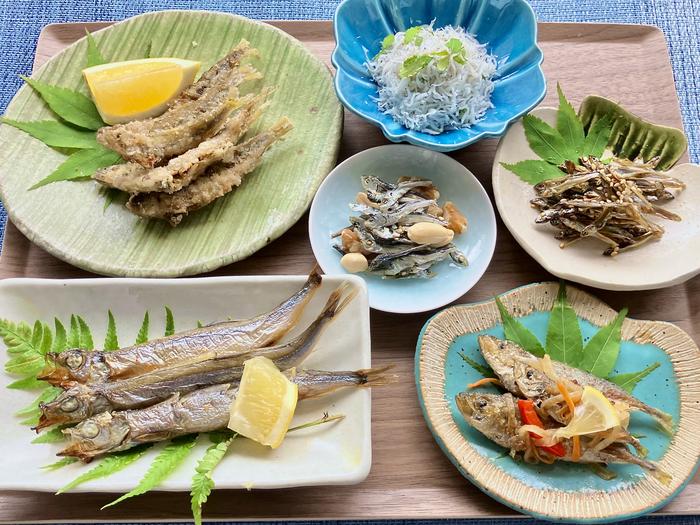
A new study has found evidence linking the intake of small fish, eaten whole, with a reduced risk of all-cause and cancer mortality in Japanese women. Conducted by Dr. Chinatsu Kasahara, Associate Professor Takashi Tamura, and Professor Kenji Wakai at Nagoya University Graduate School of Medicine in Japan, the study highlights the potential life-extending benefits of habitually eating small fish. The findings were published in the journal Public Health Nutrition.

Credit: Chinatsu Kasahara
A new study has found evidence linking the intake of small fish, eaten whole, with a reduced risk of all-cause and cancer mortality in Japanese women. Conducted by Dr. Chinatsu Kasahara, Associate Professor Takashi Tamura, and Professor Kenji Wakai at Nagoya University Graduate School of Medicine in Japan, the study highlights the potential life-extending benefits of habitually eating small fish. The findings were published in the journal Public Health Nutrition.
Japanese people habitually eat small fish, such as whitebait, Atlantic capelin, Japanese smelt, and small dried sardines. Importantly, it is common practice to consume small fish whole, including the head, bones, and organs, which are rich in micronutrients, such as calcium and vitamin A.
“Previous studies have revealed the protective effect of fish intake on health outcomes, including mortality risks. However, few studies have focused on the effect of the intake of small fish specifically on health outcomes,” said the lead researcher, Dr. Kasahara. “I was interested in this topic because I have had the habit of eating small fish since childhood. I now feed my children these foods.”
The research team investigated the association between the intake of small fish and mortality risk among Japanese people. The study included 80,802 participants (34,555 men and 46,247 women) aged 35 to 69 years nationwide in Japan. The participants’ frequency of the intake of small fish was assessed using a food frequency questionnaire at baseline. The researchers followed them for an average of nine years. During the follow-up period, 2,482 deaths from people included in the study were recorded, with approximately 60% (1,495 deaths) of them being cancer related.
One of the most striking findings of the study was the significant reduction in all-cause and cancer mortality among women who habitually eat small fish. Women who eat small fish 1-3 times a month, 1-2 times a week, or 3 times or more a week had 0.68, 0.72, and 0.69 times the risk of all-cause mortality, and 0.72, 0.71, and 0.64 times the risk of cancer mortality, compared to those who rarely eat small fish.
After controlling for factors that can affect mortality risk, such as participants’ age, smoking and alcohol consumption habits, BMI, and intake of various nutrients and foods, the researchers found that women in the study who eat small fish frequently were less likely to die from any cause. These findings suggest that incorporating small fish into their daily diet could be a simple but effective strategy to reduce the risk of mortality among women.
The risk of all-cause and cancer mortality in men showed a similar trend to that in women, although it was not statistically significant. The reasons for the lack of significance in men remain unclear, but the researchers posit that the limited number of male subjects or other factors not measured in the study, such as the portion size of small fish, may also matter. According to the researchers, the difference in the cancer type causing cancer mortality among sexes may be related to a sex-specific association.
Although acknowledging the need for additional research in other populations and a deeper understanding of the mechanisms involved, Dr. Kasahara is enthusiastic about the results. “While our findings were only among Japanese people, they should also be important for other nationalities,” she said.
In fact, previous studies have highlighted affordable small fish as a potentially important source of nutrients, especially in developing countries that suffer from severe nutrient deficiency. This study adds to the growing body of evidence supporting the health benefits of dietary practices that include eating small fish. As Dr. Kasahara explained, “Small fish are easy for everyone to eat, and they can be consumed whole, including the head, bones, and organs. Nutrients and physiologically active substances unique to small fish could contribute to maintaining good health. The inverse relationship between the intake of small fish and the mortality risk in women underscores the importance of these nutrient-dense foods in people’s diets.”
“The habit of eating small fish is usually limited to several coastal or maritime countries, such as Japan,” Associate Professor Tamura said. “However, we suspect that the intake of small fish anywhere may be revealed as a way to prolong life expectancy. Further evidence is necessary to elucidate the potential role of the intake of small fish in mortality risk.”
Journal
Public Health Nutrition

