

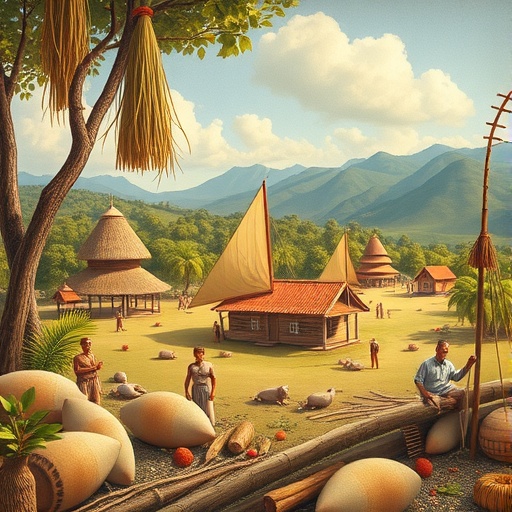
In a groundbreaking study published in Archaeological and Anthropological Sciences, researchers Trần, Hertler, and Đặng have unveiled significant insights into the diversified subsistence strategies of early sedentary populations in mainland Southeast Asia. The focal point of their research was the faunal remains discovered at Lò gạch, situated in southern Vietnam. This area has emerged as a critical site for understanding the complexities of early human life in this historically rich region, where the interplay between human activity and environmental resources shaped the development of settled communities.
The examination of the Lò gạch site offers invaluable details about the variety of species consumed by the early inhabitants. The faunal remains, meticulously analyzed, reveal that these populations were not confined to a singular mode of subsistence. Instead, they exhibited a remarkable adaptability, exploiting a range of terrestrial and aquatic resources. This multifaceted approach challenges the traditional narratives of early hunter-gatherer societies, suggesting instead a gradual transition towards more sedentary lifestyles supported by a diversified diet.
The research highlights the importance of both terrestrial and aquatic ecosystems in the sustaining of these early communities. Analysis of the remains indicates that species such as fish and small mammals made up a substantial part of their diet. The evidence of fishing practices, including the use of tools and possible fishing nets, suggests a sophisticated level of resource management that underscores the ingenuity of these early populations. Such findings paint a vivid picture of daily life and the strategies employed to maximize food security in a challenging environment.
Furthermore, the study delves into the significance of seasonality and environmental changes on subsistence patterns. By examining the seasonal availability of different faunal species, the authors argue that these early sedentary groups were acutely aware of their surroundings and skillfully adapted their hunting and gathering methods in response to ecological shifts. This adaptability is not merely a reflection of survival; it reveals deep social knowledge and cultural practices that informed their interactions with the surrounding landscape.
The research is particularly salient within the context of Southeast Asia, a region characterized by its rich biodiversity and complex ecosystems. The findings at Lò gạch are crucial for understanding how early human populations interacted with these ecological resources, transforming their subsistence strategies to meet changing environmental conditions. This newfound understanding encourages a re-evaluation of how sedentary societies developed in the region and the broader implications for human adaptation to environmental changes.
In addition to its archaeological significance, this study also contributes to contemporary discussions on sustainability and resource management. The ability of these early populations to diversify their subsistence strategies provides valuable lessons for current societies facing similar challenges. By looking to the past, there is much to learn about resilience, adaptability, and the importance of maintaining a balance with natural ecosystems.
The methodologies employed in this research are noteworthy. The integration of zooarchaeological techniques with ecological modeling allowed for a nuanced analysis of dietary patterns. The authors meticulously cataloged the faunal remains, employing both statistical and qualitative approaches to interpret the data. This scientific rigor ensures that the findings presented are reliable and contribute meaningfully to the existing body of knowledge in the field.
Additionally, the study emphasizes the interdisciplinary nature of modern archaeological research. By collaborating across various scientific domains, such as ecology, anthropology, and archaeology, the authors have painted a more comprehensive picture of life in early sedentary societies. This collaborative approach not only enriches archaeological interpretation but also fosters innovation in how we understand past human behaviors and societal evolution.
The research conducted at Lò gạch serves as a reminder of the interconnectedness of humans and their environment throughout history. As urbanization and climate change threaten biodiversity today, examining how early sedentary populations thrived in their ecological context provides vital insights into potential strategies for future sustainability. This understanding underscores the relevance of archaeology in contemporary debates about conservation, resource management, and sustainable living practices.
The authors of this study have made an essential contribution to our understanding of human history. By revealing the complexities of subsistence strategies among early sedentary populations in Southeast Asia, they challenge simplistic views of human evolution. Their findings affirm the notion that adaptability and resourcefulness have long been hallmarks of human existence, traits that are now more important than ever in navigating the complexities of modern life.
In conclusion, the insights gained from the faunal remains at Lò gạch not only illuminate the lifestyles of early sedentary populations but also encourage a deeper reflection on our relationship with nature. This research exemplifies the potential of archaeology to inform current societal challenges through an understanding of our collective human journey. It is a testament to the significance of studying the past, where lessons learned can potentially guide humanity toward a more sustainable future.
This research is a call to action for continued archaeological exploration and interdisciplinary collaboration. As we move forward, it is essential to remember the importance of historic insights into environmental stewardship and adaptive living in a rapidly changing world.
In summary, the findings from the Lò gạch site shine a light on the intricacies of human adaptation in historical contexts. By employing rigorous analytical techniques and interdisciplinary methodologies, the authors have elucidated the multifaceted subsistence strategies of our ancestors. These insights resonate today, urging us to reflect on our environmental responsibilities and the need for sustainable practices that honor the resilience of both nature and humanity.
Subject of Research: Early sedentary populations’ subsistence strategies in Southeast Asia.
Article Title: Diversified subsistence strategies in early sedentary populations of mainland Southeast Asia: insights from the faunal remains at Lò gạch, Southern Vietnam.
Article References:
Trần, Q.T.K., Hertler, C., Đặng, K.N. et al. Diversified subsistence strategies in early sedentary populations of mainland Southeast Asia: insights from the faunal remains at Lò gạch, Southern Vietnam.
Archaeol Anthropol Sci 17, 179 (2025). https://doi.org/10.1007/s12520-025-02295-3
Image Credits: AI Generated
DOI: https://doi.org/10.1007/s12520-025-02295-3
Keywords: Subsistence strategies, Lò gạch, early populations, archaeology, faunal remains, biodiversity, sustainability.


