

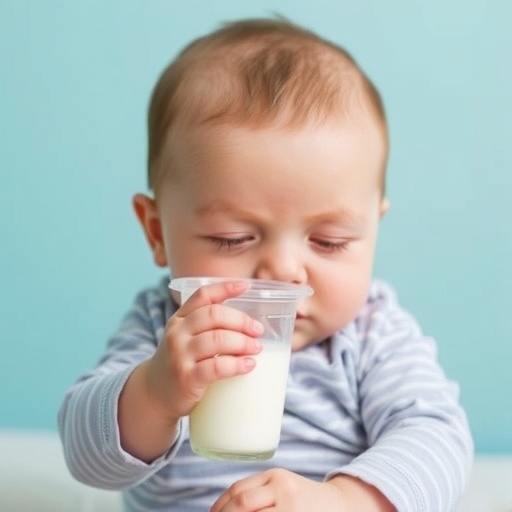
In the evolving landscape of neonatal care, the administration of donor breast milk remains an invaluable resource for infants who, due to medical or maternal constraints, cannot be breastfed by their own mothers. However, a groundbreaking study published in the Journal of Perinatology has unveiled critical insights into the complex issue of drug exposures through donor milk—a challenge that demands urgent attention from both clinicians and researchers to safeguard the health of our most vulnerable infants. This study, conducted by Noble and Hand, delves deeply into the pharmacokinetics and potential risks associated with drug residues in donor breast milk, raising pivotal questions about screening, safety protocols, and the future direction of neonatal nutrition.
Donor milk banks have long been heralded as lifelines for newborns, especially premature and critically ill infants whose immature gastrointestinal and immune systems necessitate optimal nutritional sources. Yet, these milk supplies, often pooled from numerous donors, inadvertently carry trace amounts of pharmaceuticals consumed by the milk providers. The authors emphasize that while the benefits of donor milk—such as reduced necrotizing enterocolitis and enhanced neurodevelopmental outcomes—are undeniable, the inadvertent transmission of drugs through milk introduces an under-recognized layer of complexity to neonatal care.
Pharmacologically, breast milk acts as a biologically dynamic matrix capable of sequestering and potentially concentrating various substances, including medications. Noble and Hand’s analysis underscores the necessity to grasp the intricate pharmacodynamics that govern how drugs partition into breast milk and the subsequent exposure risks for infants. Factors affecting this transfer include drug molecular weight, lipophilicity, ionization status, and maternal metabolism. The study provides compelling evidence that some medications, particularly those with long half-lives or those known for active metabolites, have increased milk-to-plasma ratios and thus higher likelihoods of exposure to infants.
Critically, the research highlights that many drugs detectable in donor milk remain poorly characterized in terms of their neonatal toxicity profiles. For instance, psychotropic medications, analgesics, and antibiotics—a triad of commonly used drug classes among lactating women—pose uncertain risks. The neonatal capability to metabolize or excrete these drugs is often underdeveloped, amplifying the potential for accumulation and adverse effects such as sedation, developmental interference, or microbiome disruption. The authors advocate for more rigorous toxicological evaluation frameworks that incorporate neonatal maturation stages to better predict these outcomes.
The study also remarks upon the operational challenges facing milk banks. Current screening protocols primarily address infectious agents but do not consistently evaluate donor pharmaceutical histories or drug residue levels in milk. This gap, the authors argue, can inadvertently permit the distribution of milk containing potentially harmful drug residues. Moreover, the logistical burdens of comprehensive drug screening are significant, requiring advanced detection methodologies such as high-performance liquid chromatography coupled with mass spectrometry (HPLC-MS), which may not be readily accessible to all milk banks.
Furthermore, Noble and Hand propose a paradigm shift in donor evaluation, suggesting the integration of detailed pharmacological interviews along with biochemical assays to identify high-risk donors or batches. The incorporation of real-time, sensitive assays could allow for dynamic screening, enhancing safety without compromising the supply. The study highlights pilot programs utilizing these technological advances, showing promising results in reducing drug contamination without significant milk wastage.
From a regulatory standpoint, the findings call for enhanced guidelines governing donor milk banking. Presently, global and national bodies offer fragmented recommendations on donor screening beyond infectious diseases, failing to address chemical contaminants adequately. The authors urge policymakers and healthcare agencies to prioritize establishing evidence-based, standardized protocols that consider drug safety alongside microbial safety, effectively creating a dual-tier screening model.
Intriguingly, the article touches upon future innovative solutions. One promising avenue lies in the development of bioreactor cultured human milk components, which, if scalable, could circumvent many concerns related to donor-derived drug exposures. Another potential solution discussed is the fortification of donor milk with protective agents capable of sequestering or neutralizing drug residues, though these biotechnological interventions remain in early experimental phases.
The study also emphasizes the ethical dimension of donor milk drug exposures. Transparency with donor mothers about the implications of their medication use for milk recipients is paramount, as is informed consent from parents of infants receiving donor milk. Since some medications may be essential for maternal health, balancing risk-benefit considerations is complex, necessitating collaborative clinical decision-making frameworks that encompass obstetrics, neonatology, and pharmacology.
In addition to maternal medications, the research underlines the potential risks of environmental and recreational drug contaminants in donor milk, such as nicotine, ethanol, and illicit substances. These pose further complications given variability in detection, potent neurotoxic effects, and social sensitivities. The authors recommend targeted public health campaigns and support systems to mitigate these exposures in lactating populations intending to donate.
This comprehensive inquiry by Noble and Hand thus marks a critical inflection point in neonatal nutrition science. It illuminates the unresolved challenges poised by drug exposures in donor milk and charts a strategic roadmap for innovation, safety enhancement, and policy reform. Neonatal practitioners, lactation consultants, and milk bank administrators are urged to assimilate these findings, advocating for multidisciplinary approaches that prioritize the sanctity of the infant’s developing system.
Finally, in advocating for expanded research efforts, the authors call for longitudinal cohort studies tracking infants fed donor milk to delineate long-term outcomes related to drug exposures. They also stress the vital role of international collaboration to standardize research methodologies and data sharing, ensuring a cohesive global response to this subtle yet consequential neonatal health hazard.
As we propel into this new era of scientific inquiry, the insights brought forth by this study underscore a crucial principle: safeguarding our youngest and most fragile patients demands vigilance not only over infectious risks but also chemical exposures. The harmony of nourishment and safety in donor breast milk remains a pinnacle objective—one that necessitates rigorous scientific dedication and compassionate clinical stewardship moving forward.
Subject of Research: Drug exposures in donor breast milk and their impact on vulnerable infants
Article Title: Drug exposures in donor milk: protecting our most vulnerable infants
Article References: Noble, L., Hand, I. Drug exposures in donor milk: protecting our most vulnerable infants. J Perinatol (2026). https://doi.org/10.1038/s41372-026-02575-3
Image Credits: AI Generated
DOI: 10.1038/s41372-026-02575-3 (Published 11 February 2026)


