

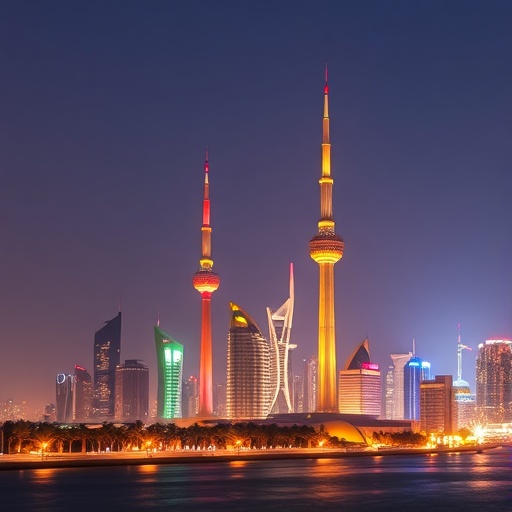
In the rapidly evolving context of the Gulf Cooperation Council (GCC) economies, the intricate challenge of fostering sustainable growth and employment has emerged as a priority for policymakers and researchers alike. The recent study conducted by Malik, Equbal, and Masood delves into this critical issue. Their research offers a comprehensive analysis and a roadmap for sustainable development strategies that harmonize economic growth with environmental considerations. It sheds light on the future trajectories of employment trends and the required interventions that can catalyze robust economic development while nurturing the sustainability goals that are increasingly imperative in today’s world.
At the heart of the GCC’s growth narrative is its heavy reliance on hydrocarbon-based resources. These economies have enjoyed unprecedented growth rates largely due to oil revenues. However, the globalization of energy markets and the palpable effects of climate change are forcing a paradigm shift in how these nations operate. The researchers argue that transitioning from resource dependence to a knowledge-based economy is essential for sustainable employment generation. This transition is not merely a beneficial strategy but a crucial imperative if these nations aspire to remain competitive in a globalized environment marked by rapid technological change and shifting consumer behaviors.
One of the notable aspects of the study is its detailed exploration of potential sectors that hold promise for sustainable job creation in the GCC. The researchers emphasize the burgeoning sectors such as renewable energy, technology, and tourism. This proactive approach towards diversification is not only pivotal for job creation but also essential in mitigating the environmental impact associated with traditional industries. Reorienting the workforce towards green jobs is seen as a fundamental step in achieving sustainability targets while simultaneously addressing the pressing need for employment in the region.
The authors further highlight the critical role of education and skill development in this transition. In an era where automation and AI are shaping the future workforce landscape, equipping individuals with the right skills is paramount. The correlation between educational attainment and employability cannot be overstated. The researchers propose tailored educational programs that align with the emerging demands of the labor market, thereby ensuring that the workforce is ready to meet the challenges posed by new industries and technologies.
In addition to skill development, the study underlines the importance of policy frameworks that support innovation and entrepreneurship. For sustainable growth to be realized, a conducive environment for startups and small-to-medium enterprises must be fostered. The researchers call for policies that not only encourage investment in innovation but also provide the necessary infrastructure for these nascent companies to thrive. By creating a vibrant entrepreneurial ecosystem, the GCC economies can unlock untapped potential and drive job creation across diverse sectors.
Financial inclusion is another critical theme addressed in the research. Ensuring that all segments of society have access to financial resources can help stimulate entrepreneurship and, as a result, sustainable economic growth. The study underscores the need for financial literacy programs and microfinancing initiatives that empower individuals, particularly women and youth, to engage in entrepreneurial activities. Such measures can lead to a more equitable distribution of wealth and a diversified economic base, which are essential components of sustainability.
While the study presents a hopeful outlook, it does not shy away from acknowledging the challenges that lie ahead. Transitioning towards a sustainable economic model requires concerted efforts from all stakeholders, including governments, the private sector, and civil society. The intricate dance of policy-making, economic development, and environmental stewardship is fraught with complexities, and achieving balance among these elements is no small feat. The researchers stress that collaborative efforts across various sectors and levels of governance are imperative to navigate these challenges effectively.
As the GCC nations grapple with these multifaceted issues, there is a pressing need for ongoing research to inform policy measures and development strategies. The study by Malik, Equbal, and Masood is a significant contribution to this burgeoning body of literature that advocates for a sustainable future. Through robust empirical evidence and strategic recommendations, the authors aim to spark discourse and drive action among policymakers and industry leaders.
Furthermore, the role of technology in this transformation cannot be ignored. Innovative technologies hold the key to enhancing efficiency, reducing environmental impacts, and creating new job opportunities. The researchers advocate for embracing technological advancements, such as digitalization, which can radically transform traditional sectors. Adopting smart technologies within industries can streamline operations, optimize resource use, and pave the way for sustainable practices that favor long-term environmental health.
As the narrative of sustainable growth unfolds in the GCC, it’s essential to recognize the interconnectedness of environmental, social, and economic factors. Malik, Equbal, and Masood’s research offers a framework for understanding these dynamics and presents actionable insights that can guide future efforts. It underscores that sustainability is not merely an abstract goal but a concrete pathway toward economic resilience and social well-being.
To conclude, the findings and recommendations presented in this study are timely and relevant, especially as the GCC economies continue to navigate a post-oil future. The call for fostering sustainable growth and employment cannot be overstated, as it sets the foundation for a more equitable and sustainable world. By embracing this vision, the GCC economies can not only secure their economic futures but also position themselves as leaders in sustainability on the global stage.
Subject of Research: Sustainable growth and employment in GCC economies.
Article Title: Fostering sustainable growth and employment in the Gulf cooperation council economies.
Article References:
Malik, M., Equbal, M.S. & Masood, T. Fostering sustainable growth and employment in the Gulf cooperation council economies. Discov Sustain (2026). https://doi.org/10.1007/s43621-026-02651-w
Image Credits: AI Generated
DOI: 10.1007/s43621-026-02651-w
Keywords: Sustainable development, employment, GCC economies, renewable energy, innovation, entrepreneurship, education, financial inclusion, technological transformation.


