

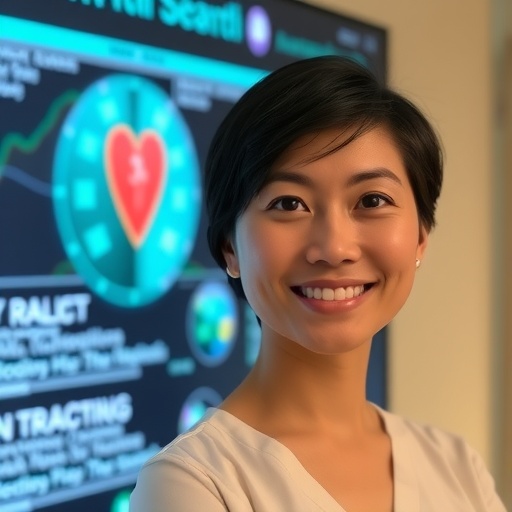
In a groundbreaking development poised to impact the fields of transplantation and cardiovascular care, Dr. Yangzhi Zhu, Principal Investigator at the Terasaki Institute for Biomedical Innovation, has been honored with the American Heart Association’s prestigious Career Development Award. This accolade not only acknowledges Dr. Zhu’s innovative contributions to translational biosensing but also provides dedicated funding amounting to $231,000 over three years to accelerate his visionary research.
The American Heart Association (AHA) Career Development Award is widely recognized as a cornerstone for supporting emerging leaders in cardiovascular and related biomedical research. Dr. Zhu’s project embodies the essence of this mission by focusing on the creation of advanced biosensing technologies designed to enhance donor organ evaluation processes. By bridging the gap between engineering and clinical application, his work aims to transform how organ health is assessed, offering more precise, timely, and actionable data that can profoundly influence transplantation outcomes.
Central to Dr. Zhu’s research is the development of next-generation biosensors capable of providing real-time, detailed insight into organ viability. Traditional methods of organ assessment often rely on static and indirect measures, which inadequately capture the dynamic physiological state of organs. His approach leverages cutting-edge biomaterials and microfluidic systems to create integrated sensing platforms that can continuously monitor critical biomarkers during the organ preservation and transplantation process.
These innovative biosensing modalities utilize a combination of cellular engineering and microenvironment analysis to decode complex biological signals indicative of organ function and stress. By harnessing molecular-level interactions and translating them into quantifiable electronic outputs, Dr. Zhu’s technology offers the potential to detect subtle changes that precede overt organ failure. This capacity is critical for making informed clinical decisions regarding organ suitability and timing of transplantation, ultimately improving patient outcomes.
The translational nature of Dr. Zhu’s work underscores its impact beyond the laboratory, aiming to seamlessly integrate with existing clinical workflows. His strategies involve designing biosensors that are not only highly sensitive and specific but also scalable and cost-effective for widespread adoption. This pragmatic focus enhances the potential for rapid technology transfer from prototype development to bedside application, addressing critical unmet needs in healthcare delivery.
Moreover, Dr. Zhu’s research tackles the broader challenge of cardiovascular disease management by providing tools to better monitor transplanted organs post-surgery. Continuous biosensing could enable early detection of rejection or dysfunction, enabling clinicians to intervene promptly and tailor therapies with unprecedented precision. The integration of these sensing technologies into clinical practice may ultimately reduce the high morbidity and mortality associated with current transplantation procedures.
The Terasaki Institute for Biomedical Innovation champions such forward-thinking research, emphasizing interdisciplinary collaboration across biomaterials science, cellular engineering, and medical device development. Dr. Zhu’s award-winning project exemplifies this interdisciplinary philosophy, merging bioengineering prowess with translational medicine to innovate tangible solutions for complex healthcare problems.
Stewart Han, President of the Terasaki Institute for Biomedical Innovation, expressed strong support for Dr. Zhu’s pioneering efforts, underlining how such recognition from the AHA reflects a broader validation of the institute’s commitment to pushing the boundaries of biomedical innovation. Dr. Zhu’s success serves as a catalyst, inspiring further exploration into the integration of biosensing technologies within personalized medicine frameworks.
This award will provide essential funding to fund critical phases of development, including refining sensor sensitivity, optimizing biomaterial interfaces, and conducting preclinical validation studies. The anticipated outcomes could revolutionize donor organ assessment paradigms, reduce organ discard rates, and enhance graft success through tailored preservation strategies based on sensor feedback.
Ultimately, Dr. Zhu’s translational biosensing research holds promise to reshape cardiovascular care by improving how clinicians monitor and understand organ health at multiple stages—from procurement and preservation to transplantation and post-operative management. This confluence of engineering innovation and clinical insight embodies a new frontier in precision medicine aimed at saving lives and improving quality of life for transplant recipients worldwide.
The American Heart Association’s commitment to fostering transformative research like Dr. Zhu’s represents a strategic investment in the future of cardiovascular health. By supporting early-career investigators applying engineering principles to solve pressing biomedical challenges, the AHA accelerates progress towards innovative solutions that hold the potential for broad, global impact.
As the research funded by this award advances, it will be crucial to maintain close collaborations with clinical partners, ensuring that the biosensing platforms are attuned to real-world clinical needs. The iterative process of refining sensor design informed by clinical feedback will be key to achieving successful translation and widespread adoption.
In summary, Dr. Yangzhi Zhu’s receipt of the AHA Career Development Award highlights the growing importance of biosensing technologies in advancing organ transplantation and cardiovascular medicine. Through the integration of biomaterials, cellular engineering, and microfluidics, his work is charting an innovative path toward improved donor organ evaluation, enhanced patient monitoring, and ultimately, better clinical outcomes.
Subject of Research: Translational biosensing for donor organ evaluation and cardiovascular care
Article Title: Terasaki Institute’s Dr. Yangzhi Zhu Awarded American Heart Association Career Development Award to Advance Translational Biosensing Research
News Publication Date: March 30, 2026
Web References: Not provided
References: Not provided
Image Credits: Terasaki Institute
Keywords: Translational biosensing, Donor organ evaluation, Cardiovascular care, Biomedical engineering, Biomaterials, Cellular engineering, Microfluidics, Transplantation, Medical technology, Precision medicine


