

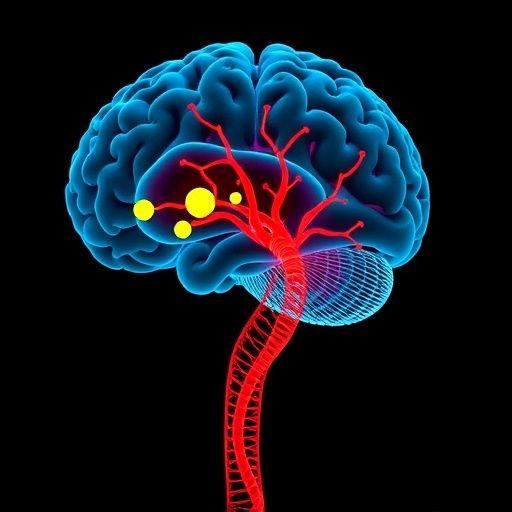
A groundbreaking study published in Nature Communications is reshaping our understanding of brain development during preadolescence, shedding light on how deviations in the maturation of dorsal association tracts not only influence current cognitive performance but also predict future psychopathological outcomes. This research, conducted by Wang, Hammond, Salmeron, and colleagues, delves deeply into the neurodevelopmental trajectories of these critical white matter pathways, revealing their integral role in a wide spectrum of mental health issues that transcend traditional diagnostic categories.
The dorsal association tracts, a collection of white matter fibers connecting various regions in the parietal and frontal lobes, are essential for integrating sensory and motor information with higher-order cognitive functions such as attention, memory, and executive processing. During preadolescence—a neurodevelopmental window characterized by rapid brain restructuring—these pathways undergo significant changes in microstructural organization and connectivity strength. The researchers tapped into advanced neuroimaging modalities, including diffusion tensor imaging (DTI) and tractography, to map and quantify the developmental deviations within these tracts across a large cohort of preadolescent children.
What makes this study particularly groundbreaking is its identification of specific patterns of atypical development in dorsal association tracts that correlate with both concurrent cognitive performance and longitudinal mental health outcomes. By employing sophisticated machine learning algorithms and longitudinal data analysis, the team demonstrated that variations in tract integrity and coherence accurately forecast children’s cognitive abilities, such as problem-solving and processing speed, while simultaneously predicting diverse psychopathological symptoms spanning anxiety, depression, and attentional disorders.
From a neurobiological perspective, the study illuminates the complex interaction between structural brain maturation and behavioral manifestations often observed in clinical psychology. It challenges the conventional siloed approach of diagnosing psychiatric conditions by showing that disrupted white matter pathways in early life underlie a transdiagnostic risk—meaning that one neurodevelopmental anomaly can manifest as multiple psychiatric phenotypes depending on environmental and genetic modifiers. This insight could revolutionize psychiatric assessment by focusing on neurodevelopmental biomarkers rather than symptom clusters.
The research also advances our understanding of critical periods in brain plasticity during preadolescence. The dorsal association tracts, which mature later than primary sensory and motor pathways, are particularly sensitive to environmental stimuli and stressors. The study’s authors suggest that deviations in the developmental trajectory of these tracts could be a neural substrate for the heightened vulnerability to mental health disorders that often emerge during adolescence. It proposes that interventions targeting this pivotal window could recalibrate brain circuitry to promote resilience.
Technologically, the study leveraged high-resolution neuroimaging combined with cutting-edge computational modeling to parse subtle microstructural changes in white matter tracts, such as fractional anisotropy (FA) and mean diffusivity (MD). These neuroimaging biomarkers serve as proxies for axonal density, myelination, and fiber coherence. By longitudinally tracking these biomarkers, the researchers unveiled how slight deviations in white matter maturation trajectories are linked with measurable cognitive deficits and psychiatric symptomatology, reinforcing the brain-behavior relationship.
The transdiagnostic approach utilized here widens the scope beyond categorical psychiatric diagnoses to examine psychopathology along continuous dimensions—often conceptualized as hierarchical models of psychopathology. This nuanced view acknowledges that the neurobiological substrate of mental disorders is shared across conditions, and that early identification of brain development anomalies can provide crucial foresight into an individual’s mental health trajectory, potentially enabling preemptive interventions.
Furthermore, this research holds implications for educational strategies and neurodevelopmental support programs. Understanding how dorsal association tract development influences cognitive functions may inform tailored interventions in school settings, offering personalized cognitive training designed to bolster specific neural pathways and optimize learning outcomes during this critical developmental window.
One particularly compelling aspect of the study is its exploration of individual variability. While deviations in dorsal association tract development are linked to psychopathology risk, the study underscores that not all children with atypical tract growth manifest psychiatric symptoms. This observation points to the interplay between brain structure, genetics, environment, and resilience factors, highlighting the importance of a multi-dimensional framework when considering neurodevelopmental health.
The dataset analyzed comprises a large sample of preadolescents, enabling robust statistical power to dissect subtle associations. The inclusion of longitudinal follow-up allows the mapping of evolving trajectories, distinguishing transient delays in white matter maturation from persistent anomalies that portend adverse cognitive and psychiatric outcomes. This temporal dimension is crucial for distinguishing cause-effect relationships in brain-behavior dynamics.
Integrating multimodal data, including cognitive testing and symptom assessment scales, with neuroimaging findings fortifies the conclusions. It demonstrates that the brain’s microstructural integrity in dorsal white matter pathways is a reliable biomarker with predictive validity for complex behavioral phenotypes. This convergence of evidence supports a neurodevelopmental framework that cuts across disciplines—neuroscience, psychiatry, and developmental psychology.
From a clinical viewpoint, the study’s findings advocate for early neurodevelopmental screening utilizing noninvasive imaging techniques to identify children at risk of cognitive and psychiatric delays. Such proactive identification could lead to personalized early interventions designed to modify brain plasticity trajectories. It suggests a paradigm shift in mental health—from reactive symptom management to preventative neurodevelopmental care.
The study also prompts deeper questions about the mechanistic underpinnings driving dorsal tract deviations. Hypotheses include genetic polymorphisms affecting myelination, environmental insults such as psychosocial stress or malnutrition, and epigenetic modifications that influence neurodevelopmental gene expression. Future research expanding on these pathways may yield targeted therapeutic strategies.
Importantly, this investigation underscores the developmental origins of mental health disorders. By anchoring psychiatric vulnerability in early brain development, it provides a scaffold for rethinking diagnostic criteria and treatment modalities. This alignment with neurobiological substrates enhances the hope for biomarker-driven precision psychiatry tailored to individual developmental trajectories.
The potential societal impact is profound. Early intervention informed by brain development understanding promises reduced burden of mental illness, improved quality of life, and optimized educational attainment. This approach aligns with public health models advocating for brain health promotion during critical developmental periods.
Looking ahead, the integration of artificial intelligence and large-scale longitudinal neuroimaging databases will refine predictive models, paving the way for individualized risk profiles and targeted intervention strategies. This technological synergy can accelerate translation of these findings from the laboratory to clinical and educational practices.
In conclusion, the study by Wang and colleagues offers groundbreaking evidence that deviations in the development of dorsal association tracts during preadolescence are pivotal determinants of both cognitive performance and the risk of broad-spectrum psychopathology. By bridging neurodevelopmental biology with behavioral outcomes, this research paves the way for a new era of preventative mental health care grounded in brain science.
Subject of Research: Neurodevelopmental trajectories of dorsal association tracts during preadolescence and their relationship to cognitive function and transdiagnostic psychopathology
Article Title: Deviation in development of dorsal association tracts during preadolescence links to concurrent and future cognitive performance and transdiagnostic psychopathology
Article References:
Wang, D., Hammond, C.J., Salmeron, B.J. et al. Deviation in development of dorsal association tracts during preadolescence links to concurrent and future cognitive performance and transdiagnostic psychopathology. Nat Commun (2026). https://doi.org/10.1038/s41467-026-69774-6
Image Credits: AI Generated


