

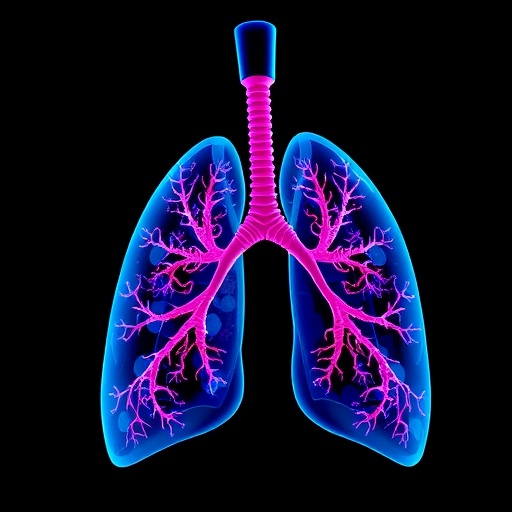
In a pioneering study poised to reshape our understanding of childhood asthma, researchers have unveiled the intricate relationship between environmental pollutants, specifically ozone and particulate matter (PM2.5), and the genetic responses triggered in pediatric patients suffering from this chronic respiratory condition. The findings underscore the vital importance of contextualizing childhood asthma not merely as an inherited ailment but as a complex biological response influenced by the environmental milieu. Importantly, this research illuminates the underlying transcriptomic mechanisms, proposing potential pathways for more effective therapeutic interventions and preventive measures.
At the heart of this investigation, Chun et al. explored the airway transcriptome—essentially the sum of all RNA molecules expressed in the airways—of children exposed to ozone and PM2.5. By utilizing state-of-the-art sequencing technology, the researchers could meticulously catalog the genes activated or silenced under these environmental stresses. Asthma, characterized by inflammation and obstruction of the airways, often manifests differently in children than in adults, necessitating a unique approach to understanding its etiology and progression.
What sets this study apart is its methodological rigor, combining advanced bioinformatics with bench science to draw comprehensive inferences about the stimuli affecting asthma in children. The application of transcriptomic analyses allowed the authors to map out networks of gene expression that are uniquely responsive to the inflammatory signals posed by particle exposure. Such insights are essential not only in identifying the key genetic players involved but also in understanding how these genes interact within broader biological pathways.
The research team identified distinct gene signatures correlating with the exposure to ozone and PM2.5, revealing nuances in how different patients’ bodies respond to these environmental factors. This differentiation in genetic response is particularly significant for children as their developing respiratory systems may present varying susceptibilities to airborne irritants. Thus, understanding these transcripts provides therapeutic windows, enabling tailored interventions that could mitigate the harsh impacts of pollution on susceptible populations.
Moreover, the implications of this work extend beyond immediate clinical applications. By highlighting the intricate links between environmental exposures and genetic responses, Chun et al. provide a framework that policymakers can employ when considering regulations related to air quality. The findings could serve as persuasive evidence advocating for stricter limits on ozone and particulate matter emissions, particularly in urban areas where asthma rates are disproportionately high among children.
Notably, the researchers uncovered that specific transcriptomic changes associated with ozone exposure appeared to drive the inflammatory processes that characterize asthma exacerbations. Conversely, different yet overlapping pathways were activated in response to PM2.5 exposure. Such distinctions highlight the importance of recognizing the multifaceted nature of environmental risks and their differential impacts on health.
As public awareness surrounding air quality rises, this study also underscores the role of community-driven initiatives in combating the adverse health effects of pollution. Educational campaigns aimed at promoting cleaner air can synergize with this research by equipping parents, educators, and policymakers with the knowledge necessary to protect children from environmental hazards. By raising awareness of the genetic susceptibilities highlighted in this research, communities can foster a proactive approach to asthma management and prevention.
In contemplating the future implications of this research, one must consider the transformative potential of integrative health strategies that encompass both environmental policy and personalized medicine. The merging of genomic insights with environmental data can lead to proactive health interventions and novel therapeutics tailored for children at risk for asthma exacerbations, emphasizing prevention over treatment.
Additionally, the study opens avenues for further research aimed at comprehensively understanding the interplay between various environmental pollutants beyond ozone and PM2.5, such as nitrogen dioxide and volatile organic compounds. As climate change continues to exacerbate air quality issues, ongoing investigations into how these pollutants interact with genetic predispositions will be crucial in formulating robust public health responses.
As we grapple with the growing prevalence of asthma among children, this research serves as a clarion call to reevaluate how we conceive of and address chronic respiratory conditions. It challenges us to tighten our focus on environmental determinants and urges us to adopt a holistic perspective that encompasses genetic, environmental, and social factors in our pursuit of healthier communities.
Ultimately, as we stand at this critical intersection of environmental science and pediatric health, Chun et al.’s findings underscore an ever-pressing need for collaborative efforts across disciplines. Bridging the gap between molecular biology, epidemiology, and public health will be essential in devising strategies that not only understand but also mitigate the impact of environmental factors on childhood asthma.
In closing, this study is not just a call to action for medical professionals and researchers; it compels society at large to acknowledge and address the broader implications of environmental health. By fostering a culture of transparency around air quality and its implications on health, particularly for our most vulnerable populations, we move closer to a future where asthma management is informed by both genetic understanding and policy-driven environmental stewardship.
Subject of Research: The relationship between ozone, PM2.5 exposure, and genetic responses in children with asthma.
Article Title: Airway transcriptome networks for ozone and PM2.5 exposure reveal distinct key drivers for children with asthma.
Article References: Chun, Y., Irizar, H., Zhang, L. et al. Airway transcriptome networks for ozone and PM2.5 exposure reveal distinct key drivers for children with asthma.
Genome Med 17, 151 (2025). https://doi.org/10.1186/s13073-025-01570-1
Image Credits: AI Generated
DOI: https://doi.org/10.1186/s13073-025-01570-1
Keywords: asthma, ozone, PM2.5, transcriptome, children, environmental health, genetic response.


