

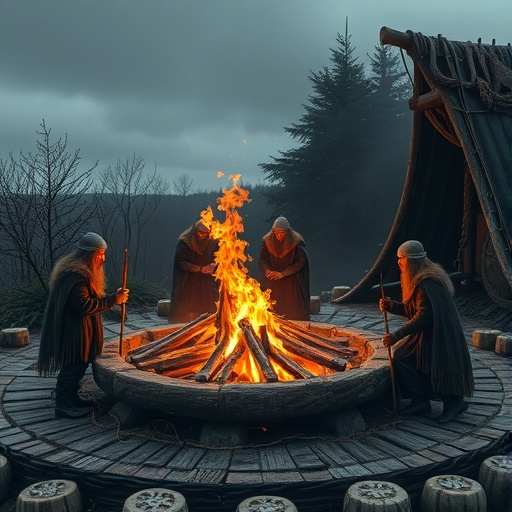
In a groundbreaking study, researchers have employed advanced analytical techniques to shed light on the cremation rituals associated with a Viking Age burial mound in Tyresta, South-Central Sweden. This research highlights a remarkable intersection of archaeology and science, revealing how cutting-edge technologies like ATR-FTIR (Attenuated Total Reflectance Fourier-Transform Infrared Spectroscopy) can unravel the complexities of ancient burial practices that have puzzled archaeologists for centuries.
The Tyresta burial mound, a significant archaeological site, represents the rich and enigmatic culture of the Vikings during the late 8th to early 11th century. It is known for its elaborate grave goods and cremation practices, reflecting the social structure and beliefs of the Norse people. However, the exact details of these ancient funerary customs have largely remained obscured, prompting an urgent need for innovative methodologies to study these artifacts comprehensively.
The researchers, led by M. Colmenares-Prado, focused on analyzing various materials recovered from the burial site. One of the most significant aspects of this study is the use of ATR-FTIR, a non-destructive technique that allows for the examination of organic and inorganic substances within the burial context. This technology is instrumental in providing insights into the chemical compositions of the remains, shedding light on the materials used in the cremation process.
Through ATR-FTIR, the team could identify specific spectral patterns associated with different organic compounds. This analytical method revealed the presence of distinctive chemical signatures linked to funeral pyres, allowing the researchers to construct a more detailed picture of the cremation rituals employed at Tyresta. Importantly, they acquired data that highlighted the diversity of organic materials, such as plant residues and animal fats, utilized in these ancient practices.
In addition to spectral analysis, the study also implemented analytical colorimetry, which provided another dimension to understanding the burial site’s cultural significance. By examining color properties in the artifacts, the researchers could determine the visual symbolism embedded within the cremation process. This approach offered valuable insights into how colors may have conveyed meaning or emotion during the Viking Age funerals, enriching our understanding of their aesthetic choices and cultural expressions.
Another remarkable facet of this research is its examination of mercury presence in the site. The team uncovered traces of mercury and discussed its potential role in Viking funerary practices. Mercury, often associated with ancient rituals, could point to symbolic connections believed to bridge the mortal and spiritual realms. Finding it in the context of cremation adds a layer of complexity to our comprehension of the practices and beliefs surrounding death in Viking society.
This multifaceted approach showcases the potential of combining various scientific methods to glean deeper insights into archaeological findings. By intertwining the chemical analysis with other aspects of material culture, the researchers created a holistic perspective that helps decode the relationship between burial practices and societal beliefs in Viking history. This study reaffirms the importance of interdisciplinary collaboration, emphasizing how modern technology can aid in the interpretation of historical narratives that have otherwise remained tantalizingly mysterious.
The findings from this research have profound implications not only for the study of Viking burial practices but also for broader archaeological discourse. By demonstrating the efficacy of ATR-FTIR and analytical colorimetry, the research team paves the way for future studies exploring similar sites across Scandinavia and beyond, potentially revealing hidden truths from other ancient cultures.
In conclusion, the investigation into the cremation rituals at the Tyresta burial mound represents a significant advancement in archaeological methodology. The integration of scientific techniques provides fresh perspectives on how the Vikings honored their dead and the meanings associated with their practices. As our understanding of ancient cultures continues to evolve, this study stands as a testament to the power of science in illuminating the past, enabling us to glean insights that enrich our understanding of human history and cultural heritage.
The meticulous work of Colmenares-Prado and colleagues exemplifies a growing trend within archaeology whereby innovative technologies and interdisciplinary approaches are transforming the lens through which we view ancient societies. As further research develops, one can only anticipate the revelations that such methods will continue to unveil, offering us a deeper apprehension of the complexities inherent in human cultural practices across time.
As we look ahead, this approach invites us to reconsider how we engage with archaeological evidence, emphasizing the need for continued exploration and technological adaptation in the quest to unlock the secrets of the past. The study serves as a clarion call for future researchers to harness similar techniques, ensuring the legacy of human cultures is preserved and understood for generations to come.
Subject of Research: Cremation rituals in Viking Age burial mounds.
Article Title: Using ATR-FTIR, analytical colour and mercury for unravelling the cremation ritual of Tyresta viking age burial mound (South-Central Sweden).
Article References:
Colmenares-Prado, M., Martínez Cortizas, A., Storå, J. et al. Using ATR-FTIR, analytical colour and mercury for unravelling the cremation ritual of Tyresta viking age burial mound (South-Central Sweden).
Archaeol Anthropol Sci 18, 33 (2026). https://doi.org/10.1007/s12520-026-02411-x
Image Credits: AI Generated
DOI: https://doi.org/10.1007/s12520-026-02411-x
Keywords: Viking Age, cremation rituals, ATR-FTIR, archaeological methodology, Tyresta burial mound.


