

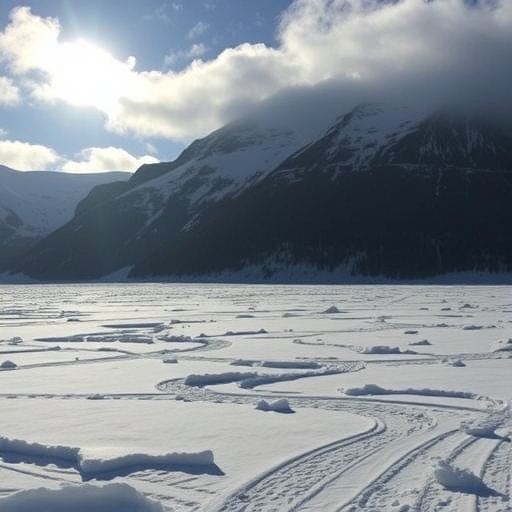
Throughout Earth’s long and tumultuous climatic history, few phenomena stand out as starkly and enigmatically as the episodes known to geologists as “Snowball Earth.” These extraordinary events, during which the entire planet’s surface—spanning from pole to equator—was enshrouded in ice, represent some of the most extreme climate states our planet has ever undergone. According to Trent Thomas, a planetary scientist at the University of Washington, Snowball Earth episodes encapsulate times when global temperatures plummeted below the freezing point, turning Earth into a near-complete icy orb. With recent research shedding new light on these ancient glaciations, scientists are diving deeper into the mechanisms driving this planet-wide freeze and its eventual, dramatic thaw.
The Snowball Earth events in focus occurred during the Cryogenian period, roughly 720 to 635 million years ago, consisting specifically of two notable glaciations separated by a significant duration discrepancy. Remarkably, the first of these ice ages endured for approximately 56 million years, while the subsequent event lasted a much shorter span of only around 4 million years. Understanding the root cause behind this staggering fourteenfold difference in length is not merely an academic curiosity; it has profound implications for unveiling the complex interactions that regulate Earth’s climate over geological timescales.
At the core of these investigations lies the Earth’s carbon cycle—a sophisticated global system acting as a climatic thermostat by modulating atmospheric carbon dioxide (CO2) levels. This natural balance of carbon input and removal shapes Earth’s climate by controlling greenhouse gas concentrations that trap heat in the atmosphere. During Snowball Earth episodes, however, this thermostat seemingly falters. The intricate feedback loops regulating carbon are disrupted when vast ice sheets spread toward the equator, drastically reducing the efficacy of typical carbon sinks. Understanding how these extreme states affect carbon cycling is crucial not only to reconstruct ancient climates but also to inform predictions of future climate trajectories under escalating anthropogenic influences.
The Snowball Earth phenomenon initiates when ice sheets, beginning at the poles, progressively expand towards lower latitudes. As the ice coverage grows, Earth’s albedo—the fraction of sunlight reflected back into space—rises in a reinforcing loop: glaciers reflect sunlight, causing temperatures to drop further and more ice to form. This runaway albedo feedback can push the planet into a stable ice-covered state. Despite this chilling regime, volcanic activity continues unabated, steadily pumping CO2 into the atmosphere. Over millions of years, volcanic CO2 accumulates, ultimately crossing a climatic tipping point that triggers a rapid and often catastrophic deglaciation, restoring warm conditions. Such post-Snowball periods are frequently recorded as some of the warmest and most dynamic chapters in Earth’s climatic history.
To decode why the Cryogenian Snowball events differed so drastically in duration, one must consider the components influencing atmospheric CO2 levels. Two processes dominate: the volcanogenic influx of CO2 and natural CO2 removal mechanisms, predominantly weathering. Weathering, the chemical breakdown of rocks which effectively sequesters carbon by locking it away in minerals, is paramount in offsetting volcanic emissions over geological timescales. Interestingly, while volcanism appears rather steady between these two glaciations, weathering rates may hold the key. Terrestrial weathering, which is the dominant carbon sink under normal conditions, would have been subdued during global ice coverage due to the ice sheets insulating rock surfaces, reducing rock-water interactions.
The research led by Thomas utilized sophisticated Earth system computer models to explore the possibility of replicating the fourteenfold difference in Snowball duration. By holding volcanic CO2 emissions constant in their simulations, investigators found that the only viable mechanism to produce such disparity was modulation of seafloor weathering rates. Unlike continental weathering, seafloor weathering involves the interaction of ocean water with oceanic basaltic crust, which continues beneath the ice-covered oceans. Thus, seafloor weathering could remain an active carbon sink during Snowball Earth conditions and significantly influence atmospheric CO2 drawdown and thus the length of global glaciation.
In modern Earth systems, seafloor weathering constitutes a relatively minor fraction of total CO2 removal compared to terrestrial weathering. However, the Cryogenian era reveals a contrasting scenario: elevated seafloor weathering rates possibly played an outsized role in determining the longevity of Snowball events. Prolonged glaciations correlate with intensified seafloor weathering, which would have accelerated CO2 sequestration, thereby tempering atmospheric greenhouse gas buildup and extending the frozen state. This revelation reconciles previous modeling challenges that struggled to naturally simulate extended Snowball Earth durations without invoking extreme improbabilities.
The underlying mechanism driving changes in seafloor weathering rates is hypothesized to relate to variations in the porosity of the oceanic crust. Porosity dictates the volume of seawater capable of circulating through the basaltic seabed and chemically attacking the rocks. Increased porosity facilitates more effective weathering processes and enhanced carbon sequestration. Such porosity could be influenced by the chemistry of seawater, particularly sulfate concentrations. Higher sulfate levels promote the precipitation of minerals like anhydrite and gypsum in hydrothermal vent systems, which can clog pore spaces in basalt, reducing water-rock interaction and thereby diminishing weathering rates.
Thomas emphasizes the complexity and interplay of these chemical and physical Earth system components, acknowledging that these findings are a starting point to dismantle the enigmas that have long surrounded Snowball Earth events. The current models offer a cohesive explanation for the previously contradictory Snowball durations, integrating seafloor weathering as a crucial player which had been largely overlooked. However, this work invites further experimental, observational, and theoretical research to validate how exactly these early oceanic chemical environments evolved and interacted with global climate feedbacks over millions of years.
Beyond their geological intrigue, insights gained from Snowball Earth investigations underscore the delicate balance inherent in Earth’s carbon cycle and its sensitivity to external and internal perturbations. By understanding the dynamic processes that governed past extreme climates, scientists improve their ability to forecast future changes in an era dominated by human-induced greenhouse gas emissions. This is crucial as it illustrates not only how Earth has recovered from catastrophic icy states but also the factors that regulate the switch between frozen and temperate worlds.
Moreover, the study highlights the importance of considering less dominant geochemical processes, such as seafloor weathering, in global climate models. As Earth’s systems are inherently complex and interconnected, recognizing the roles of multiple carbon sinks and their potential shifts under varying conditions will refine predictions of both ancient and contemporary climate phenomena. The investigation into Snowball Earth durations thus contributes substantially to Earth Science, shedding light on the past while bearing relevance for our planet’s future.
In summary, through an intricate blend of geological evidence, geochemical principles, and innovative modeling, this recent study demystifies one of Earth’s greatest climate puzzles—the contrasting lengths of Cryogenian Snowball Earth events. It places seafloor weathering at the forefront of this narrative, offering a robust, self-consistent mechanism to explain the glaciations’ durations. The research opens new avenues for understanding planetary climate regulation and reinforces the intricate linkages between Earth’s lithosphere, hydrosphere, and atmosphere over geological time.
Subject of Research: Snowball Earth glaciations and seafloor weathering’s impact on their durations
Article Title: Seafloor weathering can explain the disparate durations of Snowball glaciations
News Publication Date: 2-Dec-2025
Web References: https://pubs.geoscienceworld.org/gsa/geology/article/doi/10.1130/G53722.1
References: Thomas, T.C. et al. (2025) “Seafloor weathering can explain the disparate durations of Snowball glaciations”, Geology, vol. 54, no. 2, doi:10.1130/G53722.1.
Keywords: Snowball Earth, Cryogenian glaciations, carbon cycle, seafloor weathering, geological climate events, Earth system modeling, volcanic CO2 emissions, global ice ages.


