

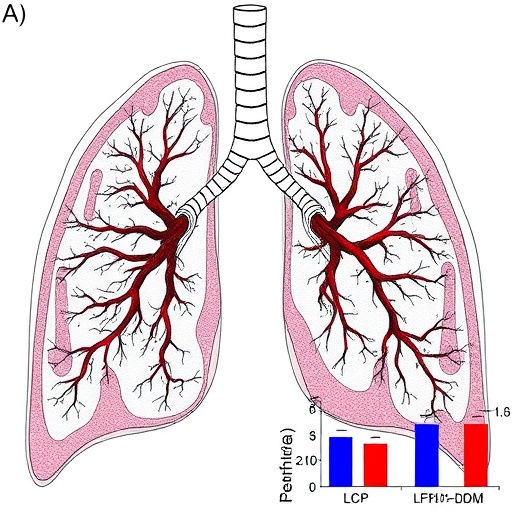
Silica-induced pulmonary fibrosis is a critical health issue that has garnered increasing attention among researchers and medical professionals. Recent findings from a study led by Yin et al. delve into the molecular underpinnings of this condition, revealing how m^6A-mediated upregulation of DEC1 plays a pivotal role in the disease’s progression. This research contributes to a better understanding of pulmonary fibrosis, a debilitating disease characterized by the scarring of lung tissue, leading to serious respiratory complications.
The study highlights the crucial involvement of the DEC1 protein in the pathogenesis of silica-induced pulmonary fibrosis. DEC1, also known as Differentially Expressed in Chondrocytes 1, is a transcription factor that has been identified as an important mediator in various biological processes. Among its many roles, DEC1 regulates cellular responses to stress and inflammation, making it a key player in fibrotic diseases. Understanding how DEC1 functions in the context of silica exposure unveils new pathways that can potentially be targeted for therapeutic intervention.
m^6A methylation, a prevalent form of RNA modification, is emerging as a critical regulator of gene expression. This study presents compelling evidence of how m^6A modification of RNA contributes to the upregulation of DEC1 in lung cells exposed to silica. The research team employed advanced molecular techniques to demonstrate that the presence of m^6A marks on DEC1 transcripts enhances their stability and translation, ultimately leading to increased DEC1 protein levels within the cells. This finding underscores the importance of post-transcriptional regulation in the development of pulmonary fibrosis.
The signaling pathways implicated in this process are equally significant. The study’s findings suggest that the upregulation of DEC1 is closely linked with the activation of the PI3K/Akt signaling pathway. This well-known pathway is integral to numerous cellular functions, including growth, survival, and metabolism. In the context of silica-induced pulmonary fibrosis, the aberrant activation of the PI3K/Akt pathway promotes fibrotic processes, exacerbating tissue scarring and lung dysfunction. By elucidating this signaling cascade, the research offers a clearer picture of the molecular interactions that drive disease progression.
Moreover, the study provides insights into the potential for targeted therapies that could intervene at various stages of this signaling pathway. The identification of DEC1 as a critical player opens up avenues for developing pharmacological approaches aimed at modulating its activity. Potential therapeutic strategies could include small molecules designed to inhibit DEC1 or agents that disrupt its interaction with the m^6A methylation machinery. Such innovations could pave the way for effective treatments for pulmonary fibrosis, addressing a significant unmet medical need.
The implications of this research extend beyond pulmonary fibrosis, as the m^6A modification and its regulatory effects on gene expression are relevant in other fibrotic diseases and various forms of cancer. As scientists continue to decipher the complex roles of RNA modifications, a broader understanding of their implications may lead to novel strategies in treating a range of chronic conditions. This highlights the importance of exploring RNA biology as a frontier in biomedical research.
In addition to its biological significance, the study also emphasizes the urgency of addressing silica exposure in occupational and environmental settings. Silica dust, commonly encountered in industries such as construction and mining, poses a significant risk to workers’ health. The research reinforces the need for protective measures and regulations to limit exposure to silica and mitigate the risk of developing pulmonary fibrosis. Efforts to improve workplace safety protocols can have far-reaching consequences in preventing this debilitating disease.
The team’s comprehensive approach combined in vitro experiments with animal models, providing robust evidence supporting their findings. The utilization of various methodologies allows for an enhanced understanding of how silica induces changes at the cellular level. These model systems serve as essential tools for testing hypotheses and validating the mechanistic pathways identified in the study, establishing a strong foundation for future research endeavors.
Furthermore, as the research community continues to explore the nuances of RNA modifications like m^6A, this study serves as a catalyst for expanding the scope of investigation into similar modifications and their impact on gene regulation. Understanding how these modifications influence various biological processes can lead to groundbreaking discoveries in molecular biology and medicine. The researchers call for more investigations into the roles of other RNA modifications and their potential contributions to disease, which could revolutionize strategies for therapeutic development.
As we move toward a new era of precision medicine, the intersection between basic research and clinical applications becomes increasingly important. The findings from Yin et al. not only enrich our knowledge of m^6A modifications in pulmonary fibrosis but also inspire future explorations into the therapeutic potential of targeting DEC1 and the PI3K/Akt pathway for respiratory diseases. By bridging the gap between laboratory discoveries and clinical advancements, researchers aim to implement effective intervention strategies that improve patient outcomes and quality of life.
In conclusion, the research conducted by Yin, Yang, Xie, and colleagues presents significant advancements in understanding the molecular mechanisms underlying silica-induced pulmonary fibrosis. By revealing the role of m^6A-mediated DEC1 upregulation and its association with the PI3K/Akt signaling pathway, the study lays the groundwork for future innovations in treatment. It emphasizes the urgent need for continued research into the interplay of environmental exposures, gene regulation, and disease mechanisms. Potential collaborations among scientists, clinicians, and public health officials are essential for developing comprehensive strategies to address silica exposure and its associated health risks.
Ultimately, as the field of molecular medicine develops, studies such as this are pivotal in shaping our understanding of complex diseases such as pulmonary fibrosis and provide essential insights that may lead to real-world applications. The ongoing commitment to unraveling the mysteries of genetic regulation and its repercussions for human health reinforces the potential for transformative progress in medicine and public health.
Subject of Research: Silica-induced pulmonary fibrosis and its molecular mechanisms.
Article Title: m^6A-mediated DEC1 upregulation facilitates silica-induced pulmonary fibrosis via PI3K/Akt signaling pathway.
Article References:
Yin, H., Yang, S., Xie, Y. et al. m6A-mediated DEC1 upregulation facilitates silica-induced pulmonary fibrosis via PI3K/Akt signaling pathway. J Transl Med (2025). https://doi.org/10.1186/s12967-025-07629-2
Image Credits: AI Generated
DOI: 10.1186/s12967-025-07629-2
Keywords: Silica exposure, pulmonary fibrosis, m^6A modification, DEC1, PI3K/Akt signaling, gene regulation, therapeutic targets.


