

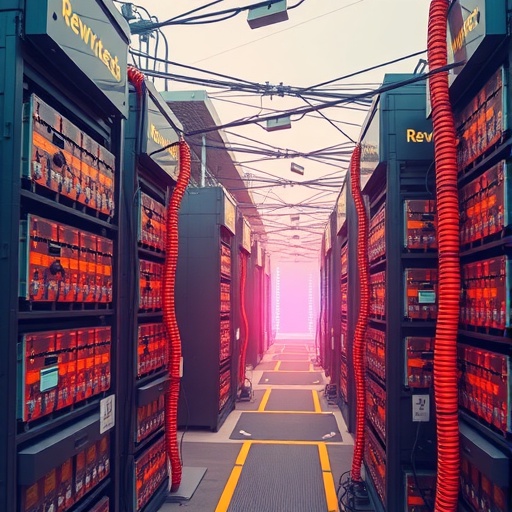
In the dazzling age of artificial intelligence (AI), our urban landscapes shimmer with the promise of smart traffic systems, intelligent public services, and interactive digital environments. The allure of AI is frequently visualized through sleek interfaces—smartphones lighting up with real-time updates, homes adjusting to our presence, or city streets dynamically responding to traffic needs. Yet beneath this surface of urban sophistication lies an often-overlooked reality: the physical backbone of AI-driven cities is concentrated in vast data centers, enormous facilities strategically placed at the peripheries of metropolises. These windowless monoliths hum incessantly, fueled by immense energy consumption, silently orchestrating the flow of digital intelligence that shapes modern urban life. Understanding and addressing the implications of these data centers is paramount if we aspire to build cities rooted in fairness, sustainability, and democratic agency.
At the heart of contemporary AI infrastructures, data centers serve as more than mere storage hubs or processing nodes. They represent the critical computational powerhouses where algorithms churn through immense datasets, delivering the rapid insights powering urban AI applications. Unlike the ephemeral digital clouds imagined by many users, these facilities are deeply tangible, physically embedded, and energy-intensive. Their placement, design, and operational patterns directly influence local economies, resource allocation, and even social dynamics across cities. Ignoring this integral connection perpetuates the myth of invisibility surrounding the digital infrastructure that shapes our daily urban experiences, ultimately eroding transparency and accountability in smart city development.
Data centers’ energy appetite is staggering. To maintain continuous operation and prevent overheating of servers running intense AI computations, vast quantities of electricity are consumed around the clock. This energy demand often translates into burdens on regional power grids, increased carbon emissions, and complex trade-offs in urban sustainability goals. The environmental footprint of these facilities challenges the green narratives frequently associated with digital innovation. As urban planners and policymakers embrace AI-driven smart systems, a critical reckoning with the environmental costs embedded in the computational substratum is urgently needed. Sustainable design strategies, including renewable energy integration and innovative cooling technologies, must become standard practices to reconcile AI’s promise with ecological prudence.
Moreover, data centers exert considerable influence over urban economic geographies. Their construction and operation attract significant capital investment, stimulate job creation in specialized technical fields, and reshape regional industrial profiles. However, these benefits are often unevenly distributed. Peripheral city zones hosting large data centers may experience economic marginalization or social exclusion due to limited integration with the surrounding community or infrastructural disparities. Additionally, the siting of these centers frequently aligns with political and economic power structures, subtly directing digital development trajectories. In this way, the physical infrastructure of AI not only underpins technical capabilities but also reconfigures urban power relations and investment priorities.
The question of control over data centers intersects with broader democratic concerns about the governance of urban AI. The concentration of digital infrastructure in private or semi-private hands can undermine public oversight and perpetuate asymmetries in information access and decision-making. When a handful of corporations or entities manage the platforms that govern urban services—from traffic flow to emergency response—citizens may lose agency over critical aspects of their environment. Transparent frameworks and participatory models for managing these infrastructural assets are essential to fostering equitable urban AI ecosystems. Without such shifts, technological advances risk exacerbating existing inequalities and eroding civic trust.
Technological advances in server hardware and network architecture continually redefine the capabilities and configurations of data centers. Innovations such as edge computing, which decentralize certain processing tasks closer to end-users, offer potential pathways to alleviate some pressures on centralized data centers. However, these approaches also raise new challenges for infrastructure coordination, data privacy, and cybersecurity. Understanding the evolving landscape of AI infrastructure requires bridging insights from computer science, urban planning, and policy studies. This interdisciplinary perspective is crucial to designing resilient, adaptive urban digital ecosystems that balance efficiency, security, and inclusivity.
Cooling remains a critical engineering challenge within data centers. Servers generate vast heat loads, necessitating sophisticated thermal management systems. Traditional air-cooling methods consume substantial electricity, prompting research into advanced alternatives like liquid cooling and immersion technologies. These techniques promise enhanced energy efficiency and density but require significant redesigns and capital investment. Coupled with innovative renewable energy sourcing, such advancements could markedly reduce the environmental impact of data center operations. These engineering solutions are not purely technical but embody a commitment to integrating sustainability principles into the fundamental infrastructure of urban AI.
The spatial footprint of data centers also impacts urban land use and real estate markets. Facilities require extensive land parcels, often on city fringes, to accommodate sprawling infrastructure, security perimeters, and backup systems. This land demand intersects with regional planning priorities, raising concerns about habitat disruption, urban sprawl, and infrastructural balancing. Cities must carefully navigate these tensions, ensuring that data center development harmonizes with broader ecological and social objectives. Proactive zoning policies and community engagement can help mitigate adverse effects while harnessing data centers as catalysts for innovation districts and local economic revitalization.
The relentless pace of urban AI deployment amplifies the importance of infrastructural resilience. Data centers are vulnerable to a spectrum of risks—from natural disasters like floods and earthquakes to cyber-attacks and supply chain disruptions. Ensuring uninterrupted AI services for critical urban functions requires robust contingency planning, distributed architecture, and ongoing investment in security and maintenance. This resilience imperative introduces layers of complexity in urban governance, blending technological sophistication with crisis management strategies. Intelligent urban AI cannot be decoupled from the reliability and security of its foundational infrastructure.
Social dimensions of data center siting and operation warrant careful attention. Communities proximate to these facilities may experience environmental justice issues, including noise pollution, water resource strain, and altered microclimates due to waste heat discharge. Engaging with affected residents and stakeholders can surface concerns, foster mutual understanding, and guide more socially sensitive infrastructure planning. Transparency about energy sourcing, emissions, and operational practices is critical in building public trust and legitimacy for ongoing data center expansion within urban regions.
Emerging policy frameworks increasingly seek to integrate data center governance into broader urban sustainability and equity agendas. Municipalities are exploring regulatory approaches encompassing energy efficiency standards, renewable energy mandates, and community benefit agreements linked to data center projects. International coordination around data center carbon footprints and cross-border data flows also shapes local decision-making. Policymakers must navigate the complex interplay of technological innovation, economic imperatives, and social demands to create enabling environments where urban AI infrastructure advances serve collective well-being.
Citizen engagement and participatory design hold transformative potential for reframing the relationship between data centers and urban life. By demystifying the physical underpinnings of AI, fostering public dialogue, and incorporating diverse voices in planning and oversight, cities can reclaim agency over digital futures. These initiatives align with broader movements toward open data, algorithmic transparency, and responsible AI governance. In this vision, data centers do not remain isolated technological entities but become integral components of democratic urban ecosystems, responsive to the values and needs of their inhabitants.
Future urban AI landscapes will hinge on the strategic integration of infrastructure, policy, and community. Building smart cities that are truly intelligent requires confronting the tangible realities of where and how AI operates. The ‘cloud’ must be reimagined not as an ethereal entity but as a concrete, visible, and accountable part of the urban fabric. By addressing the environmental, social, and political dimensions of data centers, we equip ourselves to navigate the challenges and unlock the opportunities of AI-enhanced urban futures with foresight and equity.
In the final analysis, the promise of AI to revolutionize urban life depends fundamentally on our willingness to engage with the material infrastructures that enable it. Data centers, those often-hidden giants at the edge of cities, are not simply technical installations but critical arenas where technology, society, and environment intersect. Their stewardship will define how fairly and sustainably the digital age serves urban populations in the decades to come. Recognizing and confronting their power is not optional but imperative for any city committed to inclusive and intelligent futures.
Subject of Research:
Data centers as essential infrastructure supporting urban artificial intelligence systems.
Article Title:
Datacenters as core infrastructure of urban AI.
Article References:
Tiwari, A. Datacenters as core infrastructure of urban AI. Nat Cities (2026). https://doi.org/10.1038/s44284-026-00421-3
Image Credits:
AI Generated
DOI:
https://doi.org/10.1038/s44284-026-00421-3


