

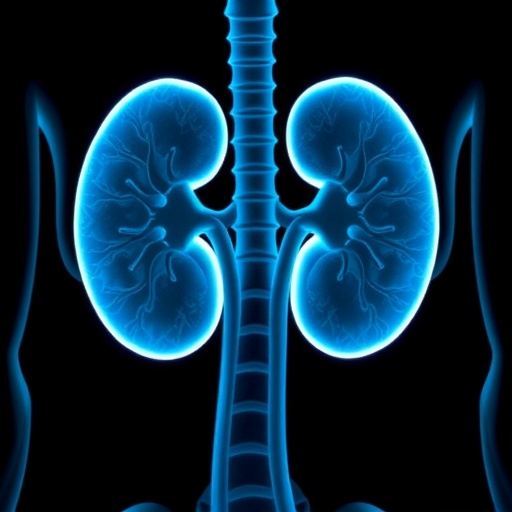
In a groundbreaking study that promises to reshape pediatric nephrology, researchers have unveiled compelling evidence regarding the prognostic utility of cystatin C in children afflicted with urologic malformations leading to chronic kidney disease (CKD). This investigation delves into the nuanced relationship between cystatin C levels and renal function deterioration, offering fresh diagnostic clarity for a demographic historically challenged by variable disease progression and complex clinical presentations.
Chronic kidney disease in pediatric patients often manifests as a gradual, insidious decline in renal function, frequently rooted in congenital anomalies of the urinary tract. Such urologic malformations can precipitate progressive nephron loss and fibrosis, eventually compromising global kidney function. Traditional biomarkers like serum creatinine have long served the diagnostic community but are hampered by considerable variability in muscle mass and other confounding factors, especially in growing children. Consequently, the quest for more reliable, sensitive biomarkers has been intense and now, cystatin C is emerging as a frontrunner.
Cystatin C, a low molecular weight cysteine protease inhibitor synthesized by all nucleated cells at a constant rate, has been increasingly examined for its potential superiority over creatinine. Unlike creatinine, its serum levels are less influenced by muscle mass, diet, or age, making it particularly attractive for evaluating renal function in children. These properties predispose cystatin C to be an ideal biomarker to track subtle changes in glomerular filtration rate (GFR), even in early stages of kidney impairment.
The research led by Lin, SY., Wen, YC., and Weng, YH. takes a comprehensive approach by enrolling pediatric patients with documented urologic malformations. Through a meticulous longitudinal design, serum cystatin C levels were monitored alongside traditional renal biomarkers, imaging studies, and clinical outcomes. The goal was to establish a correlation between cystatin C concentrations and the onset, progression, and severity of CKD in this sensitive and diverse patient population.
Advanced statistical modeling revealed a robust and consistent association between elevated cystatin C and declining kidney function, independent of age, sex, and the specific type of urologic anomaly. Furthermore, cystatin C demonstrated a higher sensitivity and earlier elevation compared to creatinine levels, signifying its potential as an early warning indicator. These findings concur with mounting evidence that cystatin C captures dynamic changes in renal clearance that creatinine often misses until more extensive damage has occurred.
This enhanced sensitivity bears significant clinical implications. Early identification of declining renal function can prompt timely intervention, potentially halting or slowing progression to end-stage renal disease. This is particularly crucial for pediatric patients, where preserving renal reserve can impact lifelong health, growth, and quality of life. The ability to stratify risk more accurately using cystatin C could revolutionize patient monitoring and individualized treatment planning.
Importantly, the study also examined cystatin C’s predictive power for long-term outcomes. Patients with persistently elevated cystatin C levels exhibited faster CKD progression and were more likely to require renal replacement therapy at younger ages. These prognostic capabilities were validated across multiple centers, enhancing the generalizability of the findings and suggesting a paradigm shift in pediatric nephrology protocols.
In an era where precision medicine is increasingly emphasized, biomarkers that integrate molecular biology with clinical application are invaluable. Cystatin C’s inherent biochemical characteristics allow it to reflect glomerular filtration rate more directly than traditional markers, furnishing clinicians with a more accurate and timely snapshot of renal health. Such precision is vital in pediatric urology, where malformations range from mild anatomical deviations to complex congenital disorders with variable clinical trajectories.
From a technical perspective, the assay methodologies for cystatin C have evolved to become highly reproducible and accessible. Immunonephelometric and immunoturbidimetric techniques enable rapid and precise quantification in clinical laboratories. The researchers emphasized standardization and calibration across testing platforms, addressing previous concerns about inter-lab variability. This methodological rigor strengthens the study’s conclusions and supports cystatin C’s implementation in routine clinical workflows.
Beyond its diagnostic prowess, cystatin C also represents a window into the pathophysiology of CKD in children. Elevated cystatin C levels might reflect not only diminished filtration but also subtle alterations in renal tubular cell function and systemic inflammatory states common in chronic renal impairment. Elucidating these pathways could open avenues for targeted therapies that go beyond symptomatic management.
While the study focuses on pediatric urologic malformations, the implications extend to broader pediatric populations at risk for CKD, including those with metabolic or hereditary kidney diseases. The adoption of cystatin C-based monitoring strategies could harmonize assessment across diverse etiologies, fostering early detection and uniform risk stratification.
Challenges remain, including cost considerations and assay availability in resource-limited settings. However, the clinical benefits detailed in this research underscore the necessity of integrating cystatin C measurement into standard pediatric nephrology care, especially for high-risk cohorts. Clinicians and healthcare systems must weigh these benefits against logistic hurdles to optimize patient outcomes.
Future research directions prompted by this work could explore combining cystatin C with emerging biomarkers such as urinary neutrophil gelatinase-associated lipocalin (NGAL) or kidney injury molecule-1 (KIM-1) for an even more refined prognostic panel. Additionally, integrating cystatin C trends with advanced imaging modalities or genetic profiling might yield predictive algorithms with unprecedented accuracy.
In summary, this pioneering investigation provides compelling evidence for cystatin C’s prognostic value in chronic kidney disease complicating pediatric urologic malformations. By addressing critical gaps in early detection and risk assessment, the findings pave the way for more personalized and effective management strategies. As pediatric nephrology embraces these insights, improved clinical outcomes and enhanced quality of life for affected children could soon become reality.
The collective effort of Lin and colleagues heralds a new chapter in nephrology biomarker research and clinical application. Their work exemplifies how rigorous, translational research can forge paths to better diagnostics and ultimately, better health for vulnerable pediatric patients facing the lifelong challenges of chronic kidney disease.
Subject of Research: Prognostic value of cystatin C for chronic kidney disease in pediatric patients with urologic malformations.
Article Title: Prognostic value of cystatin C for chronic kidney disease in pediatric urologic malformations.
Article References:
Lin, SY., Wen, YC., Weng, YH. et al. Prognostic value of cystatin C for chronic kidney disease in pediatric urologic malformations. Pediatr Res (2026). https://doi.org/10.1038/s41390-025-04742-2
Image Credits: AI Generated
DOI: 10.1038/s41390-025-04742-2
Keywords: cystatin C, chronic kidney disease, pediatric nephrology, urologic malformations, glomerular filtration rate, biomarkers, renal function, pediatric urology


