
Wednesday, January 7, 2026
Science
No Result
View All Result
  • Login
  • HOME
  • SCIENCE NEWS
  • CONTACT US
  • HOME
  • SCIENCE NEWS
  • CONTACT US
No Result
View All Result
Scienmag
No Result
View All Result
Home Science News Social Science

‘Cracking the Bro Code’ in computing cultures

April 16, 2024
in Social Science
Reading Time: 2 mins read
0
‘Cracking the Bro Code’ in computing cultures
66
SHARES
603
VIEWS
Share on FacebookShare on Twitter
ADVERTISEMENT

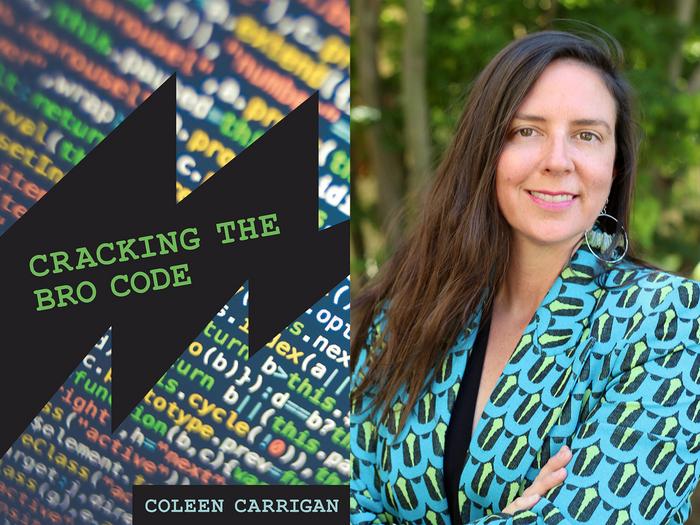
The University of Virginia’s School of Engineering and Applied Science, in collaboration with the Massachusetts Institute of Technology Press, is pleased to present “Cracking the Bro Code,” by Coleen Carrigan, an associate professor of science, technology, and society.

blank

Credit: UVA Engineering

The University of Virginia’s School of Engineering and Applied Science, in collaboration with the Massachusetts Institute of Technology Press, is pleased to present “Cracking the Bro Code,” by Coleen Carrigan, an associate professor of science, technology, and society.

Uncovering Sexism and Racism in Tech

Carrigan’s work is more than just a book; it’s a bold ethnographic journey that dives deep into the often overlooked yet pervasive issues of sexism and racism thriving within contemporary computing cultures. As an associate professor and former senior manager in Big Tech, Carrigan brings a unique perspective on harassment in tech, combining scholarly rigor with lived experiences.

In “Cracking the Bro Code,” Carrigan unveils the harsh realities faced by women, nonbinary individuals and people of color within the tech industry. Drawing from her own encounters and observations, she meticulously outlines the systemic challenges that act as formidable barriers to broadening participation in computing fields.

The Need for Social Purpose

One of the key arguments Carrigan makes is the indispensable role of embracing a social purpose within the tech realm. Computing leaders promise that their platforms and products serve the public good, but Carrigan shares views from inside the computing workplace that invite skepticism about computing’s service to humanity. She argues that this failed promise is a significant reason why the field lags behind other STEM fields in welcoming and retaining a wide range of practitioners.

She skillfully intertwines discussions on altruism, race, gender and computing, advocating for a transformative shift from a culture of hostility and exclusion to one that champions inclusivity and acceptance. 

By fostering an environment that is not only inclusive but also welcoming, Carrigan highlights the immense potential for positive impacts on both technology production and its societal applications.

The Power of Inclusivity

Through her compelling narrative, she invites readers to envision a future where inclusivity and justice are not just aspirations but fundamental pillars of computing’s workplace culture and its policies and practices.

“Cracking the Bro Code” serves as a poignant call to action, challenging us to dismantle existing barriers, hold computing corporations accountable to democratic values, and forge a future where women of color, white women, and nonbinary people are offered opportunities, resources and respect to perfect the skills required for leadership in this century.

Carrigan’s empathetic tone, combined with her intimate portraits of workers and students historically disenfranchised from computing in the United States, make this book not just a scholarly endeavor but a compelling narrative that inspires institutional change.



Share26Tweet17
Previous Post

University of Exeter to lead groundbreaking international cyber law project

Next Post

Alzheimer’s disease progresses faster in people with Down syndrome

Related Posts

blank
Social Science

How H-1B Lottery Fuels Business Diversity

January 6, 2026
blank
Social Science

Big Data Insights: Transforming Educational Psychology

January 6, 2026
blank
Social Science

Understanding Women’s Aversive Rape Fantasies: A Threat Perspective

January 6, 2026
blank
Social Science

Nature Exposure Significantly Lowers Self-Reported Pain

January 6, 2026
blank
Social Science

Second-Gen Antipsychotics Impact Metabolic Health in Schizophrenia

January 6, 2026
blank
Social Science

Whole-Brain Connectivity Predicts Psychosis Risk, Function

January 6, 2026
Next Post
Patient with Down syndrome getting scan

Alzheimer’s disease progresses faster in people with Down syndrome

  • Mothers who receive childcare support from maternal grandparents show more parental warmth, finds NTU Singapore study

    Mothers who receive childcare support from maternal grandparents show more parental warmth, finds NTU Singapore study

    27596 shares
    Share 11035 Tweet 6897
  • University of Seville Breaks 120-Year-Old Mystery, Revises a Key Einstein Concept

    1007 shares
    Share 403 Tweet 252
  • Bee body mass, pathogens and local climate influence heat tolerance

    657 shares
    Share 263 Tweet 164
  • Researchers record first-ever images and data of a shark experiencing a boat strike

    525 shares
    Share 210 Tweet 131
  • Groundbreaking Clinical Trial Reveals Lubiprostone Enhances Kidney Function

    510 shares
    Share 204 Tweet 128
Science

Embark on a thrilling journey of discovery with Scienmag.com—your ultimate source for cutting-edge breakthroughs. Immerse yourself in a world where curiosity knows no limits and tomorrow’s possibilities become today’s reality!

RECENT NEWS

  • Self-Control, Meaning, and GenAI Impact Academic Engagement
  • Exploring Kewda Research: A Bibliometric and Content Review
  • Sweet Potato Leaf Silage Boosts Growth in Pigs
  • Climate Change Fuels Persistent River Heatwaves Globally

Categories

  • Agriculture
  • Anthropology
  • Archaeology
  • Athmospheric
  • Biology
  • Blog
  • Bussines
  • Cancer
  • Chemistry
  • Climate
  • Earth Science
  • Marine
  • Mathematics
  • Medicine
  • Pediatry
  • Policy
  • Psychology & Psychiatry
  • Science Education
  • Social Science
  • Space
  • Technology and Engineering

Subscribe to Blog via Email

Enter your email address to subscribe to this blog and receive notifications of new posts by email.

Join 5,193 other subscribers

© 2025 Scienmag - Science Magazine

Welcome Back!

Login to your account below

Forgotten Password?

Retrieve your password

Please enter your username or email address to reset your password.

Log In
No Result
View All Result
  • HOME
  • SCIENCE NEWS
  • CONTACT US

© 2025 Scienmag - Science Magazine

Discover more from Science

Subscribe now to keep reading and get access to the full archive.

Continue reading