

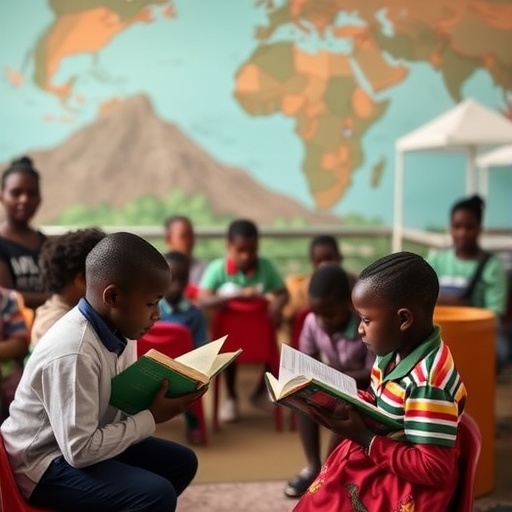
In a sobering analysis of the impact of the COVID-19 pandemic on education in South Africa, researchers Böhmer and Wills shine a light on the stark inequalities that have surfaced in reading outcomes. Utilizing data from the Progress in International Reading Literacy Study (PIRLS) for 2016 and 2021, their research highlights how the disruption caused by the pandemic has exacerbated existing educational disparities. The findings underscore the urgent need for strategic intervention to ensure that all children, regardless of their socioeconomic background, have equitable access to quality education and resources.
Before COVID-19 struck, South Africa was already grappling with significant challenges in its educational landscape. The PIRLS data from 2016 painted a troubling picture, with many learners performing below the international benchmarks for reading proficiency. The onset of the pandemic in early 2020 further complicated these issues, resulting in prolonged school closures and a shift to remote learning that was not effective for many students, particularly those in underprivileged areas. The research reveals a concerning trend: the pandemic has widened the gap between students from affluent families and those from disadvantaged backgrounds.
As schools transitioned to online learning, the disparities in access to technology became glaringly evident. Families with resources could facilitate home learning with internet access and physical learning materials, while students from low-income households often struggled with inadequate resources. This lack of access to technology resulted in a significant learning loss, particularly among younger students still developing foundational literacy skills. The PIRLS 2021 data illustrates this disparity, as the reading assessments revealed a measurable decline in performance compared to the previous assessment cycle.
The researchers emphasize that the inequity in educational outcomes is not just a reflection of the pandemic’s immediate impact but also a long-standing issue rooted in the systemic inequalities that have historically plagued South Africa’s education system. The contrast between rich and poor communities in terms of educational opportunities is a microcosm of broader societal divides, resulting in students’ divergent trajectories based on economic status. It is essential to recognize that these reading outcomes are more than mere statistics; they represent the future potential of children, which is being thwarted by circumstances beyond their control.
In another layer of complexity, Böhmer and Wills discuss the psychological effects of the pandemic on young learners. Prolonged isolation and the anxiety surrounding health issues have a profound impact on children’s ability to engage with learning materials effectively. The emotional and psychological toll of the pandemic cannot be understated, as it hinders children’s motivation to read and learn. Assessing literacy outcomes must take into consideration the emotional landscape these children are navigating, as this psychological dimension is critical to understanding educational performance post-pandemic.
The disparities revealed in the researchers’ findings could have long-term implications for South Africa’s economic future. A poorly educated youth population leads to weak economic growth, as literacy is fundamental to employability and economic participation. The study points out that if these inequities in learning are not addressed, South Africa risks perpetuating a cycle of poverty, where marginalized communities remain trapped in a state of limited access to quality education, resulting in diminished opportunities for generations to come.
Considering the significance of these findings, Böhmer and Wills advocate for comprehensive policy responses aimed at bridging the educational divide. The researchers suggest that targeted interventions are necessary, especially for the most disadvantaged learners, to recover lost learning and return to trajectories of progress. This may include investment in infrastructure for remote learning, provision of resources and materials, and psychological support for students navigating the stressors imposed by the pandemic.
Moreover, the role of teachers in this recovery process is paramount. Teacher training programs should be bolstered to equip educators with strategies for addressing the unique challenges posed by disrupted learning experiences. By fostering an environment that prioritizes pedagogical adaptation in response to students’ varied needs, education authorities can spearhead efforts to elevate reading outcomes across the board.
Collaboration between government and non-governmental organizations is also crucial in this endeavor. By pooling resources and expertise, stakeholders can design and implement integrated approaches to address the multifaceted issues revealed by the pandemic. Increased community engagement is necessary to ensure that the voices of those directly affected, including students and parents, are heard in the formulation of effective educational policies.
The intricate relationship between socio-economic status and educational outcomes is a crucial focal point in this discussion. As the authors highlight, education policy must address both the immediate recovery from the pandemic and the systemic inequalities that have historically marginalized certain groups. Achieving equity in reading outcomes requires a long-term commitment to reform that transcends the impulse to merely restore the pre-pandemic status quo.
At the heart of this research is the call for action, highlighting that addressing educational inequalities in South Africa is not merely a policy issue but rather a moral imperative. The implications of neglecting this issue extend well beyond the classroom, influencing the fabric of society itself. Ensuring that all children have access to quality education is key to fostering a more equitable and prosperous future for South Africa as a whole.
In conclusion, the findings of Böhmer and Wills represent a clarion call for immediate and sustained action to rectify the educational inequities laid bare by the pandemic. Their research presents not only a troubling assessment of the current landscape of reading outcomes in South Africa but also a roadmap for change. The post-COVID era offers an opportunity to reshape the educational experience for the nation’s children, providing hope that the lessons learned from this crisis can inform a brighter future for generations to come.
As we move forward, the challenge remains: will society rise to the occasion and tackle the enduring inequalities in education, or will we allow them to deepen further, hindering not only individual potential but also the collective progress of South Africa as a nation? Only time will tell, but the urgency of the need for action has never been clearer.
Subject of Research: Educational Inequality in South Africa
Article Title: COVID-19 and inequality in reading outcomes in South Africa: PIRLS 2016 and 2021
Article References:
Böhmer, B., Wills, G. COVID-19 and inequality in reading outcomes in South Africa: PIRLS 2016 and 2021. Large-scale Assess Educ 13, 24 (2025). https://doi.org/10.1186/s40536-025-00256-9
Image Credits: AI Generated
DOI: https://doi.org/10.1186/s40536-025-00256-9
Keywords: COVID-19, Educational Inequality, Reading Outcomes, South Africa, PIRLS Report, Literacy, Socioeconomic Status, Teacher Training, Policy Intervention


