

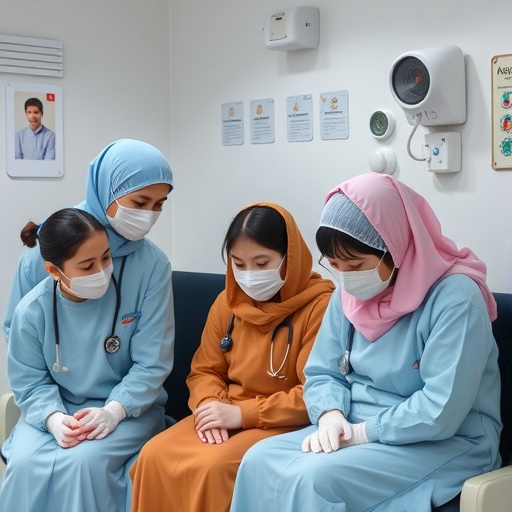
The COVID-19 pandemic has permeated nearly every aspect of life, leaving no corner of the globe untouched. Among the myriad of studies examining the psychological ramifications of this unprecedented health crisis, a recent research article sheds light on a notably vulnerable demographic: the families of Iranian nurses. This group has been uniquely affected due to their frontline roles in combating the virus while navigating their own concerns and anxiety related to the health and safety of loved ones. The study, led by Bahrami, Heidarifard, Momeni, and colleagues, dives deep into the anxiety levels experienced by these families, offering critical insights into the intersection of healthcare, mental health, and the effects of a global pandemic.
As COVID-19 spread rapidly across Iran, the nation saw healthcare professionals thrust into high-stress situations. Nurses, in particular, became the backbone of the medical response teams, often working long hours in challenging environments. Yet, while they tended to the sick, their families grappled with the emotional burden of uncertainty. They faced a duality of worry—concern for their own health and that of their nurse relatives, who were consistently exposed to an unpredictable and dangerous virus. This study endeavors to quantify that anxiety and examine its ramifications on family units.
The research adopted a cross-sectional design, targeting families of registered nurses involved in the fight against COVID-19. This method allowed for a snapshot assessment of anxiety symptoms prevalent in these families at a specific time. Utilizing well-established psychological assessment tools, the research team collected data on anxiety levels, looking for patterns and correlations that would provide a deeper understanding of their mental health challenges.
Participants were asked to reflect on their emotional states during the pandemic, providing responses that captured the levels of stress, concern, and overall anxiety they experienced. The findings revealed that a considerable proportion of families reported elevated anxiety levels, often tied to the fear of infection and worry about the health of their nurse family members. This startling realization underscores the infectious spread of anxiety—how the stress experienced by healthcare workers reverberates through their familial networks, creating a wider psychological impact.
Furthermore, the study delved into various demographic factors, assessing how different backgrounds, age groups, and occupation levels influenced anxiety levels. Notably, the relationships formed the basis of stress; families with multiple healthcare workers reported higher anxiety rates, possibly due to compounded fears. The research highlighted that this heightened anxiety was not merely a consequence of the nursing profession but a profound societal issue, manifesting in collective familial distress.
The implications of these findings extend beyond individual families; they reveal a broader need for mental health support systems tailored to healthcare workers and their families. As nurses continue to confront the reality of pandemics, it becomes increasingly clear that mental health resources need to be integrated into healthcare systems. By recognizing the dual burdens faced by healthcare workers and their loved ones, organizations can begin to foster environments that support both physical and emotional well-being.
The article prompted discussions on the significance of resilience in the face of adversity, suggesting that institutional responses should evolve to incorporate family-centered care models. They can help mitigate psychological distress by providing support networks for healthcare workers and their families. Lessons learned from this pandemic should serve as a catalyst for change, ensuring that mental health becomes a primary focus and not an afterthought.
Anxiety is not merely an individual ailment but a communal struggle; the findings of this study underscore the need for a holistic approach to mental health. This perspective considers the interconnections between healthcare professionals and their families as a vital element of effective healthcare delivery. Strategies to alleviate anxiety for both healthcare workers and their family members can promote a healthier workforce and, by extension, a healthier society.
The findings also resonate with the larger narrative of the pandemic’s psychological toll on global populations. Similar studies have emerged from various countries, each highlighting unique aspects of the mental health landscape that have changed due to the pandemic. These collective findings provide an invaluable repository of information, allowing researchers to identify trends and create preventative measures to buffer future crises.
Innovative approaches, such as online mental health resources and virtual support groups, could serve as immediate solutions to address anxiety experienced by healthcare families. As technology integrates seamlessly into daily life, these resources can offer accessible, tangible support at various levels, bridging the gap between healthcare services and mental health care.
In conclusion, the research by Bahrami et al. serves as both a wake-up call and a blueprint for actionable strategies aimed at improving mental health support for the families of healthcare workers. The intricate web of anxiety that has spun out of the pandemic can no longer be overlooked. Acknowledging these experiences and implementing systemic changes will be crucial in preparing for future healthcare challenges.
We must continue to observe and research the psychological impacts of pandemics, taking lessons from this crisis to foster resilience and empower healthcare families. As we navigate the ongoing circumstances of COVID-19, it is the collective responsibility of society to provide adequate support and resources, ensuring that families remain resilient in the face of adversity.
Subject of Research: Anxiety in Families of Healthcare Workers During the COVID-19 Pandemic
Article Title: Anxiety caused by the spread of COVID-19 in Iranian nurses’ families: a cross-sectional study
Article References:
Bahrami, M., Heidarifard, S., Momeni, M. et al. Anxiety caused by the spread of COVID-19 in Iranian nurses’ families: a cross-sectional study.
Discov Psychol (2026). https://doi.org/10.1007/s44202-026-00607-9
Image Credits: AI Generated
DOI:
Keywords: COVID-19, anxiety, nurses, families, mental health, Iran, pandemic.


