

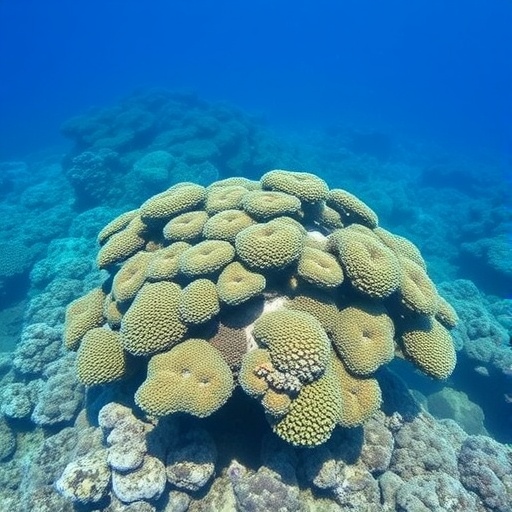
Coral reefs stand as some of the most biodiverse and ecologically vital ecosystems on the planet, providing an array of socioecological services that sustain coastal communities, support fisheries, and protect shorelines. However, these remarkable structures face unprecedented threats from climate change, which alters the delicate balance between the accretion and erosion of calcium carbonate (CaCO3), the mineral foundation of reef frameworks. Recent comprehensive research has sought to unravel the complex dynamics governing reef growth and degradation under the multifaceted stresses imposed by a warming and acidifying ocean, offering new insights into the future persistence of coral reefs amidst accelerating environmental change.
Central to the resilience of coral reefs is the process of carbonate accretion, whereby reef-building organisms precipitate CaCO3, gradually constructing the three-dimensional habitat structures that form the backbone of reef ecosystems. This biological calcification is predominantly driven by scleractinian corals and calcareous algae, each playing distinct but complementary roles. Coral polyps secrete aragonite skeletons, creating the reef’s robust framework, while crustose coralline algae (CCA) bind sediments and reinforce the substrate. Yet, these calcifiers face mounting challenges as ocean temperatures rise and seawater chemistry shifts due to increased carbon dioxide absorption, leading to ocean acidification that hampers carbonate ion availability crucial for calcification.
The erosion processes that counterbalance accretion further complicate reef carbonate budgets. Bioeroders such as parrotfish, sea urchins, boring sponges, and microorganisms actively break down CaCO3 structures, while chemical dissolution accelerates under lower pH conditions. A critical concern is how climate change influences these erosive forces relative to calcification rates. Emerging evidence suggests that although net carbonate production diminishes under combined stressors, calcifying algae exhibit greater vulnerability to acidification and warming than corals. This differential sensitivity could shift the ecological balance, potentially reshaping reef building dynamics.
Marine heatwaves and mass bleaching events have already inflicted dramatic declines in coral cover globally, significantly impairing coral reef accretion potential. These thermal stressors disrupt the coral-algal symbiosis essential for coral survival and growth, often resulting in widespread mortality. It is increasingly apparent that coral cover loss will be the primary driver of declining net carbonate production on reefs, overshadowing the direct physiological impacts of ocean acidification on calcifiers. Consequently, only reef populations that have developed thermal tolerance or adaptation mechanisms are poised to sustain positive carbonate budgets as climate change progresses.
The persistence of pre-existing reef frameworks, formed over millennia, raises critical questions. While future net carbonate production may dwindle or become negative, the rates at which these ancient structures erode and dissolve under shifting environmental conditions remain poorly quantified. This knowledge gap stems partly from the challenging timescales required to observe meaningful changes in framework integrity. Enhanced efforts to quantify biologically mediated erosion and chemical dissolution processes are imperative to refine models predicting reef longevity and structural stability in a future ocean.
Moreover, while considerable research has focused on corals and calcareous algae, other sediment-producing taxa that contribute to reef carbonate budgets remain underexplored. Foraminifera and tropical molluscs, for instance, play substantial roles in sediment generation and reef sediment stabilization but have yet to receive adequate attention regarding their responses to changing oceanic conditions. Understanding the climate sensitivity of these lesser-studied organisms could reveal critical feedbacks influencing reef accretion and sediment dynamics.
Oxygen depletion in marine environments, or deoxygenation, presents an additional and largely understudied stressor affecting coral reef ecosystems. As ocean warming exacerbates stratification and reduces oxygen solubility, many reef habitats experience hypoxic conditions that may influence coral health and reef metabolism. The interplay between deoxygenation and reef carbonate dynamics remains an emerging field of inquiry, with the potential to unveil novel mechanisms by which climate change compromises coral reef sustainability.
Taken together, the synthesis of these findings underscores the urgency of developing integrated frameworks that incorporate biological, chemical, and physical processes governing reef carbonate dynamics under climate stress. Such comprehensive understanding will be pivotal to forecasting how coral reefs might fare throughout the twenty-first century and beyond, informing conservation strategies geared toward enhancing reef resilience and adaptation. The recognition that only thermally adapted coral populations might maintain positive CaCO3 production necessitates targeted efforts in identifying and protecting these genetic reservoirs.
Furthermore, recognizing the nuanced interactions between various reef-building taxa and their eroders, alongside chemical dissolution processes, may highlight potential tipping points at which reefs shift from net accretion to net erosion. These thresholds could vary substantially across regions, depending on local oceanographic conditions, species composition, and anthropogenic impacts. Tailoring management practices to localized reef carbonate budgets and the specific vulnerabilities therein will thus be critical.
Innovative monitoring technologies, such as high-resolution imaging, autonomous underwater vehicles, and advanced geochemical proxies, offer promising tools to measure real-time changes in reef carbonate production and erosion with unprecedented precision. Deploying these technologies across diverse reef systems may help parse out the spatial heterogeneity in reef responses to warming and acidification, identifying refugia and areas of rapid decline. This data-driven approach will bolster adaptive management and restoration efforts.
Beyond the direct biogeochemical processes, the broader ecological consequences of altered carbonate budgets are profound. Reduced CaCO3 production compromises reef structural complexity, diminishing habitat availability for myriad reef-associated species. This, in turn, threatens fisheries productivity, biodiversity, and the cultural values tied to coral reef ecosystems, amplifying socio-economic vulnerabilities for dependent human communities worldwide.
The intricate dance of coral reef accretion and erosion is thus at a critical crossroads, governed by a web of interacting stressors that increasingly tip the scales against carbonate build-up. Yet, despite the daunting challenges, there remains hope embodied in resilient coral populations, adaptive ecosystem management, and advancing scientific understanding. Harnessing these elements to mitigate loss and foster reef persistence demands urgent, coordinated global action.
In conclusion, the future of coral reef structures hinges on the interplay between climate-driven reductions in net carbonate production, the resilience and adaptation of key calcifying organisms, and the largely unknown trajectories of framework erosion and dissolution. Addressing these intertwined factors with comprehensive research and innovative conservation is indispensable to safeguard these irreplaceable marine treasures into the latter half of the century and beyond.
Subject of Research: Coral reef carbonate budgets and their persistence under climate change stressors
Article Title: Persistence of coral reef structures into the twenty-first century
Article References: Cornwall, C.E., Timmerman, O., Andersson, A. et al. Persistence of coral reef structures into the twenty-first century. Nat Rev Earth Environ (2026). https://doi.org/10.1038/s43017-026-00764-4
Image Credits: AI Generated
DOI: https://doi.org/10.1038/s43017-026-00764-4
Keywords: Coral reefs, calcium carbonate, carbonate accretion, bioerosion, climate change, ocean warming, ocean acidification, coral bleaching, thermal adaptation, reef persistence


