

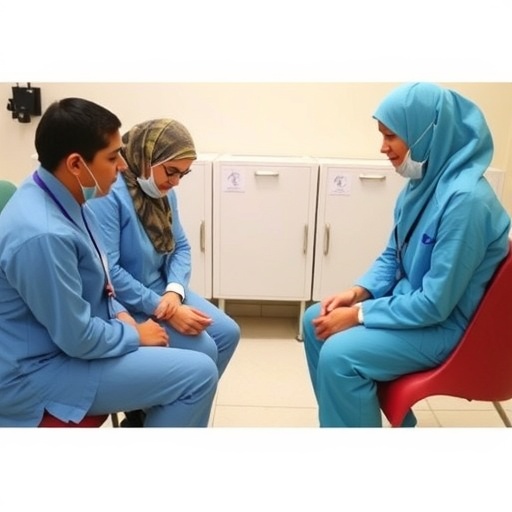
In an increasingly high-stress healthcare environment, the psychological well-being of nurses, particularly those who work in oncology, has become a focal point of substantial research. A recent study conducted in Jordan delves deep into the relationship between coping mechanisms and occupational stressors faced by oncology nurses. This work sheds light on an area that is critical not only for the health of the nurses themselves but also for the effective care of patients under their supervision. The study, led by esteemed researchers Dalky, Obeidat, and Haddad, provides compelling insights into how these coping strategies can make a significant difference in occupational stress management.
Occupational stress is a prevalent issue among nurses, and it becomes particularly pronounced in oncology settings. Nurses in these environments regularly confront intense emotional and physical demands as they strive to provide the best possible care for cancer patients. The cumulative effect of witnessing suffering, coupled with the pressure to deliver exceptional care, often leads to heightened stress levels. This study highlights that oncology nurses are not only tasked with handling their patients’ medical needs but also engaging with their complex emotional states, which can lead to significant occupational stress.
Researchers sought to identify specific coping mechanisms that nurses employ when faced with occupational stressors. Understanding these strategies is essential, as it enables the development of tailored support systems aimed at mitigating stress levels among nursing staff. By exploring various coping techniques, the study reveals the multifaceted nature of stress management. Not all coping methods are equally effective. Some may lead to emotional exhaustion while others promote resilience and a sense of fulfillment in their challenging roles.
The methodology employed in this study breaks down how data was collected and analyzed, providing a clear framework for understanding the findings. Researchers utilized questionnaires distributed to a representative sample of oncology nurses across various medical institutions in Jordan. The scales assessed not only the levels of stress experienced by the nurses but also how different coping mechanisms were employed in response to these stressors. This systematic approach offers a comprehensive understanding of the interconnectedness between coping strategies and occupational stress.
Results from the study indicate that certain coping mechanisms have a more positive correlation with reduced stress. For instance, problem-focused coping strategies, which aim to tackle the source of stress directly, were found to be more effective than emotionally focused strategies like avoidance or denial. This finding encourages oncological institutions to provide training and resources that promote problem-solving approaches among nursing staff. It signals a shift in how healthcare organizations can support their teams, moving beyond general stress management programs to more focused training on effective coping strategies.
Furthermore, the study highlights the role of organizational support in fostering healthier work environments. Oncology nurses reported feeling less stressed when their workplaces offered resources such as counseling, peer support groups, and stress management workshops. This reinforces the critical need for healthcare leaders to actively invest in mental health resources and to cultivate an organizational culture that prioritizes psychological resilience among its staff.
On the other hand, the research points out the challenges faced by those who utilize less effective coping strategies, such as avoidance. Nurses who lean towards these methods often find themselves in a downward spiral, where unresolved stress leads to burnout and decreased job satisfaction. This finding serves as a wake-up call for healthcare administrators, emphasizing the importance of early identification of stress levels and the necessity of interventions aimed at redirecting coping efforts.
The implications of this research extend beyond the individual nurses. Improved mental health among nursing staff has a ripple effect on patient care and outcomes. When nurses are equipped with effective coping mechanisms, they are more present, empathetic, and engaged in their work, thereby enhancing the overall quality of care provided to patients. This relationship underscores the importance of addressing nurses’ psychological well-being as a priority for patient-centered care.
Moreover, the findings raise questions about the training and educational programs for future nursing professionals. Incorporating modules on coping strategies and stress management into nursing curriculums could better prepare new graduates to handle the pressures of the healthcare environment, particularly in high-stress areas like oncology. By educating nurses on these crucial skills before they enter the workforce, the healthcare system can cultivate a resilient and adaptable nursing workforce.
As the research gains traction, it brings to the forefront the necessity of collaboration among stakeholders in the healthcare industry. Policymakers, educators, and healthcare leaders must come together to create an environment where the mental health of nursing staff is continuously addressed. This collaborative effort can lead to the development of comprehensive wellness programs, enriched training for stress management, and policies that safeguard the psychological health of workers in high-stress occupations.
In conclusion, the study led by Dalky and colleagues not only emphasizes the importance of understanding coping mechanisms in oncology nursing but also calls for widespread systemic changes in how healthcare organizations approach nurse well-being. As the healthcare landscape continues to evolve, prioritizing the mental health of nursing staff will be critical to fostering resilient healthcare systems capable of coping with the challenges that lie ahead. By recognizing and implementing effective coping strategies, we can ensure that oncology nurses remain a vital and effective part of patient care teams.
This pioneering work is poised to generate dialogue within the medical community on the necessity of addressing occupational stress among nurses and may inspire further research into innovative solutions that place the mental health of healthcare professionals at the forefront of organizational priorities. As these findings ripple through the healthcare sector, it is hoped that their impact leads to positive changes benefiting not only nurses but the entire community of patients they serve.
Subject of Research: The influence of coping mechanisms on occupational stressors among oncology nurses.
Article Title: Influence of coping mechanisms on occupational stressors among Jordanian oncology nurses: a correlational study.
Article References:
Dalky, H.F., Obeidat, R.S., Haddad, R.H. et al. Influence of coping mechanisms on occupational stressors among Jordanian oncology nurses: a correlational study.
BMC Nurs (2026). https://doi.org/10.1186/s12912-026-04319-2
Image Credits: AI Generated
DOI: None provided.
Keywords: Occupational stress, coping mechanisms, oncology nurses, Jordan, mental health, healthcare.


