

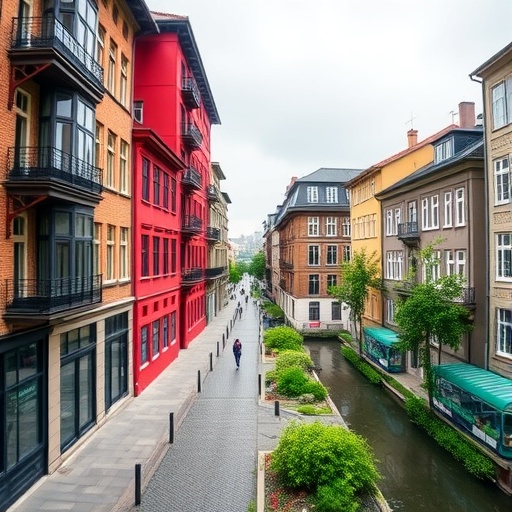
Urban regeneration has increasingly become a focal point for cities across the globe, with various approaches being implemented to rejuvenate old and dilapidated areas. In the arena of urban regeneration, comparative studies reveal critical insights into differing legal frameworks and policy applications between nations. A recent examination conducted by Castellano, Sørensen, and Sørensen delves into the urban regeneration practices in two relatively distinct landscapes—Denmark and Italy. This comparative legal perspective sheds light on the varied methodologies employed in urban renewal, emphasizing the transformative power these practices hold for cities.
Both Denmark and Italy are rich in historical architecture and cultural heritage, yet their urban regeneration strategies diverge significantly due to differing legal, social, and economic contexts. The intricate regulatory frameworks governing urban development reflect each country’s historical circumstances and cultural priorities. The report suggests that Denmark’s urban regeneration is sharply focused on sustainability and citizen participation, leveraging modern legal incentives to facilitate community engagement. This participative approach encourages transparency and fosters societal bonds, vital for cohesive urban development.
Conversely, Italy’s approach is steeped in tradition, with strict governance surrounding historical preservation. The Italian context is saturated with historical landmarks, necessitating a balance between regeneration and preservation. The meticulous legal structures in place serve not just as hurdles but as safeguards for maintaining the integrity of Italy’s architectural heritage. The permanence of these laws often means that urban projects in Italy move at a slower pace compared to Denmark, where adaptability is encouraged, creating an environment ripe for innovative solutions.
One key aspect explored in the article is the impact of urban regeneration on local communities. In Denmark, initiatives often aim to revitalize communities by enhancing social cohesion and improving public spaces. The researchers argue that urban regeneration projects in Denmark usually involve substantial consultation with local citizens, ensuring their voices are heard and represented. This community-centric approach is increasingly seen as essential for the success of regeneration schemes, ensuring that developments meet the genuine needs of residents rather than imposing top-down mandates.
Italy, however, faces unique challenges due to the complexities of its legal frameworks. The authors highlight how the regulatory landscape influences urban regeneration projects, often hampering swift action. While the Italian laws protect historical sites, they can inadvertently stifle innovation. The analysis indicates that urban planners and developers often find themselves navigating a maze of regulations, which can delay development and create frustration among stakeholders. The outcome is a dichotomy that juxtaposes the enthusiasm for modern urban solutions against the reverence for historical continuity.
Furthermore, the study sheds light on the financial mechanisms underpinning urban regeneration. Danish initiatives are often backed by government funding, complemented by private investments. The synergy between public and private sectors encourages a shared responsibility in rejuvenating urban landscapes, reducing reliance on municipal funding alone. This innovative financing model creates pathways for diverse revenue streams that sustain long-term urban regeneration efforts.
Italian projects, in contrast, frequently depend on public funds but struggle with budget constraints at local and national levels. Economic turmoil and limited financial resources can inhibit the realization of ambitious urban renewal projects that require extensive investment. Despite these challenges, there is an emerging recognition of the need for public-private partnerships in Italy to facilitate necessary funding and realize revitalization goals.
The role of technology in urban regeneration has garnered attention in both nations. In Denmark, technological advancements enhance participatory processes, leveraging digital platforms for citizen engagement. The advent of smart city solutions has further supported sustainable urban regeneration by employing data analytics to inform planning and development decisions. Such tech-driven approaches also support environmental sustainability by optimizing resource use and reducing waste.
Italy, while somewhat lagging in the tech adoption aspect, is beginning to embrace digital tools that could facilitate better planning and execution of regeneration projects. However, the challenge remains in integrating technology within established cultural frameworks and practices. The researchers emphasize the importance of cultivating a culture that embraces innovation, citing that the future of urban regeneration in Italy may depend significantly on bridging the gap between tradition and modernity.
In analyzing the social implications of urban regeneration, the article notes that both Denmark and Italy view the concept through the lens of community identity and social equity. While urban regeneration can spark economic growth, it often raises concerns about gentrification and displacement of existing residents. In Denmark’s social landscape, policies aim to ensure that regeneration efforts benefit all community members, protecting against potential adverse consequences resulting from urban revitalization.
In Italy, the fragile balance between urban development and cultural preservation raises distinct social concerns. There is a heightened sensitivity regarding displacement and the effects of tourism-driven gentrification on local populations. The findings from the article suggest that there is an urgent need for an inclusive approach that promotes equitable benefits from urban regeneration, ensuring the voices of long-standing residents remain integral in shaping their communities’ futures.
As cities across the globe grapple with issues related to sustainability, social equity, and economic resilience, the comparative perspective offered by this research presents valuable lessons. Understanding the legal frameworks and cultural contexts that shape urban regeneration in Denmark and Italy can inspire other nations to evaluate their approaches critically. Effective urban regeneration is not merely about bricks and mortar but is about fostering community connections and creating environments where individuals thrive.
In conclusion, the study conducted by Castellano, Sørensen, and Sørensen provides significant insights into the distinct yet interwoven narratives of urban regeneration in Denmark and Italy. With both nations demonstrating unique methodologies backed by different legal structures, the paper emphasizes that embracing innovative practices while honoring historical legacies is imperative for successful urban regeneration. As cities continue on the path of renewal, the interplay between legal frameworks, community engagement, and technological solutions will remain foundational to the future of urban landscapes.
Ultimately, urban regeneration is an ongoing dialogue that reflects each city’s aspirations and challenges. The comparative analysis by the authors opens avenues for future research, allowing urban policymakers and stakeholders to draw on successful elements from each context to inform their approaches. In an era where urban environments are rapidly evolving, understanding these dynamics is paramount to fostering resilient and inclusive communities for generations to come.
Subject of Research: Comparative legal perspectives on urban regeneration in Denmark and Italy.
Article Title: Urban regeneration in comparative legal perspective between Denmark and Italy.
Article References:
Castellano, F., Sørensen, M.T. & Sørensen, J. Urban regeneration in comparative legal perspective between Denmark and Italy.
Discov Cities 2, 126 (2025). https://doi.org/10.1007/s44327-025-00170-3
Image Credits: AI Generated
DOI: https://doi.org/10.1007/s44327-025-00170-3
Keywords: urban regeneration, legal frameworks, sustainability, community engagement, comparative analysis, Denmark, Italy


