

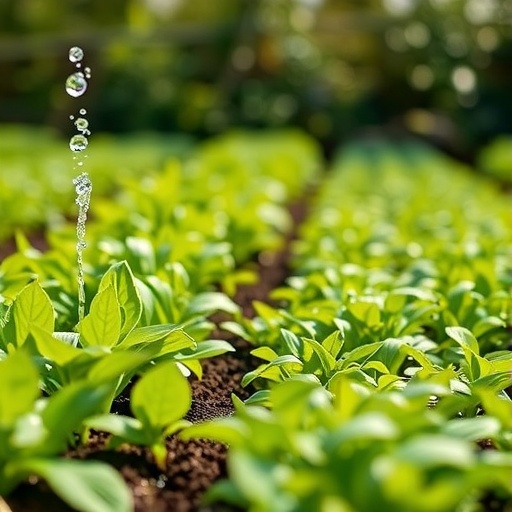
In a world increasingly confronted by the dual challenges of freshwater scarcity and the need for sustainable agricultural practices, innovative solutions are indispensable. A recent study conducted by leading researchers S.A. El Baradei, M.I. Basiouny, and N. Hazem offers a groundbreaking examination of various secondary wastewater treatment techniques that hold promise as viable sources of irrigation water. This comparative analysis investigates how transforming wastewater into reused water could alleviate water shortages while contributing to sustainability in agricultural practices.
With global water demand projected to surpass supply in the coming decades, the urgency for sustainable water management strategies is palpable. Agriculture consumes an estimated 70% of the world’s freshwater resources, a staggering figure that underscores the necessity for alternatives. Traditional irrigation methods are no longer sustainable in many regions, prompting a shift toward treated wastewater as a solution. The researchers highlight that, with appropriate treatment, wastewater can yield comparable quality water suitable for agricultural use.
The team’s analysis categorizes several secondary wastewater treatment techniques, assessing their efficacy, cost, and impact on water quality. Techniques such as activated sludge processes, membrane bioreactors, and constructed wetlands are all evaluated for their potential to produce high-quality irrigation water. In each case, the researchers delve into the technical aspects, discussing their operational mechanisms and efficiency in removing contaminants.
Activated sludge processes have long been a cornerstone of wastewater treatment. This aeration-driven method promotes the growth of microorganisms that break down organic matter. The authors elucidate how variations within this technique can enhance its effectiveness for irrigation purposes, particularly by optimizing aeration and retention times. When executed correctly, this method can yield water that meets or exceeds agricultural standards.
Another treatment process analyzed is the membrane bioreactor (MBR) technology, which integrates biological treatment with membrane filtration. The results of this technique present a fascinating juxtaposition of efficacy and cost. While MBRs are often more expensive to implement, they excel at removing even the smallest contaminants, making their output particularly appealing for agriculture in regions with stringent water quality requirements.
Constructed wetlands emerged as a natural and cost-effective alternative in the study. This method creatively utilizes natural processes to treat wastewater through vegetation, soil, and microbial interactions. The researchers discuss the benefits of constructed wetlands, which not only purify water but also provide essential habitat for diverse wildlife. Such systems promise a dual benefit: water treatment and biodiversity conservation, offering an intriguing model for sustainable water use.
Beyond these processes, the study also examines the viability of integrating multiple treatment techniques for synergistic effects. By combining methodologies, the potential to achieve superior water quality emerges, which could be transformative for irrigation practices. The researchers advocate for a holistic approach, recommending that future irrigation water solutions consider local contexts and resource availability.
One of the significant findings of El Baradei and his colleagues was the relationship between cost and efficiency. While advanced technologies like MBR offer high-quality outputs, their upfront investment challenges widespread adoption in developing countries. The study advises policymakers to consider not only the initial costs but also the long-term savings associated with utilizing treated wastewater for irrigation, particularly in water-scarce regions.
The implications of adopting treated wastewater for irrigation extend beyond agriculture. Reducing reliance on freshwater sources allows for more sustainable water management practices overall. Furthermore, when treated wastewater re-enters the natural water cycle as irrigation returns seep back into groundwater, the researchers propose that this could enhance local aquifers and promote ecosystem resilience.
As the study gains traction within academic and environmental circles, it prompts a reevaluation of existing water management policies. Policymakers are urged to consider more integrative frameworks that recognize the value of treated wastewater. Sustained public awareness campaigns would also be crucial to mitigate the social stigma associated with using wastewater in agriculture.
Emerging from the COVID-19 pandemic, there is a renewed focus on resilient food systems. The insights from this research align perfectly with the global push toward sustainability and food security, signaling an encouraging trend among scientists, farmers, and policymakers alike. As nations grapple with the realities of climate change and water scarcity, the adoption of treated wastewater could serve as a critical building block in constructing a sustainable agricultural future.
In conclusion, the comparative analysis by El Baradei, Basiouny, and Hazem lays the groundwork for future explorations in wastewater treatment. By presenting compelling evidence that shows the feasibility and utility of secondary wastewater treatment as a resource for irrigation, the study makes a persuasive case for its consideration in agricultural practices globally. As challenging as the water crisis appears, the innovative approaches outlined herein shine a glimmer of hope in addressing one of humanity’s most pressing issues.
The future of sustainable agriculture, empowered by reuse principles and advanced wastewater treatment technologies, is destined for transformation. With adequate investment, policy support, and public engagement, treated wastewater could indeed become the lifeblood of a new irrigation revolution, fostering both ecological balance and agricultural resilience in the face of an uncertain future.
Subject of Research: Wastewater treatment techniques for irrigation.
Article Title: Different secondary wastewater treatment techniques as potential irrigation water resources: a comparative analysis and case study.
Article References:
El Baradei, S.A., Basiouny, M.I. & Hazem, N. Different secondary wastewater treatment techniques as potential irrigation water resources: a comparative analysis and case study.
Discov Sustain (2025). https://doi.org/10.1007/s43621-025-01221-w
Image Credits: AI Generated
DOI:
Keywords: Wastewater treatment, irrigation, agriculture, sustainability, water scarcity, activated sludge, membrane bioreactors, constructed wetlands.


