

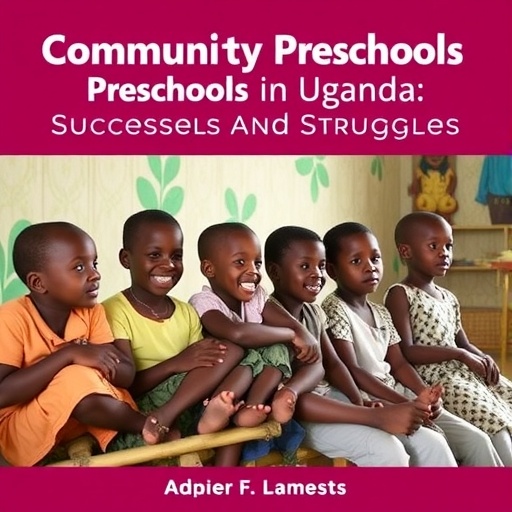
In the heart of Uganda, where educational infrastructure often struggles to keep pace with the burgeoning population, a remarkable story of resilience and innovation is unfolding. Community-based preschools have emerged as pivotal institutions offering early childhood education despite formidable socio-economic and logistical challenges. This phenomenon, meticulously analyzed by researchers Urwick and Nakabugo, reveals how grassroots initiatives are quietly transforming the educational landscape in regions frequently overlooked by mainstream developmental efforts.
Early childhood education is widely recognized as a critical foundation for lifelong learning and success. However, in many parts of Uganda, access remains limited due to poverty, infrastructural deficits, and systemic neglect. Against this backdrop, community-driven preschools have arisen not just as educational venues, but as embodiments of local determination and creativity. These preschools operate with razor-thin resources, relying heavily on local volunteers and modest financial inputs drawn from both within and outside the community. Despite these constraints, they have managed to deliver meaningful developmental experiences to children, setting the stage for improved educational outcomes.
The study conducted by Urwick and Nakabugo provides comprehensive insights into how these community-based preschools negotiate an environment laden with adversity. Their research delves into the dual nature of these preschools—marked simultaneously by achievement and persistent challenge. On one hand, they fulfill a crucial gap in early education provision; on the other, they grapple with constraints that threaten sustainability and quality. What emerges from this examination is an intricate portrait of educational provision that defies simple categorization.
Technically, the community preschools studied utilize a variety of pedagogical approaches that are adapted to the context of limited materials and training. Rather than relying on conventional classroom methods that presuppose a certain level of infrastructure, these preschools emphasize experiential learning and play-based activities that stimulate cognitive and social skills using locally available resources. This approach not only aligns with contemporary child development theories but also empowers teachers to be innovators, crafting lessons that resonate culturally and practically with the children’s immediate realities.
One of the critical technical challenges these preschools face is the shortage of qualified early childhood education (ECE) instructors. Most facilitators lack formal training, which complicates the delivery of standardized curricula. Urwick and Nakabugo highlight initiatives aimed at capacity building, including targeted training workshops and peer learning groups that inject much-needed pedagogy skills into this grassroots network. These interventions represent a blend of bottom-up and top-down strategies, facilitating a knowledge exchange that helps sustain program standards.
Infrastructure remains a persistent hurdle. Many of these preschools operate in rudimentary settings—often under trees, in makeshift shelters, or repurposed community structures. This not only affects attendance rates during adverse weather but also influences learning engagement. The study documents inventive local solutions such as community-led infrastructural development drives. This includes constructing temporary classrooms from inexpensive, locally sourced materials, which illustrates a profound communal investment in childhood development.
Funding and financial management are further areas fraught with complexity. Community preschools rely heavily on a mosaic of financial sources: parental contributions, small-scale fundraising, NGO support, and occasionally government subsidies. However, irregular and insufficient funding streams threaten long-term viability. The researchers describe emerging models of micro-financing and communal savings groups that serve as innovative financial mechanisms aimed at creating a modest but sustained revenue flow. These models emphasize community ownership and reduce dependency on external aid.
Equally significant is the role of parental and community engagement in sustaining these preschools. The study underscores how active involvement from parents and local leaders enhances enrollment and creates a supportive ecosystem around the child’s learning environment. Behavioral change communication strategies have been introduced to sensitize communities on the importance of early childhood learning, thus fostering a conducive social climate for education. This engagement contributes not only to better attendance but also reinforces positive developmental attitudes at home.
Monitoring and evaluation present another layer of complexity in these settings. Due to resource constraints, systematic assessments of educational outcomes are scarce. Urwick and Nakabugo propose leveraging community participation in routine evaluations, training local stakeholders in basic monitoring techniques, and integrating mobile digital tools where feasible. These measures can enable more responsive program adjustments and data-driven decision-making, essential for scalable and replicable success.
The integration of health and nutrition services within these preschools is also a noted enhancement. Recognizing that learning is inseparable from overall child well-being, some community-based preschools have integrated basic health screenings and nutritional support within their routine activities. This holistic model addresses barriers such as malnutrition and illness, which significantly impair cognitive and physical development in early years. Collaborative partnerships with local health providers amplify these benefits, setting a precedent for integrated service delivery models in low-resource settings.
Policy implications from this research are profound. The study calls for increased governmental recognition and support for community-based early childhood education initiatives. Formalizing these models within national frameworks and providing tailored funding and training resources could boost their reach and impact significantly. This would also legitimize the role of non-state actors in supplementing public educational efforts, enhancing inclusiveness and equity.
Globally, the lessons emanating from Uganda’s community preschools resonate with parallel contexts facing similar constraints. The combination of local ingenuity, community buy-in, and adaptive pedagogy serves as a blueprint for other low-income countries seeking to expand early childhood education access efficiently and sustainably. The study’s deep dive into these dynamics enriches the global dialogue on education equity and innovation.
In sum, Urwick and Nakabugo’s research throws light on a vital yet underexplored segment of the global education ecosystem. These community-based preschools are not only venues for early learning but also hubs of social resilience and empowerment. Their achievements underscore the potential of community action to rewrite the educational script in environments that many perceive as hopeless or inaccessible. Yet, the persistent challenges they face demand concerted multi-sectoral support to transform these isolated successes into a sustained, scalable model.
The future of Uganda’s community-based preschools hinges on bridging the gap between grassroots realities and formal educational policies. Collaborative frameworks involving governments, NGOs, and communities can forge pathways that enhance infrastructural development, teacher training, funding stability, and holistic child development. This systemic approach is imperative to convert the admirable adaptability displayed so far into institutionalized educational excellence.
Ultimately, the story of early childhood education in Uganda’s community preschools is one of hope etched against adversity. It is a testament to how determination intertwined with thoughtful innovation can cultivate fertile grounds for childhood learning, even against the odds. As the world looks to inclusive educational paradigms post-pandemic, such grassroots narratives demand amplified attention and resources, ensuring that no child’s potential is left to chance.
Subject of Research: Community-based early childhood education in Uganda, focusing on both achievements and challenges faced by preschools operating under constrained conditions.
Article Title: Providing early childhood education against the odds: the achievements and challenges of community-based preschools in Uganda.
Article References:
Urwick, J., Nakabugo, M. Providing early childhood education against the odds: the achievements and challenges of community-based preschools in Uganda. ICEP 19, 22 (2025). https://doi.org/10.1186/s40723-025-00164-z
Image Credits: AI Generated
DOI: https://doi.org/10.1186/s40723-025-00164-z


