

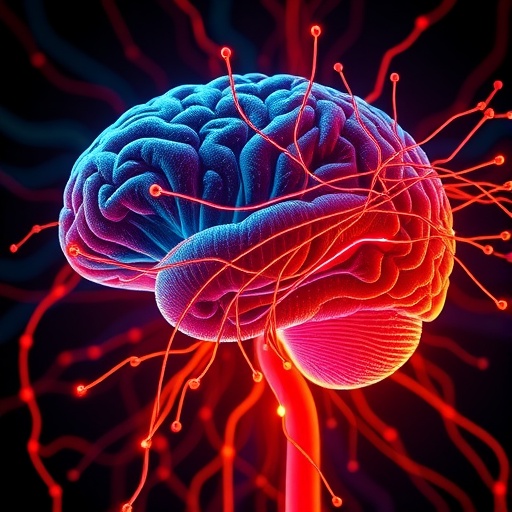
In the complex tapestry of social interactions, the capacity of mammals to respond to the distress of others with acts of compassion and support is a phenomenon that has intrigued scientists for decades. This prosocial behavior, evident not only in humans but also in various animal species, serves as a foundation for social cohesion and group survival. Recent groundbreaking research has begun to illuminate the neural mechanisms underpinning these selfless acts, revealing a fascinating overlap with the neural circuits traditionally associated with parenting.
A study published in Nature by Sun, Lim, Dang, and colleagues (2026) provides compelling evidence that the brain regions involved in parenting are also critically engaged when animals offer care and comfort to stressed adult peers. Their work unravels how the medial preoptic area (MPOA) of the brain—a region long recognized for its role in nurturing offspring—also orchestrates prosocial allogrooming behavior directed toward vulnerable conspecifics, illuminating the biological substrates of empathy and social support.
To probe this neural connection, the researchers focused on mice exhibiting varying levels of parenting behaviors. By studying these animals’ responses to stressed adult conspecifics, they observed a clear relationship: those mice demonstrating higher parenting tendencies were markedly more inclined to engage in allogrooming—a form of tactile, affiliative behavior that alleviates stress in others. This finding suggested that circuits governing caregiving of offspring might be co-opted or shared for broader social support functions.
The MPOA emerged as the central hub regulating this prosocial grooming behavior. Through a series of ingenious manipulations, such as chemogenetic modulation and targeted neuronal activity labeling, the authors demonstrated that activating or silencing this brain region could bidirectionally alter grooming behaviors toward stressed adults. This regulatory effect underscores the critical role of MPOA neurons as a neural fulcrum balancing caregiving activities within adult social contexts.
Delving deeper, the study identified that the neuronal ensembles activated during parenting and allogrooming partially overlap within the MPOA. These convergent populations appear to serve dual roles, effectively bridging parental care and adult-directed altruism. This convergence was further substantiated by observing the MPOA-VTA (ventral tegmental area) pathway, a dopaminergic circuit classically linked to reward and motivation, highlighting how motivational processes are intertwined with prosocial engagement.
Consistent with this circuitry, dopamine release in the nucleus accumbens (NAc) was associated with both parenting and prosocial allogrooming, suggesting these behaviors are reinforced through common reward pathways. Such dopaminergic signaling aligns with the notion that caring actions, even beyond offspring nurturing, confer intrinsic satisfaction or social utility, promoting the maintenance of cooperative relationships in social animals.
Employing cutting-edge activity-dependent neuronal labeling techniques, the study elegantly captured and manipulated MPOA neurons activated during parenting behaviors. The functional necessity of these neurons for subsequent prosocial grooming was demonstrated by selectively inhibiting them, which diminished allogrooming responses. Conversely, neurons engaged during prosocial interactions were crucial for offspring-directed grooming, revealing a bidirectional functional overlap that blurs the lines between parenting and empathy-driven care.
This neural reciprocity suggests that the sophisticated social behaviors expressed in adult mammals may have evolved through the reutilization of pre-existing parenting circuits. Rather than emerging independently, prosocial support for non-offspring may capitalize on the neurobiological infrastructure originally adapted for nurturing vulnerable young, providing an evolutionary pathway for complex social cooperation.
Importantly, these findings offer a critical perspective on the evolutionary origins of human empathy and social bonding. The study demonstrates that prosocial actions like comforting, grooming, or mutual aid are not mere social constructs but are deeply rooted in ancestral caregiving mechanisms. Understanding these shared pathways may shed light on social disorders marked by diminished empathy or caregiving, such as autism or antisocial personality disorder.
Furthermore, the research provides a foundation for exploring therapeutic interventions that enhance prosocial behavior and social bonding by targeting specific neural circuits. Pharmacological modulation or neuromodulation technologies could be harnessed to restore or augment these overlapping parenting-prosocial pathways, offering hope for individuals struggling with social deficits.
The broader implications extend into societal dynamics as well. By highlighting the biological basis for altruism and mutual support, this work reinforces the importance of empathy and care not just in family units but across wider social networks. It underscores how evolutionary biology continues to shape the social fabric, influencing cooperation and cohesion among adults.
Critically, this study also opens new avenues for investigating how stress signals are perceived and processed across social partners, and how this synaptic communication translates into coordinated prosocial responses. The role of sensory inputs, neuropeptides, and modulatory systems in fine-tuning these behaviors constitutes an exciting frontier for neurobiological research.
In summary, the work by Sun and colleagues elucidates a shared neural substrate within the MPOA that orchestrates both parenting and prosocial behaviors, mediated through a dopamine-linked circuit involving the VTA and nucleus accumbens. This discovery elegantly connects caregiving and altruism under a unified neural framework, enriching our understanding of the biological basis of social kindness.
As research continues to peel back the layers of neural complexity underpinning social behavior, such insights promise to transform our perception of empathy—from an abstract moral virtue to a tangible product of ancient, evolutionarily conserved brain systems. The revelation that the tender care once exclusively reserved for offspring now extends its influence to adult social support highlights the profound adaptability and resilience of the mammalian brain.
Subject of Research: Neural mechanisms underlying prosocial and parenting behaviors in mammals.
Article Title: Shared neural substrates of prosocial and parenting behaviours.
Article References:
Sun, F., Lim, K.Y., Dang, J. et al. Shared neural substrates of prosocial and parenting behaviours.
Nature (2026). https://doi.org/10.1038/s41586-026-10327-8
Image Credits: AI Generated


