

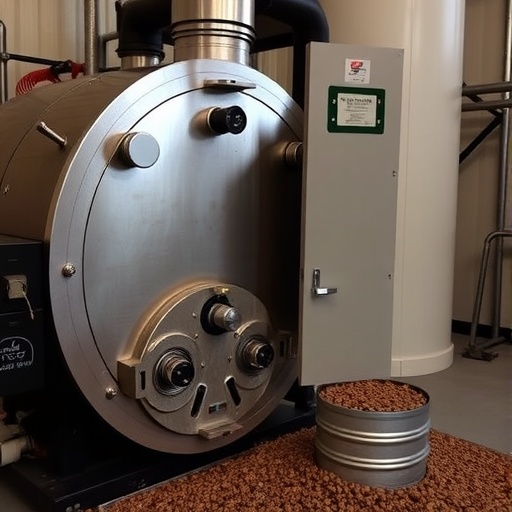
In recent years, the focus on renewable energy and sustainable practices has intensified, particularly in the context of waste management in industrial settings. A groundbreaking study has emerged from the collaborative efforts of researchers, including de Marqui Mantovan, Simadon, and Bazzo, as they explore the potential for eco-friendly energy production through the co-firing of floated sludge from the meat processing industry along with eucalyptus chips in an industrial biomass boiler. This innovative approach not only addresses critical waste management issues but also promotes greener energy production pathways.
The conventional methods of waste disposal in the meat processing industry typically involve significant environmental concerns, including landfills and water pollution. However, with the methodology presented in this study, researchers aim to highlight the dual benefits of minimizing waste and producing energy. The experiment utilized sludge derived from byproducts of meat production, which is often considered a hazardous waste material with limited disposal options. By re-engineering this byproduct into a usable fuel source, the researchers exemplify a shift toward a circular economy in industrial practices.
The research presents a detailed analysis of the combustion properties of the floated sludge in conjunction with eucalyptus chips, a biomass material that is renowned for its high calorific value. The co-firing process not only leverages the energy potential of both materials but also addresses the challenges associated with the ash content and emissions produced during combustion. Central to their findings is the realization that eucalyptus chips can compensate for the lower heating value of sludge, fostering a more balanced and efficient energy output.
Moreover, the study examines the emissions released during the burning of these materials, which is critical for industrial compliance with environmental regulations. A significant advantage of using biomass fuels like eucalyptus chips lies in their potential to reduce greenhouse gas emissions compared to traditional fossil fuels. The integration of floated sludge is poised to further lower the carbon footprint of energy production within the meat processing sector.
Technical evaluations were conducted to measure the performance of the industrial biomass boiler, with the researchers providing empirical evidence that backs up their claims. Various combustion parameters were analyzed, including temperature efficiency, burnout rates, and overall energy yield. Such comprehensive analysis underscores the feasibility of this co-firing method, showcasing its potential not only for energy generation but also as a model for industrial sustainability.
Additionally, one of the pivotal aspects of the research involves the granulation of the blended fuels. The process not only enhances homogeneity but also ensures that the fuel can be efficiently stored and fed into the biomass boiler. The physical and chemical characteristics of the blended fuel significantly influence boiler operation, and the study meticulously outlines the necessary steps in optimizing this co-firing process for real-world applications.
The anticipated outcomes extend beyond merely providing cleaner fuel sources; the study significantly integrates economic perspectives by analyzing the cost-effectiveness of transitioning to co-firing systems. As energy costs fluctuate and environmental regulations tighten, industries are increasingly seeking viable alternatives that offer both financial and ecological sustainability. By evaluating the operational metrics against traditional waste disposal methodologies, the research illustrates a potential reduction in costs associated with both energy production and waste management.
Exploring different combustion conditions and their effects on surrounding ecosystems is paramount. The researchers aim to ensure that the implementation of this innovative co-firing technology does not inadvertently harm local environments or communities. Rigorous testing and adjustments to operational parameters are mandatory to ensure that emissions remain within acceptable parameters while extracting the maximum amount of energy from the waste materials.
The implications of this research are profound, not just for the meat processing industry but for a diverse range of sectors seeking to adapt more sustainable practices into their operations. By shifting focus from waste to resource, industries can enhance their resilience in the face of climate change and regulatory pressures while simultaneously tapping into the vast energy potential that lies within what was once deemed waste.
In addition to addressing climate change, the study opens avenues for further research into alternative biomass sources available globally, which can significantly affect the supply chains of the energy sector. The findings may encourage more industries to experiment with various blends of biomass fuels, fostering innovation and reducing reliance on non-renewable energy sources.
Understanding the impact of the co-firing process on various equipment is another objective that merits attention. The researchers underline the importance of compatibility between the biomass boiler components and the new fuel mix, noting potential adjustments that may be necessary to optimize functionality and lifespan. This contribution to the technical field further establishes the significance of compatibility in the pursuit of greener technologies.
This initiative also hints at a significant cultural shift within organizations, as industries that adopt such practices will likely cultivate a more environmentally conscious ethos among employees and stakeholders alike. As efforts to establish sustainable operations gain momentum, the societal norms surrounding waste management and energy production stand to shift profoundly.
As the results of this pioneering study roll out, they will likely inspire further discussions on sustainable energy practices and policies, fostering collaborative efforts across various sectors to implement eco-friendly solutions. The findings resonate well with ongoing global dialogues surrounding climate action and sustainability, pushing boundaries toward innovative and effective methods for transitioning to a more sustainable future in energy generation.
Ultimately, the research is a testament to the viability of using industrial byproducts as sustainable energy sources. By showcasing the practical implementation of co-firing floated sludge with eucalyptus chips, it’s clear that academia, industry, and environmental stewardship can coalesce to create solutions that mitigate waste while harnessing energy in a cleaner, more responsible manner.
With the widespread acceptance and adoption of such breakthroughs, the transformation of waste into resource stands to redefine the relationship between industry and environment, emphasizing the need for an innovative approach to sustainability and energy production.
Subject of Research: Co-firing of floated sludge and biomass for energy production.
Article Title: Cofiring of Floated Sludge from a Meat Processing Industry and Eucalyptus Chips in an Industrial Biomass Boiler.
Article References: de Marqui Mantovan, F., Simadon, K.G., Bazzo, E. et al. Cofiring of Floated Sludge from a Meat Processing Industry and Eucalyptus Chips in an Industrial Biomass Boiler. Waste Biomass Valor (2025). https://doi.org/10.1007/s12649-025-03451-5
Image Credits: AI Generated
DOI: https://doi.org/10.1007/s12649-025-03451-5
Keywords: biomass, co-firing, waste management, renewable energy, sustainability, meat processing industry, eucalyptus chips, industrial applications, circular economy.


