

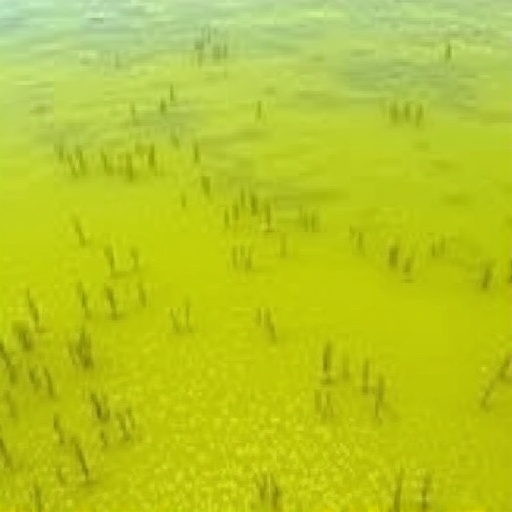
In an era marked by escalating global climate instability, the intricate interplay between extreme weather patterns and aquatic ecosystems has become a focal point of environmental research. A groundbreaking study, soon to be published in Nature Communications, highlights a troubling amplification of lake eutrophication driven by climate extremes. The research reveals how these intensifying weather anomalies fortify harmful bloom-forming algae, enabling them to withstand environmental stressors and exacerbate water quality degradation on a global scale.
Eutrophication, a process characterized by excessive nutrient enrichment in aquatic systems leading to algal overgrowth, poses profound risks to biodiversity, water safety, and ecosystem functionality. While nutrient inputs from agricultural runoff and urbanization are well-established culprits, the new findings underscore a less explored but equally critical factor: the enhanced resilience of harmful algae to climatic stress triggered by more frequent and severe events such as heatwaves, droughts, and flooding.
The investigative team, led by Wang and colleagues, utilized an integrative methodological framework combining long-term ecological monitoring, controlled laboratory experiments, and advanced modeling techniques to dissect the synergistic effects of climate extremes on algal bloom dynamics. Their data suggest that these episodic climatic disturbances induce physiological adaptations in bloom-forming algae, increasing their capacity to withstand oxidative stress, thermal fluctuations, and fluctuating nutrient availability.
At the cellular level, harmful algae exhibit upregulation of stress response genes and antioxidant pathways when exposed to temperature spikes and desiccation episodes. This molecular fortification is linked to improved survival rates during unpredictable environmental perturbations, enabling persistent dominance in eutrophic waters. The researchers highlight that such physiological plasticity not only facilitates the persistence of toxic cyanobacteria and dinoflagellates but also modulates community composition toward less diverse yet more bloom-prone assemblages.
Importantly, the study dissects the feedback mechanisms through which climate extremes exacerbate eutrophication severity. Heatwaves intensify stratification in lakes, creating nutrient traps in surface waters that fuel algal proliferation. Simultaneously, drought conditions concentrate nutrients through reduced dilution, while flood events mobilize terrestrial phosphorus reservoirs into aquatic systems. These compounded effects foster a nutrient-rich, thermally stable environment that favors harmful algal species with robust stress tolerance over less resilient competitors.
This research also confronts the alarming socio-ecological consequences of intensified lake eutrophication under climate extremes. Harmful algal blooms (HABs) produce cyanotoxins with documented neurotoxic, hepatotoxic, and carcinogenic effects, threatening human health and limiting recreational water use. Economically, HAB events translate into costly water treatment upgrades, fisheries losses, and diminished property values. The increased stress resistance of bloom-forming algae portends longer-lasting and more unpredictable bloom occurrences, challenging existing management frameworks that often rely on predictable nutrient reduction strategies.
From a global perspective, the study aggregated data from multiple continents, encompassing lakes of varying trophic states and climatic zones. This comprehensive approach delineates a pervasive pattern: regardless of regional differences, climate extremes consistently amplify the stress endurance and competitive advantage of harmful bloom-forming algae. Such universality underscores the urgent need for adaptive management policies that integrate climate projections with nutrient control measures to mitigate eutrophication.
The molecular insights provided also pave the way for innovative mitigation strategies. By identifying key genetic pathways linked to stress resilience, researchers suggest potential targets for biotechnological intervention. For example, strategies aiming to disrupt protective antioxidant responses or thermal tolerance mechanisms could weaken bloom-forming algae’s competitive edge, presenting novel avenues for ecological restoration and bloom prevention.
Moreover, the paper stresses the importance of enhanced monitoring infrastructure to anticipate and respond to episodic climate disturbances. Given the dynamic nature of algal stress tolerance, real-time sensor networks capable of detecting early physiological shifts in bloom-forming populations could offer critical lead times for deploying rapid response actions, such as aeration, algaecide application, or controlled nutrient attenuation.
An additional layer of complexity arises from the interplay between climate-driven stress resistance and microbial community interactions. The researchers note that increased algal resilience alters trophic relationships, potentially disrupting the roles of grazers and microbial decomposers that naturally regulate bloom intensity. This ecological disruption may create feedback loops that further entrench eutrophic conditions and stress-hardened algal dominance, complicating recovery prospects.
These findings also carry implications for biodiversity conservation in freshwater ecosystems. The shift toward stress-resistant algal species reduces habitat suitability for diverse flora and fauna, threatening endemic species adapted to more stable environmental conditions. Such biodiversity loss diminishes ecosystem resilience and function, undermining ecosystem services critical for human well-being.
Crucially, the work calls for interdisciplinary collaboration incorporating climatology, molecular biology, ecology, and socioeconomics to address the multifaceted challenges presented by climate-amplified eutrophication. It advocates for holistic governance approaches that synchronize nutrient management, climate adaptation, and water quality protection policies, ensuring sustainability of freshwater resources under a rapidly changing climate.
In sum, Wang and colleagues provide compelling evidence that climate extremes do more than just exacerbate nutrient inputs—they biologically empower harmful algal populations to thrive amidst stress, creating a cascading effect that intensifies global lake eutrophication. Their study signals an urgent warning for water managers and policymakers worldwide: the confluence of climate change and eutrophication demands immediate and innovative responses to safeguard aquatic ecosystems and dependent human societies.
As the climate crisis unfolds, this research highlights the complex biological feedbacks that magnify environmental degradation, reminding us that addressing nutrient pollution alone may no longer suffice. The resilience of harmful algae to climatic stressors signals a paradigm shift in freshwater ecology, where understanding and mitigating the physiological adaptations of bloom-forming species will be critical to reversing eutrophication and protecting water quality for future generations.
Subject of Research:
The impact of climate extremes on the intensification of global lake eutrophication through increased stress resistance of harmful algae.
Article Title:
Climate extremes intensify global lake eutrophication by increasing the stress resistance of harmful bloom-forming algae.
Article References:
Wang, C., Wang, M., Xie, M. et al. Climate extremes intensify global lake eutrophication by increasing the stress resistance of harmful bloom-forming algae. Nat Commun (2026). https://doi.org/10.1038/s41467-026-69529-3
Image Credits:
AI Generated


