

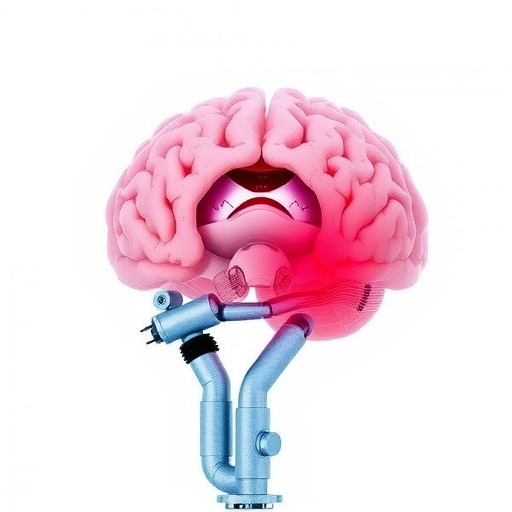
A groundbreaking clinical study has demonstrated the remarkable safety and efficacy of the YDHB-NS01 robot-assisted system for cerebral angiography, marking a significant milestone in the field of neurointerventional robotics. This sophisticated robotic platform was meticulously evaluated in a prospective observational study conducted at a leading Chinese medical institution. The results, recently published in the Chinese Neurosurgical Journal, provide compelling evidence that this state-of-the-art system not only matches but potentially exceeds the performance of conventional manual cerebral angiography techniques, opening new horizons for safer, more efficient neurovascular diagnostics.
Cerebral angiography remains the gold standard for visualizing cerebrovascular pathologies, such as intracranial aneurysms, arteriovenous malformations, and arterial stenosis. Traditional cerebral angiography demands that interventionalists operate under continuous fluoroscopic imaging, which invariably exposes them to harmful ionizing radiation for extended periods. The advent of robotic-assisted platforms has been hypothesized to mitigate these occupational hazards by enabling remote operation from shielded environments. Until now, widespread clinical validation of such technologies has been limited.
The YDHB-NS01 system distinguishes itself through a highly engineered robotic manipulator capable of smoothly navigating catheters and guidewires within cerebral vasculature. The device incorporates advanced force feedback mechanisms and intuitive control interfaces, ensuring that operators can maintain delicate precision necessary for neurovascular interventions. Furthermore, the system’s design emphasizes robust mechanical stability and seamless integration with existing angiographic imaging suites, streamlining workflow without compromising diagnostic quality.
In the clinical investigation led by Dr. Yuanli Zhao and his team at Peking Union Medical College Hospital, 50 patients were enrolled and divided equally between robotic-assisted and manual cerebral angiography groups. Each procedure was performed by the same experienced neurosurgeon, eliminating operator variability. Both technical success—the ability to position the catheter accurately within target vessels—and clinical success—adequate vessel visualization for diagnosis—were achieved at an impeccable 100% rate in both cohorts, underscoring the robot’s reliability and safety.
Significantly, the median procedure time was markedly reduced in the robotic-assisted group, averaging 27 minutes compared to 38 minutes in manual cases. This 29% reduction in intervention duration points to enhanced procedural efficiency, a critical factor in clinical productivity and patient throughput. Importantly, no statistically meaningful differences were observed between groups for fluoroscopy time, patient radiation exposure, contrast agent volume, or total angiography suite occupancy, indicating that the robot’s operational advantages do not come at the expense of increased resource use or patient risk.
The robotic system maintained stable performance throughout all interventions, exhibiting no mechanical failures or system errors. Operator feedback highlighted the smooth delivery of catheters and guidewires, stable manipulation of the device, responsive control interfaces, and effective force feedback sensations. These technical attributes empower the operator with precision control that rivals manual dexterity, while concurrently offering ergonomic benefits by minimizing physical strain and radiation exposure during procedures.
Crucially, there were zero adverse events or complications among all study participants across both groups. No puncture site issues, vessel trauma, thromboembolism, transient ischemic attacks, ischemic strokes, or contrast-related allergic reactions occurred. The absence of procedural complications speaks to the system’s safety profile and the robustness of the procedural protocols, reinforcing confidence in robotic-assisted cerebral angiography for clinical application.
A learning curve was observed in the adoption of the robotic system, with longer procedure times and elevated radiation doses noted during the initial two cases. However, subsequent cases demonstrated convergence towards stable metrics, emphasizing that operator proficiency improves rapidly with experience. This suggests the YDHB-NS01 platform is readily adoptable without imposing significant additional training burdens, an essential consideration for widespread clinical integration.
Beyond clinical outcomes, the published article includes a comprehensive literature review of current robotic neurointervention technologies. This section contextualizes the YDHB-NS01 system within the broader trajectory of vascular interventional robotics, exploring technical success rates reported worldwide, ongoing challenges such as enhancing force feedback fidelity, improving imaging system integration, and ensuring device compatibility with a wide array of commercial angiographic catheters and guidewires.
This pioneering study represents an important leap forward in robotic-assisted cerebrovascular diagnostics. However, the authors caution that larger, multi-center randomized controlled trials are necessary to substantiate these preliminary findings and to fully elucidate the long-term benefits and potential limitations of the technology across diverse clinical settings. Such research will be instrumental in defining future standards of care and in guiding regulatory endorsement.
In summary, the YDHB-NS01 robotic system has been clinically validated to provide safe, effective, and efficient cerebral angiography that rivals the manual approach. By potentially reducing procedure times and operator radiation exposure without compromising diagnostic quality, this technology holds promise for transforming neurointerventional workflows. The success of this robot-assisted platform heralds a new era in cerebrovascular medicine, where precision engineering and technological innovation converge to enhance patient outcomes and clinician safety.
The implications of this study extend beyond cerebral angiography, suggesting a broader role for robotic assistance in endovascular surgery. Continued advancements in robotics, imaging, and computer-assisted navigation will likely accelerate the adoption of minimally invasive, robotically guided interventions across neuroscience and vascular medicine, ultimately reshaping the landscape of diagnostic and therapeutic practices in the coming decade.
Subject of Research: People
Article Title: Clinical validation and literature review of robot-assisted cerebral angiography
News Publication Date: 30-Jan-2026
References: DOI: 10.1186/s41016-026-00426-w
Image Credits: Qi Liu, Siming Gui, Yang Zhao, Fei Wang, Chen Xu, Qiuju Cui, Youxiang Li, and Yuanli Zhao
Keywords: Robotics, Neuroscience, Surgery, Medical imaging, Cardiovascular disease, Radiology, Biomedical engineering, Health and medicine


