

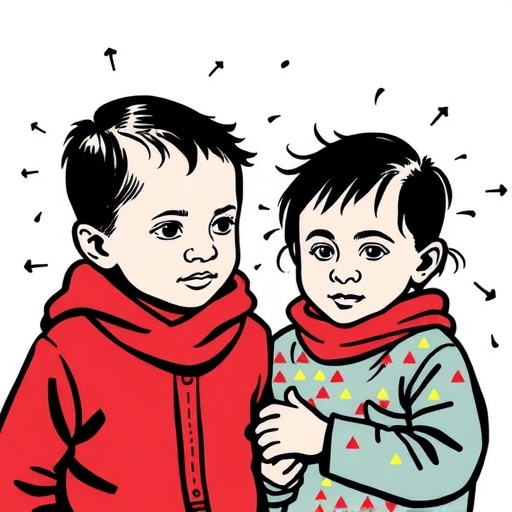
In recent years, the intersection of childhood experiences and life history strategies has become a focal point of research in behavioral science and human psychology. The novel study conducted by Međedović, Karić, Kostić, and colleagues, as published in the journal Adaptive Human Behavior and Physiology, sheds light on the significant influence that early-life environments have on life histories, particularly in postconflict societies. By examining the effects of various childhood exposures, this research highlights how socioecological factors can shape individual life trajectories and survival strategies.
At the heart of this research lies the concept of the life history network, which refers to the interconnectedness of biological, social, and ecological elements influencing the development and behavioral patterns of individuals. The authors argue that understanding these networks is crucial for addressing the needs of populations affected by conflict. Postconflict societies, marked by instability and social disruption, offer a unique context in which to study these dynamics, as children exposed to varying degrees of adversity may develop distinct adaptive strategies.
The study emphasizes that childhood environments serve as a foundational platform upon which individuals build their future. Factors such as socioeconomic status, familial support, community structures, and exposure to violence can significantly influence psychological resilience and behavioral adaptations. The authors meticulously analyzed data from various postconflict regions to illustrate how these childhood exposures correlate with diverse life outcomes, including reproductive strategies, parenting styles, and overall health.
One of the key findings of this research is the crucial role of stable and supportive environments during childhood. Those who experienced nurturing and secure settings are more likely to develop prosocial behaviors and long-term planning capabilities. Conversely, children subjected to neglect, violence, or instability often display shorter-term strategies focused on immediate survival. This disparity in life history strategies can have profound implications, not only for the individuals involved but also for the broader community and societal functioning.
Moreover, the study investigates the role of social networks in mediating the effects of childhood experiences on adult behavior. The authors posited that while individual experiences vary widely, collective social structures can provide buffers against adverse childhood conditions. Social capital, defined as the networks of relationships among people who live and work in a particular society, serves as a critical resource that can enhance resilience and promote positive life pathways.
The implications of this research extend beyond theoretical understanding. Policymakers and mental health professionals can leverage these insights to design intervention programs that foster supportive environments for children in postconflict regions. By recognizing the influential factors outlined in this study, targeted efforts can be made to enhance the quality of childhood experiences, ultimately shaping healthier future generations.
Another fascinating aspect of the research is its exploration of gender differences in response to childhood environments. The authors found that males and females may adopt different life history strategies based on their early life exposures. These distinctions underscore the importance of tailoring approaches to address the unique needs and experiences of different genders, particularly in vulnerable contexts where conflict has disrupted traditional social roles and supports.
This research also opens the floor to investigate how cultural factors intersect with childhood experiences and subsequent life strategies. In postconflict societies, cultural narratives and community values can greatly influence the developmental trajectories of children. Understanding these cultural dimensions can enrich our comprehension of the life history network, particularly as it pertains to the adaptability and resilience of individuals in the face of adversity.
As the study engages with the concepts of adaptation and survival, it raises pertinent questions about the long-term consequences of early childhood experiences on health. The authors provide evidence linking adverse childhood experiences to increased vulnerability to chronic health issues in adulthood. This connection reinforces the necessity for mental health and social services to integrate a life history approach when working with individuals from postconflict contexts.
Furthermore, the findings encourage a multidisciplinary dialogue among sociologists, psychologists, and policymakers. By understanding the life history networks at play, professionals across sectors can introduce strategies that promote social cohesion and mental well-being in communities recovering from conflict. Such collaboration is particularly vital in areas where historical trauma continues to impact daily life and social structures.
The study’s robust methodology adds credibility to its findings. With a comprehensive analysis of quantitative and qualitative data, the authors support their conclusions with empirical evidence that underscores the multifaceted nature of childhood experiences. By employing a diverse range of perspectives, the research presents a holistic view of how life history networks operate within the complexities of postconflict socioecologies.
While the research provides valuable insights, it also leaves room for further investigation. Future studies could evaluate the effectiveness of interventions aimed at fostering positive childhood environments and mitigating the impacts of conflict. Identifying scalable programs that can be implemented in various socioecological contexts will be critical for fostering resilience and promoting peace.
In conclusion, the study by Međedović, Karić, Kostić, and their colleagues presents a compelling examination of the interactions between childhood environments and adult life history strategies in postconflict societies. By illuminating the pathways through which early experiences shape individual trajectories, the authors contribute significantly to our understanding of human development. Their work emphasizes the urgency of addressing childhood adversity, not merely as a matter of individual concern but as a societal imperative for fostering sustainable peace and resilience.
As we move forward, this research will undoubtedly inform ongoing discussions in the fields of psychology, sociology, and public health, as scientists and practitioners alike strive to create environments that nurture the potential of all children, particularly those, who, in the wake of conflict, stand at a critical juncture in their development.
Subject of Research: The influence of childhood environments on life history strategies in postconflict societies.
Article Title: Life History Network in a Postconflict Socioecology: The Effect of Childhood Environment.
Article References:
Međedović, J., Karić, T., Kostić, S. et al. Life History Network in a Postconflict Socioecology: The Effect of Childhood Environment.
Adaptive Human Behavior and Physiology 11, 2 (2025). https://doi.org/10.1007/s40750-024-00255-0
Image Credits: AI Generated
DOI:
Keywords: Childhood environment, life history strategies, postconflict societies, resilience, social networks, intervention programs, gender differences.


