

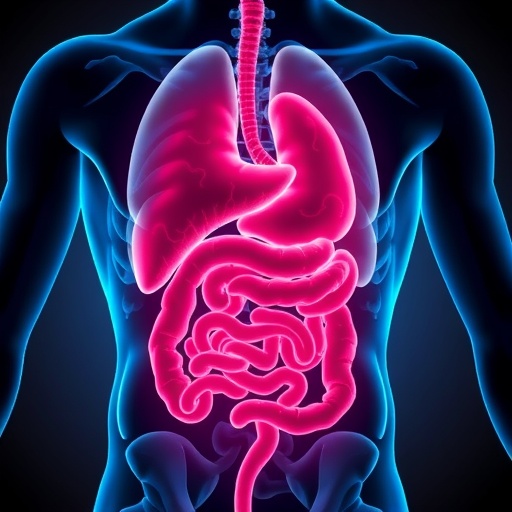
In an era where cancer therapies continue to evolve rapidly, a groundbreaking study has unraveled a complex interplay between chemotherapy, the gut microbiome, and the immune system, offering new avenues to combat metastatic disease. Researchers led by Bersier, Lorenzo-Martin, and Chiang have revealed how chemotherapy-induced disruptions in intestinal microbiota and metabolic shifts, specifically involving the microbial metabolite indole-3-propionic acid (IPA), reprogram myelopoiesis—the process by which bone marrow generates myeloid cells—to create a systemic environment inhibitive to cancer metastasis. Published in Nature Communications, their findings illuminate an unexpected, yet potent, mechanism whereby chemotherapy can indirectly fortify the body’s defenses against tumor spread.
The concept that chemotherapy’s impact transcends direct tumor cytotoxicity and modulates systemic immunity through microbiota-derived signals represents a fundamental paradigm shift. Traditionally, chemotherapy’s side effects on the gut microbiome have been viewed primarily as detrimental, contributing to dysbiosis and immunosuppression. However, this study recontextualizes chemotherapy-driven dysbiosis as a potentially beneficial factor that drives metabolic and immunological rewiring favoring metastasis resistance. At the core of this mechanism lies indole-3-propionic acid, a tryptophan-derived metabolite produced by commensal bacteria, which emerges as a critical mediator linking gut dysbiosis to enhanced myelopoiesis and immune modulation.
Myelopoiesis, the bone marrow’s generation of myeloid lineage cells including monocytes, neutrophils, and dendritic cells, is pivotal for immune surveillance and inflammatory responses. This study outlines how IPA influences myelopoietic pathways to produce functionally distinct myeloid progenitor cells that enhance anti-metastatic immunity. The data suggest that chemotherapy remodels the gut microbiome, reducing bacterial taxa susceptible to chemotherapeutic toxicity, while enriching IPA-producing strains that deliver metabolite signals to the bone marrow niche. This bone marrow reprogramming potentiates a myeloid compartment that suppresses metastatic tumor establishment in distant organs, redefining the systemic impact of chemotherapy beyond tumor killing.
Delving deeper, the researchers employed murine models of metastatic cancer treatments where chemotherapy regimens mimicked clinical intensity. Post-therapy, intestinal microbial profiling identified a marked shift toward increased IPA-producing bacterial populations, alongside altered metabolomic signatures in circulation. Concomitant bone marrow analyses revealed expansion and transcriptional reprogramming of myeloid progenitors characterized by enhanced antigen presentation and inflammatory cytokine production. Functional assays confirmed these myeloid cells hinder metastatic niche formation, reducing circulating tumor cell survival and colonization. These findings were corroborated by pharmacological experiments showing that exogenous IPA administration replicated the chemotherapy-associated myelopoietic reprogramming effects.
Mechanistically, the study circumvents simplistic explanations involving direct cytotoxicity and instead illustrates a chemo-microbiota-metabolite axis that initiates epigenetic and transcriptional transformations within myeloid precursors. IPA appears to act as a signaling molecule engaging with the aryl hydrocarbon receptor (AhR) on hematopoietic stem and progenitor cells. AhR activation orchestrates gene expression patterns that prioritize differentiation pathways yielding anti-inflammatory and tissue-protective myeloid subsets. This modulation not only limits pre-metastatic niche preparation but also enhances innate immune clearance mechanisms. Such intricate mechanistic insights link environmental microbial metabolites with hematopoiesis, underscoring the microbiome’s systemic immunomodulatory role.
Remarkably, these results challenge the existing dogma that posits chemotherapy-induced intestinal dysbiosis solely as a deleterious factor. Instead, the researchers argue for a nuanced view where specific microbial alterations, metabolic outputs, and immune consequences combine to foster a metastasis-refractory systemic milieu. This balances chemotherapy’s known immunosuppressive risks with its unintended immunoprotective potential mediated by microbiota-driven metabolic crosstalk. The findings advocate for therapeutic strategies designed not only to minimize microbiome disruption but to harness metabolic modulators such as IPA to augment anti-metastatic immunity.
Clinically, the implications are profound. Current cancer management often overlooks the systemic immune-metabolic perturbations induced by chemotherapy. The discovery that chemotherapy-induced gut dysbiosis can paradoxically reinforce systemic immune defenses invites novel adjunctive therapies aimed at manipulating gut bacterial populations or their metabolites. For example, supplementation with IPA or probiotics engineered to elevate its production could enhance the efficacy of existing cytotoxic regimens by promoting anti-metastatic myelopoiesis without exacerbating chemotherapy toxicity. This concept opens promising translational avenues where microbiome-targeted interventions synergize with conventional treatments.
Furthermore, the study highlights the importance of preclinical models that integrate microbiome and host immune analyses to predict therapeutic outcomes more accurately. Considering the hepatotoxic and mucosal side effects historically associated with chemotherapy, tailoring treatment plans that optimize beneficial microbial metabolites while suppressing pathobionts could improve patient quality of life and long-term survival. Longitudinal microbiome monitoring during cancer therapy may serve as a biomarker platform to guide personalized interventions that maximize metastatic control through immune system modulation.
On a molecular level, the engagement of the AhR signaling axis by IPA expands the understanding of how dietary and microbial metabolites influence hematopoietic fate decisions. AhR functions as a key environmental sensor that integrates external chemical cues into intrinsic gene regulatory networks. The revelation that chemotherapy-induced changes in IPA availability regulate AhR-dependent epigenetic programs in myeloid progenitors exemplifies how microbe-host metabolic symbiosis translates into systemic immune regulation. This intersection of microbiology, metabolism, and immunology fosters new conceptual frameworks for managing complex diseases involving immune dysregulation.
Despite these transformative insights, outstanding questions remain. It is yet to be determined how diverse chemotherapy regimens differ in their impact on gut microbiota and IPA production across various cancer types and patient populations. The interplay between microbial metabolites, host genetics, and tumor microenvironment requires deeper exploration to clarify interindividual response variability. Additionally, the long-term consequences of sustained myelopoietic reprogramming on immune homeostasis and potential off-target effects need rigorous evaluation before clinical translation. Nonetheless, this study lays a crucial foundation for future investigations bridging microbiome science with oncology.
In summary, the work by Bersier and colleagues redefines chemotherapy-induced gut dysbiosis as a double-edged sword—capable of detrimental side effects yet also driving production of immunomodulatory metabolites such as indole-3-propionic acid. This metabolite, through AhR-mediated signaling, rewires bone marrow myelopoiesis to produce functionally distinct myeloid cells that foster an anti-metastatic systemic environment. These findings open unparalleled prospects for microbiome-based adjunctive therapies that enhance metastatic disease control and improve cancer patient prognosis beyond direct cytotoxic effects.
As scientific understanding increasingly underscores the gut microbiome’s systemic influence, this illuminating study exemplifies the untapped therapeutic potential residing within host-microbe metabolic crosstalk. Harnessing such pathways could revolutionize conventional cancer treatment paradigms by converting collateral microbiome alterations from liabilities into assets. Future clinical trials designed to validate the utility of IPA supplementation or microbiota-targeted interventions alongside chemotherapy are eagerly anticipated. Ultimately, integrating microbiota metabolism into oncological strategies may yield durable metastasis suppression and transform patient survival trajectories worldwide.
Subject of Research: Chemotherapy-induced intestinal dysbiosis and its impact on myelopoiesis and metastasis resistance
Article Title: Chemotherapy-driven intestinal dysbiosis and indole-3-propionic acid rewire myelopoiesis to promote a metastasis-refractory state
Article References:
Bersier, L., Lorenzo-Martin, L.F., Chiang, YH. et al. Chemotherapy-driven intestinal dysbiosis and indole-3-propionic acid rewire myelopoiesis to promote a metastasis-refractory state. Nat Commun (2025). https://doi.org/10.1038/s41467-025-67169-7
Image Credits: AI Generated


