

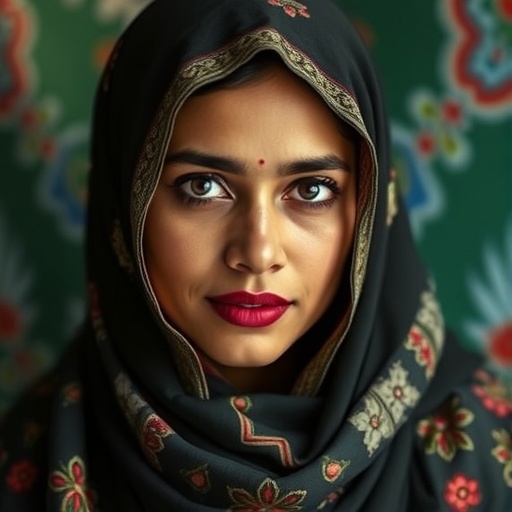
In recent years, the world has witnessed the powerful rise of social media platforms, and among them, YouTube stands out as a transformative medium for personal expression and societal commentary. This incessantly evolving platform, with millions of users, has facilitated a unique intersection between popular culture and public discourse. The implications of visual storytelling extend beyond mere entertainment; they shape perceptions and attitudes towards marginalized groups, particularly women. A recent scholarly article by A. Tahir and T. Qayyum delves into this phenomenon, specifically focusing on the stereotypical framing of Pakistani women as portrayed through YouTube’s diverse visual and discursive modalities.
The study aims to unpack the complexity of media representations, especially in relation to women from Pakistan, a nation historically steeped in patriarchal narratives. Traditional media representations have often painted a narrow and at times derogatory view of Pakistani women, which perpetuates existing stereotypes. This article explores whether a platform like YouTube can subvert or reinforce these stereotypes. By analyzing various video content and accompanying discourse, the authors provide insights into how media shapes social identity and cultural perception.
Through an extensive analysis, Tahir and Qayyum have pointed out that YouTube provides a dual narrative. On one hand, it serves as a platform for empowerment and self-expression. Many Pakistani women are utilizing this space to share their stories, talents, and perspectives. For instance, beauty bloggers, educational influencers, and social activists are utilizing the platform to showcase their skills and challenge societal norms. However, on the other hand, the authors illuminate the persistent stereotypes that continue to circulate, constructed through visual framing techniques and narratives that often reduce Pakistani women to simplistic tropes.
Visual representation plays a critical role in shaping societal beliefs. The authors highlight how certain visual elements—facial expressions, settings, clothing, and postures—contribute to the framing of women in these videos. For example, traditional attire may be showcased in a manner that emphasizes cultural heritage, while at other times, it is manipulated to illustrate a narrative of oppression or submission. This nuanced understanding of visual storytelling reveals the delicate balance between empowerment and stereotype.
Tahir and Qayyum also conducted thematic analyses of selected video content that has garnered substantial viewership. Their findings suggest that while some creators are conscious of their impact, others may unwittingly perpetuate stereotypes through uncritical adoption of popular narratives. This presents a pressing concern for content creators who need to recognize their responsibility in shaping perceptions and fostering understanding.
Cases of women reclaiming their narratives through innovative content are frequently highlighted in the study. These women often employ humor, storytelling, and critical commentary to redefine what it means to be a ‘Pakistani woman.’ By taking control of their narratives, they dismantle the preconceived images and challenge the stereotypes that are often associated with their identity. However, these voices are often drowned out by more dominant narratives, emphasizing the need for continued advocacy for visibility and representation.
The authors’ critical examination of discursive modes also emphasizes language as a powerful tool in shaping social realities. The language used in these videos, whether it be Urdu, English, or a mixture of both, plays a crucial role in how messages are delivered and perceived. By analyzing the interplay of language and visual representation, the authors offer a lens through which the complexities of identity and culture can be better understood.
Moreover, Tahir and Qayyum address the influence of socio-political contexts on media representation. The article takes into consideration the current political climate in Pakistan, which often impacts how women are portrayed and received in media. The implications of such representations stretch beyond entertainment to influence policy, societal norms, and individual behavior.
As the study progresses, it contemplates the role of YouTube as a catalyst for social change. The authors posit that this platform holds immense potential for altering the narrative surrounding Pakistani women. As more women rise to prominence on the platform, they advocate for their causes, thus altering public opinion. However, the prevailing question remains: how can this platform continue to evolve in ways that empower rather than exploit?
To comprehend the multifaceted relationship between media and identity, the article further engages in the discourse surrounding cultural imperialism. This concept becomes particularly relevant as global audiences interact with localized content, leading to a blend of cultural understandings. As Pakistani women’s narratives gain traction in the global milieu, the interplay of local and global perspectives presents both opportunities and challenges.
The article concludes with a call to action for both creators and consumers of media. It underscores the importance of critical engagement with content—encouraging viewers to question and analyze stereotypes, rather than passively consume them. It advocates for an informed audience that actively seeks out diverse representations and challenges reductive imagery.
As we move forward into an increasingly digital age, the study of media representation remains a critical area of inquiry. It upholds the idea that while platforms like YouTube can perpetuate stereotypes, they also provide a fertile ground for resistance and redefinition. Tahir and Qayyum’s work presents a vital understanding of these dynamics, highlighting the complexities that define the representation of Pakistani women in contemporary media.
In closing, the authors emphasize that the fight against stereotyping is an ongoing struggle. This is not just a challenge for content creators; it is a societal issue that demands collective awareness and advocacy. As the role of YouTube continues to grow, so too does the responsibility of its users to ensure that the narratives shared reflect a holistic and multifaceted view of Pakistani women, advocating for equality, empowerment, and understanding.
Subject of Research: Stereotypical framing of Pakistani women in YouTube’s visual and discursive modes
Article Title: Stereotypical framing of Pakistani women in YouTube’s visual and discursive modes
Article References:
Tahir, A., Qayyum, T. Stereotypical framing of Pakistani women in YouTube’s visual and discursive modes.
Discov glob soc 3, 172 (2025). https://doi.org/10.1007/s44282-025-00325-y
Image Credits: AI Generated
DOI: https://doi.org/10.1007/s44282-025-00325-y
Keywords: YouTube, Pakistani women, media representation, stereotypes, visual storytelling, cultural narrative, women’s empowerment, discourse analysis, societal perception.


