

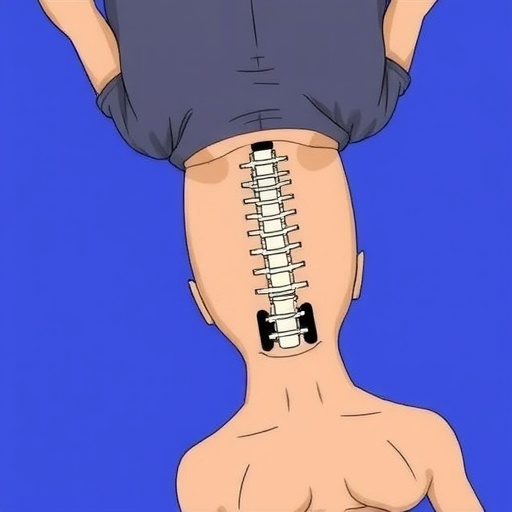
In a groundbreaking study published in Annals of Biomedical Engineering, researchers led by Al-Salehi and colleagues delve into the intricate biomechanical phenomena associated with cervical spine posture during non-impact inverted freefalls. This exploration, which breaks new ground in understanding human body dynamics under unique gravitational conditions, opens up vital conversations around injury prevention, athletic performance, and the biomechanics of extreme sports.
The cervical spine, composed of seven vertebrae, plays a critical role in supporting the head while providing a flexible range of motion. What makes this research especially compelling is its focus on how these vertebrae behave when subjected to non-impact inverted freefall conditions. Typically experienced by skydivers or in sports such as bungee jumping, the body undergoes significant shifts that can lead to potential strain or injury, making this a pertinent area of study for both safety and optimization.
By employing advanced imaging techniques, the team carefully documented the spinal positions of participants during freefall. Observations revealed that the cervical spine adapts dynamically, adjusting its posture in response to gravitational shifts. This adaptive response is crucial in understanding how to mitigate spinal injuries when people engage in extreme sports or activities that might expose them to unexpected forces.
Through their methodology, the researchers established a correlation between the angle of the cervical spine and the forces exerted on it during freefall. They discovered that when a subject is inverted, the cervical spine adopts a more extended posture that can increase stress on its structures. This alignment is a natural compensatory mechanism to maintain vision and spatial awareness but also raises concerns regarding prolonged exposure to such conditions.
Additionally, the study noted variations in individual responses based on factors such as strength, flexibility, and pre-existing conditions. Some participants demonstrated a remarkable capacity for adaptation, while others seemed more susceptible to strain and discomfort. Understanding these differences is pivotal for athletes as they pursue peak performance while minimizing injury risk.
The implications of these findings extend beyond the realm of extreme sports. Clinicians and rehabilitation specialists could incorporate insights from this research into treatment protocols for patients recovering from cervical injuries. By recognizing the adaptive nature of the cervical spine during such extreme conditions, medical professionals may better tailor rehabilitation strategies to promote recovery and improve quality of life.
Furthermore, the research raises intriguing questions about the role of training and preparation in minimizing injury risks. If athletes can train their cervical spines to better adapt to the stresses of inverted freefall, can they enhance performance longevity? This line of inquiry could inspire new training regimens focused on strengthening the cervical region specifically for athletes in sports at risk for neck injuries.
The findings also contribute to the broader understanding of how our bodies deal with rapid changes in orientation and the subsequent effect on spinal health. As society increasingly engages with activities that challenge our physical capabilities, the insights derived from this research become increasingly critical for fostering a safer approach to high-risk sports.
Moreover, the potential applications for harnessing this knowledge stretch into the realm of technology and innovation. For instance, advancements in wearable tech that monitor cervical spine angles in real-time could provide vital information to athletes and coaches, leading to proactive measures that can alleviate risks associated with spinal injuries.
As researchers continue to investigate the biomechanical intricacies of the human body, studies like this pave the way for novel discoveries. The findings not only enrich our fundamental understanding of human physiology but also cross-pollinate disciplines, from sports science to rehabilitation and injury prevention.
Ultimately, this research emphasizes the delicate balance of strength and flexibility in the cervical spine, underscoring the need for a considerate approach to training and performance in physically demanding environments. As we push the boundaries of human capability, understanding the human body’s response to extreme conditions becomes paramount.
In summation, the study by Al-Salehi et al. is more than just an exploration of spinal mechanics; it’s a testament to the interplay between innovation and tradition in sport. Through findings such as these, we stand on the brink of new strategies that could lead to safer practices and improved athlete performance in disciplines where the stakes are sky-high.
With the implications resonating across both clinical and athletic arenas, the research team has opened a vital dialogue that should continue to inform practices and perspectives for years to come.
Subject of Research: Biomechanical changes in cervical spine posture during non-impact inverted freefalls.
Article Title: In Vivo Cervical Spine Posture Changes During Non-impact Inverted Freefalls.
Article References: Al-Salehi, L., Siegmund, G.P., Partovi, R. et al. In Vivo Cervical Spine Posture Changes During Non-impact Inverted Freefalls. Ann Biomed Eng (2026). https://doi.org/10.1007/s10439-025-03917-6
Image Credits: AI Generated
DOI: https://doi.org/10.1007/s10439-025-03917-6
Keywords: Cervical spine, biomechanics, posture, inverted freefall, injury prevention, extreme sports, rehabilitation, adaptive physiology.


