

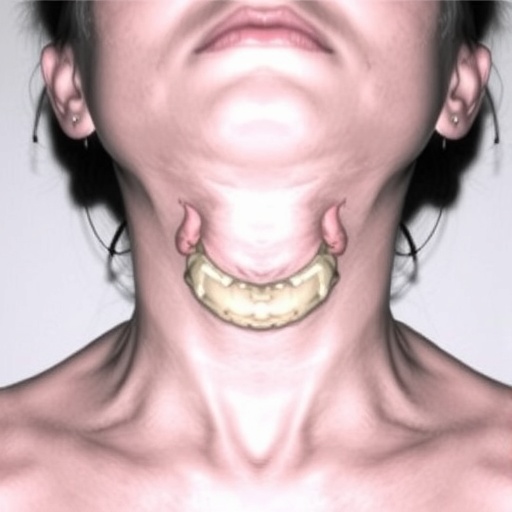
In a fascinating case documented in the BMC Endocrine Disorders journal, researchers have reported an unusual instance of right thyroid hemiagenesis coexisting with a contralateral simple diffuse goiter. This condition, which involves the partial or complete failure of thyroid gland development on one side (in this instance, the right), poses intriguing questions about thyroid physiology and its regulatory mechanisms. The patient, a 25-year-old female, sought medical attention after experiencing swelling in her neck, a symptom often attributed to thyroid abnormalities.
Upon examination, medical professionals noted the presence of a significant goiter on the left side of the thyroid, even as the right gland was essentially nonexistent. The investigation into this anomaly required a combination of advanced imaging techniques and a thorough evaluation of the patient’s hormonal levels. Thyroid function tests indicated a compensatory mechanism activated by the absent right lobe, leading to an increase in the volume of the remaining left lobe. Such a phenomenon represents the body’s remarkable adaptability in the face of anatomical deficiencies.
Thyroid hemiagenesis is an uncommon congenital anomaly. It occurs due to developmental imperfections during embryogenesis, specifically around the sixth to seventh week of gestation when the thyroid gland begins to form. Understanding this condition sheds light on the complexities of thyroid development and its repercussions on metabolic processes. Normal thyroid function is crucial, as the organ is integral to regulating metabolism, growth, and development through hormone production. A complete understanding of these pathologies could improve diagnostic approaches and therapeutic interventions.
The patient’s clinical history further revealed intermittent episodes of fatigue, weight fluctuations, and sensitivity to cold, symptoms that hinted at potential hypothyroidism. Physicians employed both ultrasound and CT scanning to visualize the thyroid structures, allowing for clear identification of the left thyroid lobe’s enlargement and the absence of the right lobe. The imaging studies not only confirmed the diagnosis but also excluded other common thyroid disorders such as nodular disease and malignancy.
Upon confirmation of the diagnosis of right thyroid hemiagenesis, the treatment plan focused on managing the goiter and monitoring thyroid hormone levels closely. The clinical team discussed the potential need for levothyroxine therapy to support the patient’s metabolic function adequately while regulating any changes stemming from hormonal imbalances caused by the structural anomaly. This proactive approach signifies a shift towards individualized patient care, wherein treatment strategies are tailored based on anatomical and functional evaluations.
Furthermore, several genetic factors are being examined in correlation with thyroid hemiagenesis. Preliminary studies suggest that mutations along signaling pathways related to endocrine development could contribute to these congenital abnormalities. Future research in this area may provide deeper insights into the genetic underpinnings of thyroid issues, guiding further understanding and possibly genetic screening protocols for at-risk populations.
Additionally, thyroid diseases carry considerable repercussions beyond hormonal regulation; they can also significantly affect psychological well-being. Patients with thyroid disorders, including hemiagenesis, often report increased levels of anxiety and depression. This layer of complexity must be integrated into patient care, ensuring that mental health support accompanies hormonal and physical treatment strategies. The interplay between physical thyroid health and mental wellness is an emerging area of focus and could lead to innovative approaches to holistic patient care.
In the era of precision medicine, it’s paramount that healthcare providers remain well-versed in uncommon conditions like thyroid hemiagenesis. This case serves not only as a clinical report but as a call to expand understanding in the domain of endocrine pathologies. Education and awareness of variations in anatomical development could enhance diagnostic acumen and patient outcomes.
The implications of detecting conditions such as hemiagenesis are vast. It indicates that the presence of goiter does not always suggest hyperplasia or malignancies; rather, it can represent compensatory hypertrophy due to underlying developmental anomalies. This nuanced understanding redefines the approach clinicians take when faced with atypical presentations in thyroid pathology.
The collaborative nature of this case report highlights the importance of interdisciplinary teams in managing complex health scenarios. The involvement of endocrinologists, surgeons, radiologists, and primary care physicians is critical in forming a comprehensive treatment strategy, leading to a more thorough understanding of the patient’s condition and improving overall care standards.
Overall, right thyroid hemiagenesis coupled with contralateral simple diffuse goiter serves as a compelling case for ongoing research and clinical discourse. The finding not only adds to the existing body of literature but also challenges clinicians to think critically about thyroid abnormalities. As research progresses, there is a potential to redefine treatment pathways and improve prognostic outcomes for patients affected by such rare conditions.
The case captured in Bedada et al. sets an important precedent for the medical community. It suggests an urgent need for further investigation into the effects of thyroid structure on hormonal health and patient quality of life. Continued efforts in this domain will pave the way for advancements in understanding potential genetic risks and development of effective interventions to manage such rare findings.
Subject of Research: Thyroid hemiagenesis coexisting with diffuse goiter
Article Title: Right thyroid hemiagenesis presenting with a contralateral simple diffuse goiter: case report.
Article References: Bedada, G.J., Adugna, S.K., Bone, A.G. et al. Right thyroid hemiagenesis presenting with a contralateral simple diffuse goiter: case report.
BMC Endocr Disord 25, 227 (2025). https://doi.org/10.1186/s12902-025-02047-3
Image Credits: AI Generated
DOI: https://doi.org/10.1186/s12902-025-02047-3
Keywords: Thyroid hemiagenesis, diffuse goiter, congenital anomalies, endocrine health, precision medicine.


