

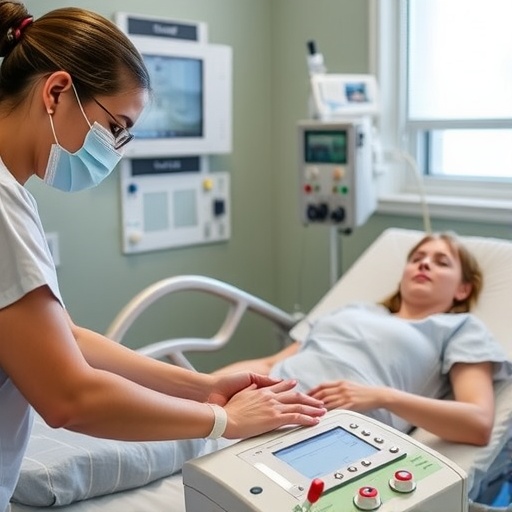
In recent years, medical education has been undergoing significant transformation, particularly in the methods utilized to teach foundational skills to future physicians. A groundbreaking study by Liu et al. addresses the pressing need for improved training techniques in ventilator management, specifically targeting non-anesthesiology medical undergraduates. This innovative approach combines flipped classroom pedagogy with case-based learning, thereby enriching the educational experience and equipping students with essential competencies. The randomized controlled trial reveals both the efficacy and the promising outcomes of this novel teaching strategy, paving the way for a revolution in medical training practices.
The traditional lecture-based model of education, while effective in certain respects, often fails to engage students deeply in the material. In contrast, the flipped classroom model enables learners to familiarize themselves with theoretical content outside of class, freeing up valuable classroom time for collaborative problem-solving and practical applications. Liu’s research provides compelling evidence that such an approach not only enhances student engagement but also fosters a deeper understanding of complex subjects, such as ventilator management, which is crucial in managing patients in critical care.
Ventilator management requires not just theoretical knowledge but also practical skills and decision-making capabilities in high-pressure situations. Case-based learning complements the flipped classroom by immersing students in real-life scenarios they are likely to encounter in practice. This method encourages them to analyze case studies, work in groups, and apply their knowledge in simulated environments. Liu et al.’s study engages participants in this dynamic learning process, allowing them to build confidence and competence in ventilator management.
A randomized controlled trial adds a layer of rigor to Liu’s research, enabling a systematic evaluation of the effectiveness of the combined learning strategy. The study involved a sizeable cohort of non-anesthesiology medical students who were divided into two groups. One group experienced the conventional teaching method, while the other engaged with the flipping classroom strategy coupled with case-based learning. This side-by-side comparison provides invaluable insights into the advantages of modernizing educational techniques.
The results were nothing short of transformative. Students who participated in the flipped classroom and case-based learning reported not only higher levels of comprehension but also increased satisfaction with their learning experience. They were better able to demonstrate practical skills and knowledge retention in assessments related to ventilator management. This study may serve as a catalyst for medical schools worldwide to adopt similar approaches, thereby improving the overall quality of medical education.
Moreover, Liu et al. emphasize that the integration of technology into education plays a vital role in facilitating this innovative learning model. Utilizing online platforms allows students to access lectures, readings, and supplementary materials at their own pace. This convenient approach accommodates diverse learning styles and schedules, ensuring that all students can engage with the content effectively. It also encourages self-directed learning—a crucial competency in today’s ever-evolving medical landscape.
Highlighting the importance of collaboration, Liu’s research points out that case-based learning fosters strong peer interactions. These interactions not only enhance the educational experience but also build essential teamwork skills that are vital for future medical practitioners. In real-world clinical settings, effective communication and collaboration among healthcare providers can significantly impact patient outcomes. By cultivating these skills early through innovative education methods, students are better prepared for their future roles.
Additionally, the study emphasizes the crucial role of assessment in medical education. The use of formative assessments in both learning environments allows for immediate feedback, helping students recognize areas for improvement. This continual evaluation process is essential, as it guides learners through their educational journey, enabling them to track their progress and adapt their study strategies as needed.
The implications of Liu et al.’s findings are broad and far-reaching. As medical education continues to evolve, the integration of innovative teaching strategies like the flipped classroom and case-based learning could potentially redefine how future healthcare professionals are trained. These methods not only align with modern educational theories but also respond to the practical needs of the healthcare system by producing graduates who are better equipped to face the challenges of patient care.
As universities begin to integrate these approaches into their curricula, it is vital for educational leaders to remain attuned to ongoing assessments and adaptations necessary to optimize learning outcomes. Continuous research will be critical in understanding how these modern techniques can be refined and expanded upon to meet the growing demands of medical education.
In conclusion, Liu et al.’s research marks an important step in the evolution of medical training. By harnessing the power of the flipped classroom model in conjunction with case-based learning, the study highlights a promising pathway toward enhancing educational quality and student preparedness. As the landscape of medical education continues to shift, embracing innovative teaching methodologies will be essential for cultivating the next generation of healthcare professionals equipped to navigate the complexities of modern medicine.
The ongoing challenges in medical education require that institutions not only adopt but also rigorously evaluate progressive teaching methods. Liu et al.’s landmark study serves as a foundational reference for future investigations into the efficacy of these practices, offering a vision of what could be possible in medical training. This blend of theory and practical application could ultimately lead to improved patient care outcomes, ensuring that the healthcare system evolves in parallel with advancements in education.
As we look to the future, the combination of technological integration, innovative pedagogical methods, and an unwavering focus on student engagement will be paramount. Liu’s findings stand as a testament to what can be achieved when educators prioritize effective learning strategies. Medical schools around the world should take heed of the implications of this research, adapting their curricula to reflect a more engaging and impactful learning environment.
The journey of medical education is ongoing, and the road ahead is filled with potential. The success of Liu et al.’s approach serves as both an inspiration and a call to action for educators across the globe. By continuing to refine educational practices and embrace the possibilities touted in this research, medical institutions can ensure they are cultivating professionals who are not only knowledgeable but also adept at delivering high-quality care in increasingly complex healthcare environments.
Ultimately, Liu et al. illustrate that the future of medical education is bright, driven by innovation and a commitment to excellence in teaching. As these methods gain recognition and adoption, the landscape of healthcare education is poised for extraordinary change, ultimately benefiting not only the next generation of physicians but also the patients they serve.
Subject of Research: Innovations in Medical Education
Article Title: Flipped Classroom Combined with Case-Based Learning Enhances Ventilator Management Training for Non-Anesthesiology Medical Undergraduates: A Randomized Controlled Study
Article References:
Liu, SM., Ou, P., Li, H. et al. Flipped classroom combined with case-based learning enhances ventilator management training for non-anesthesiology medical undergraduates: a randomized controlled study.
BMC Med Educ (2025). https://doi.org/10.1186/s12909-025-08380-4
Image Credits: AI Generated
DOI: 10.1186/s12909-025-08380-4
Keywords: Medical Education, Flipped Classroom, Case-Based Learning, Ventilator Management, Critical Care Training.


