

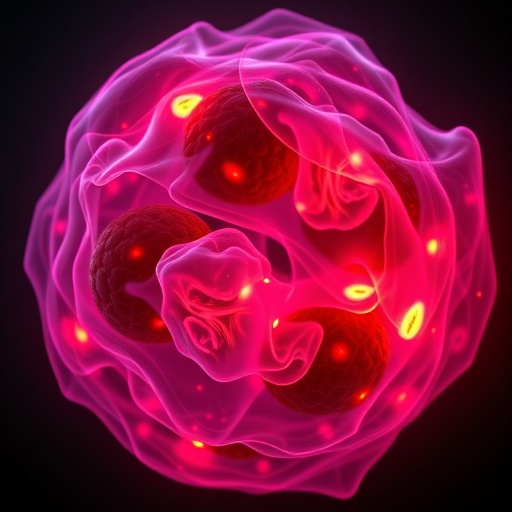
In a groundbreaking study published in Nature Communications, researchers have unveiled an unexpected and transformative aspect of cellular biology: over two hundred metabolic enzymes, traditionally recognized for their roles in energy production within the mitochondria, are also intimately associated with human DNA inside the nucleus. This revelation challenges the long-held view that metabolism and genome regulation operate as mostly separate processes within the cell, suggesting instead a sophisticated molecular dialogue that could profoundly reshape our understanding of cellular function, especially in cancer.
The study meticulously analyzed 44 cancer cell lines alongside 10 healthy cell types from a diverse array of tissues, revealing that each cell type harbors a distinct “nuclear metabolic fingerprint.” This fingerprint reflects a unique complement and distribution of metabolic enzymes directly compartmentalized within the nucleus and intimately interacting with chromatin—the physical form of DNA packaged with proteins. Previously, metabolic enzymes were thought to be confined largely to the cytoplasm and mitochondria, the latter being the cellular powerhouse. The discovery that these enzymes reside in the nucleus adds an intriguing layer of complexity to nuclear biology, indicating the presence of discrete, tissue-specific nuclear metabolisms.
One of the most striking findings in this research was the significant enrichment of energy-producing enzymes inside the nucleus, especially those involved in oxidative phosphorylation—the principal mechanism by which cells generate ATP, their main energy currency. Intriguingly, breast cancer cells exhibited a pronounced nuclear presence of these enzymes, whereas lung cancer cells almost entirely lacked them. This tissue-specific variation in nuclear metabolic enzyme populations reflects distinct cellular strategies and metabolic adaptations in tumors arising from different origins, highlighting the nuanced interplay between metabolism and genomic regulation in cancer pathology.
The researchers employed an innovative technique known as chromatin proteomics to physically isolate and identify proteins bound to DNA in its native chromatin context. It was through this method that they identified metabolic enzymes not only as structural players on DNA but also as potentially active biochemical participants within the nucleus. Their presence accounted for approximately 7% of all chromatin-associated proteins, a proportion that far exceeds previous expectations and underscores the existence of an autonomous mini-metabolic network within the nucleus.
While the precise functions of these enzymes in nuclear contexts remain to be fully elucidated, the study offers tantalizing clues. Several of these enzymes are known to synthesize critical nucleotide precursors required for DNA synthesis and repair. The researchers observed their dynamic recruitment to damaged DNA sites, suggesting a direct role in genome maintenance. This crosstalk between metabolism and DNA repair pathways could be pivotal in understanding how cancer cells respond to genotoxic stress induced by chemotherapy and radiation therapy, which are designed to inflict DNA damage.
The enzyme IMPDH2 exemplifies the functional versatility of nuclear metabolic proteins. When experimentally confined to the nucleus, IMPDH2 appeared to support genome stability, contributing to the repair processes essential to cellular survival. Conversely, restricting it to the cytoplasm diverted its activity toward different metabolic pathways, emphasizing that subcellular localization critically dictates enzyme function. This spatial specificity hints at intricate regulatory mechanisms that cells might employ to fine-tune metabolism in response to distinct physiological states.
The discovery of nuclear oxidative phosphorylation components is particularly surprising given their large enzymatic complexes, which traditionally were believed too bulky to pass through nuclear pores easily. This observation raises provocative questions about novel transport mechanisms that cancer and other cells might use to shuttle these large enzymes across the nuclear envelope. Unveiling these pathways could open new therapeutic avenues by targeting nuclear import/export machinery to disrupt aberrant nuclear metabolism in disease states.
This research carries significant implications for cancer treatment. Many existing drugs target metabolic enzymes to disrupt cancer cell energy production, while others aim to impair DNA repair to sensitize tumors to damage. The newly revealed interdependence between nuclear metabolism and genome stability may explain why tumors originating from different tissues, despite sharing similar mutations, often display variable responses to chemotherapeutics and targeted therapies. This insight could catalyze the development of more personalized and effective treatment strategies.
Moving forward, the authors advocate for systematic functional studies of individual nuclear metabolic enzymes to delineate their precise roles—whether catalytic, regulatory, or structural—within the nucleus. Such work may identify novel biomarkers for cancer diagnosis and prognosis, as well as vulnerabilities that could be exploited pharmacologically. Understanding whether all nuclear-localized enzymes are active or serve non-catalytic roles remains a pivotal question for this emerging field.
Another captivating aspect of this discovery is the broader biological implication that nuclear metabolism may serve as a previously unrecognized regulator of gene expression and chromatin dynamics. The possibility that metabolic intermediates generated in the nucleus directly influence epigenetic modifications, transcriptional programs, or DNA repair mechanisms broadens the conventional paradigm of cellular metabolism, merging it with the intricate regulatory networks governing genome function.
In conclusion, this study reveals the human cell nucleus as a bustling hub of metabolic activity, harboring a unique assemblage of enzymes that intimately cooperate with the genome. By bridging the seemingly disparate realms of metabolism and nuclear biology, this research ushers in a new chapter in molecular and cancer biology, laying the groundwork for potential breakthroughs in diagnosis, prognosis, and therapy of human malignancies. The newfound complexity of nuclear metabolic networks promises a fertile terrain for future exploration and translational innovation.
Subject of Research: Nuclear localization and function of metabolic enzymes in human cells, with implications for cancer metabolism and genome regulation.
Article Title: Metabolic Enzymes Assemble on Chromatin Revealing Tissue-Specific Nuclear Metabolism in Human Cancers
News Publication Date: March 6, 2026
Web References: 10.1038/s41467-026-69217-2
Image Credits: Alberto Coll Manzano/Centro de Regulación Genómica
Keywords: Cancer, Metabolism, Nuclear Metabolic Fingerprint, Chromatin Proteomics, DNA Repair, Oxidative Phosphorylation, Genome Stability


