

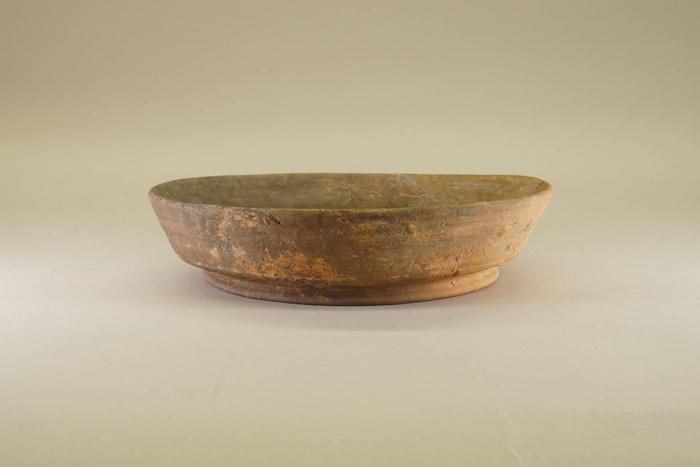
In an extraordinary fusion of archaeology and artificial intelligence, researchers at Nagoya University have pioneered a deep learning model that expertly classifies ancient ceramics with remarkable precision. This breakthrough moves beyond traditional methods, leveraging three-dimensional scan data of pottery rather than relying on photographs or planar drawings, providing a transformative leap in archaeological analysis.
The classification of ancient pottery has long been reliant on the meticulous eye and intuition of seasoned archaeologists. Differentiating between subtle shape variations of ceramic pieces, especially those from dynamic historic periods, requires years of discernment. Moreover, expert opinions often diverge on the categorization of certain artifact types, highlighting the need for an objective, data-driven approach. The Nagoya University team has risen to this challenge by developing an AI system trained to recognize the nuanced morphologies of pottery solely through 3D spatial data.
Central to this innovation is the use of the Point Transformer model architecture, a cutting-edge framework that processes three-dimensional point clouds. Unlike conventional 2D image analysis or simplified cross-sectional outlines, point clouds represent the full geometry of objects by mapping thousands of individual coordinates on their surfaces. This comprehensive representation preserves the intricate topographical details essential for distinguishing closely related pottery typologies.
The research team focused their study on Sue ware, a traditional Japanese unglazed stoneware dating from the fifth to the tenth centuries. Known for its gray to brownish-gray coloration and wheel-formed structure, Sue ware was fired at high temperatures in tunnel kilns, producing a consistent but varied set of shapes ideal for morphological classification. The researchers scanned 917 individual pieces from the Sanage kiln site— a prominent Sue ware production center during the eighth to mid-ninth centuries—creating detailed digital models comprising 1,024 spatial points each. These were meticulously labeled by expert archaeologists according to five categories: Dish Cap, Dish Body with Ring Base, Dish Body, Bowl, and Plate.
One of the enduring puzzles in Sue ware studies is the conceptual and morphological overlap between dish and bowl forms. Typically, dish-type vessels feature vertical walls and flat bottoms, while bowls are characterized by gently curving walls and concave bases. However, examples from a transitional period blur this distinction. This ambiguity is hypothesized to reflect historical shifts in dining customs—namely the transition from eating directly by hand to using chopsticks and spoons—manifested subtly in vessel shapes over time.
The Nagoya University deep learning model achieved an impressive overall classification accuracy of 93.2%, with the highest precision attained on well-defined, visually distinct categories. The model’s occasional confusion between the Dish Body and Bowl types echoed the genuine morphological continuum observed in the archaeological record, affirming that shape boundaries in this era were fluid rather than discrete.
A remarkable advancement in this study is the interpretability of the AI’s decision-making process. Employing Gradient-weighted Class Activation Mapping (Grad-CAM), the researchers visualized the specific points on each pottery piece that the model weighted most heavily in determining its classification. For example, when identifying Dish Body pieces, the model concentrated on critical regions such as the rim and the sharp inner angle where the vessel’s wall meets the base. Conversely, Bowl classifications emphasized the outer curved surfaces and the base. These focal points intriguingly align with regions human experts traditionally examine, revealing that the AI may emulate archaeologists’ reasoning patterns, albeit autonomously.
This transparency transforms the deep learning approach from a “black box” into an insightful analytical tool that not only automates classification but also offers an interpretative partnership with human expertise. Researchers can now investigate which morphological features are pivotal in typological assessments, opening avenues for enhanced archaeological understanding and hypothesis testing.
Looking forward, the team envisions extending this methodology to pottery traditions beyond Japan, tailoring the model to new ceramic datasets and cultural contexts. Recognizing the need for substantial sample sizes to train such models effectively, they have made their dataset and source code publicly available, inviting collaboration and innovation within the archaeological community worldwide.
The integration of AI and 3D scanning technologies heralds a new era for archaeological science, where complex artifact classifications can be conducted with unprecedented speed and objectivity. Not only does this facilitate large-scale cultural analyses, but it may also uncover subtle historical narratives encoded in material culture, such as shifts in social practice, technological innovation, and cross-cultural exchange.
This breakthrough reflects a broader trend toward interdisciplinary applications of machine learning, where traditional humanities disciplines benefit from quantitative and computational tools. As digital archives of cultural heritage expand, leveraging AI to decode the past will become increasingly vital in preserving, understanding, and interpreting humanity’s shared history.
The model’s success underscores the potential of deep learning in handling inherently three-dimensional archaeological data, overcoming limitations of prior 2D methods. It signals a future where archaeologists can combine their expert knowledge with advanced technologies to unlock new dimensions of insight from ancient artifacts, transforming dusty excavations into dynamic datasets for discovery.
With ongoing refinements and wider adoption, such technologies promise to accelerate cultural heritage research, enhance museum curation, and even support conservation efforts by providing detailed morphological analyses. This convergence of AI and archaeology spotlights how the past can inspire innovations that shape the future of scientific inquiry.
Subject of Research:
Not applicable
Article Title:
Deep learning-based morphological classification of ceramics: A case study of 3D point cloud analysis for Sue ware, Japan
News Publication Date:
16-Jan-2026
Web References:
http://dx.doi.org/10.1016/j.jas.2026.106472
References:
Journal of Archaeological Science
Image Credits:
Photo by Hayata Inoue / Courtesy of the Aichi Prefectural Ceramic Museum
Keywords:
Deep learning, archaeology, Sue ware, ceramics classification, 3D point clouds, artificial intelligence, machine learning, morphological analysis, Japan, cultural heritage, digital archaeology, Point Transformer, Grad-CAM


