

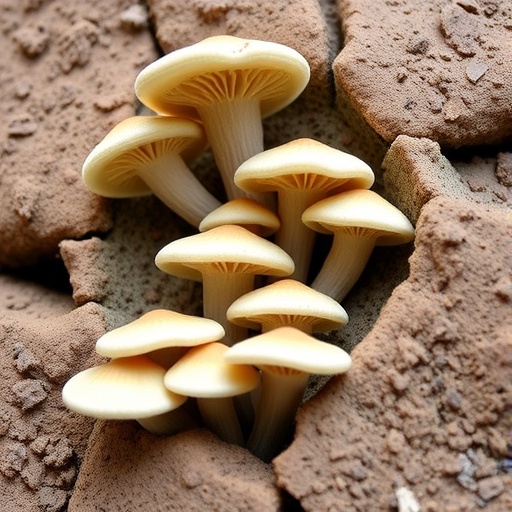
In a bold stride toward sustainable extraterrestrial habitation, UNC Greensboro chemistry professor Nicholas Oberlies has been entrusted with a pioneering NASA-funded project that investigates the potential of fungi-based materials as foundational elements in lunar and Martian construction. This venture, crafted under the auspices of Luna Labs and supported by a NASA Phase I Small Business Technology Transfer grant, aims to revolutionize off-world building techniques by harnessing biological systems in tandem with indigenous planetary materials, ultimately reducing reliance on Earth-imported supplies.
The core of this investigation centers on the concept of in-situ resource utilization (ISRU), a strategic approach that leverages materials found or produced directly at extraterrestrial sites for construction and life support purposes. Oberlies and his team are focusing on the engineering potential of fungal hyphae—a dense network of microscopic thread-like structures—that possess the remarkable ability to intertwine and bond disparate particles. Their hypothesis envisions cultivating hyphae on regolith, the granular surface substrate ubiquitous on the moon and Mars, combined with simulated human waste, to fabricate cohesive, structurally sound composite bricks.
This strategy addresses a key logistical challenge in cosmic colonization: the prohibitive cost and impracticality of transporting traditional building materials such as bricks, steel, or concrete from Earth to other celestial bodies. Instead, by exploiting fungal growth dynamics adapted to harsh off-world environments, Oberlies envisions a paradigm where construction materials can be bioengineered from locally sourced components and recycled byproducts. The process involves cultivating species of shelf fungi and other robust varieties known for their rigidity and structural resilience, with the aim of producing sterilizable and compressible units suitable for habitat assembly.
Oberlies describes his team’s work as a confluence of fungal ecology and materials science, where biological insights inform the scaling and mechanical validation of fungal-regolith composites. Luna Labs contributes cutting-edge expertise in advanced materials testing and structural analysis, quantifying variables such as compressive strength, porosity, and durability under simulated extraterrestrial conditions. This interdisciplinary collaboration melds the microbial and engineering realms, aspiring to unlock the physical capabilities of fungal mycelium as a biocementing agent in space architecture.
This initiative intriguingly departs from Oberlies’ routine investigations into fungi’s bioactive compounds, branching into architectural mycology with a vision inspired by real-world analogies. He points to fungi thriving on decaying wood as natural exemplars of bioengineered strength, reinforcing the concept that naturally evolved fungal networks can serve utilitarian structural roles beyond their ecological functions. The prospect of harnessing these biomaterials addresses both sustainability and self-sufficiency imperatives crucial to prolonged human presence on the moon and Mars.
Further adding to the project’s significance is its alignment with NASA’s Artemis Project, an ambitious program targeting sustainable lunar exploration and the establishment of permanent bases on the moon by 2040. The Artemis missions aim to demonstrate and validate technologies essential for planetary surface operations, where the development and deployment of in-situ materials are paramount. Oberlies’ research offers a potential breakthrough methodology that, if successful, could drastically reduce habitat construction costs and enhance mission resilience.
Technological establishment of such bio-composite bricks entails rigorous laboratory experimentation to optimize fungal species selection, growth conditions, and hybridization methods with regolith simulants. Trials will include varying moisture levels, substrates enriched with organic waste analogs, and environmental stressors that mimic radiation and low gravity, thereby approximating lunar and Martian surface conditions. By precisely manipulating these parameters, the team aims to maximize mechanical integrity and minimize the mass and volume of materials transported from Earth.
This early-stage research also dovetails with closed-loop life support systems, emphasizing comprehensive resource recycling wherein human waste is repurposed as a nutrient substrate for fungal cultivation. Such an approach mirrors terrestrial circular economy principles translated to off-world settings, essential for reducing resupply needs and environmental impact in space missions. It also highlights the multidisciplinary challenges of space colonization, involving microbiology, materials engineering, waste management, and planetary science.
The engineered fungal composites could potentially offer multiple advantages over conventional construction materials. Besides lighter weight and adaptability, fungal bricks are inherently biodegradable and might even contribute to radiation shielding due to their organic content. These properties signal a paradigm shift toward biofabrication techniques that are not only resource-efficient but also ecologically harmonious, supporting the overarching goal of sustainable space exploration.
Oberlies’ enthusiasm resonates with the visionary excitement that fuels space innovation. While acknowledging the project’s exploratory nature, he emphasizes its novelty and potential impact, especially in bridging fundamental fungal ecology with aerospace engineering. The collaborative effort with Luna Labs exemplifies the increasing trend of public-private partnerships in advancing space technology, blending university research acumen with industrial application prowess.
As human ambitions extend beyond Earth’s cradle, projects like Oberlies’ fungal composite research underscore the necessity for inventive solutions to seemingly intractable challenges. The pursuit of self-sufficient extraterrestrial habitats necessitates rethinking construction paradigms, and the marriage of mycology with materials science could very well chart new frontiers in alien architecture. If successful, this innovative approach will propel humanity closer to establishing durable, livable outposts on the moon and Mars, enabling the next great chapter of space exploration.
Subject of Research: Mycology-based bio-composites for extraterrestrial construction
Article Title: Fungi as Foundations: Harnessing Mycelium for Lunar and Martian Building Materials
News Publication Date: February 26, 2026
Web References: https://www.nasa.gov/humans-in-space/artemis/
Image Credits: Sean Norona, UNCG University Communications
Keywords: fungi, mycelium, extraterrestrial construction, lunar regolith, Martian soil, in-situ resource utilization, bio-composites, NASA Artemis, Luna Labs, mycology, space habitat, biofabrication


