

The Buck Institute for Research on Aging has unveiled Healthspan Horizons, an ambitious new initiative aimed at addressing one of the foremost challenges in contemporary medicine: the accurate measurement, comprehensive understanding, and effective extension of healthspan—the duration of life spent in good health. While global longevity continues to rise, the additional years often come burdened with chronic diseases, underscoring the urgent need to shift focus from lifespan alone to the quality and functionality of those years.
Healthspan Horizons is conceptualized as a cutting-edge infrastructure platform that integrates heterogeneous, multimodal datasets drawn from individuals’ day-to-day health and wellness interactions. This encompasses wearable devices tracking physiological metrics, sleep and activity monitoring, nutritional data, and laboratory results. Complementing these real-world, continuous streams of information are deep clinical and molecular phenotyping efforts guided by the Buck Institute, establishing a uniquely dense longitudinal data repository. The central premise is that coupling diverse biological and behavioral signals from the same individuals over time produces data with exponentially greater analytic power, enabling early detection of subtle deviations from healthy aging trajectories.
The platform’s analytical core leverages state-of-the-art artificial intelligence, meticulously engineered to interpret complex, multidimensional inputs into meaningful healthspan trajectories. This AI is grounded firmly in the Buck Institute’s rich expertise in the biology of aging, allowing it to discern predictive patterns that precede overt disease onset. The transformative potential lies in generating actionable insights that empower preemptive interventions, preserving vitality, strength, and independence far beyond what current medical paradigms achieve.
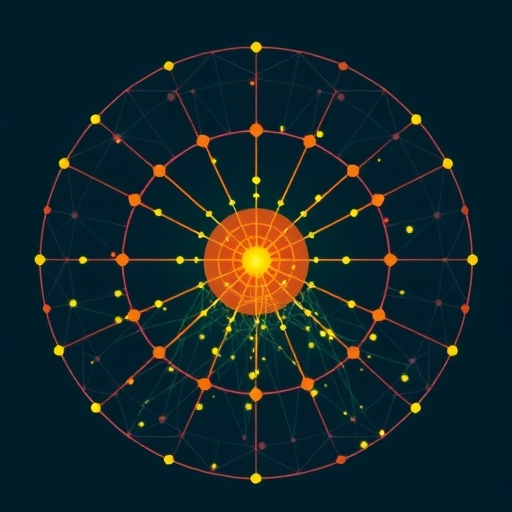
A distinctive hallmark of Healthspan Horizons is its federated, privacy-preserving architecture, which fundamentally reframes traditional data sharing models. Rather than consolidating all participant data within a centralized silo, the initiative fosters collaborative analytics by enabling approved computations to be executed across decentralized partner environments. This design not only respects individual data sovereignty but also mitigates risks associated with data commercialization and privacy breaches, thereby enhancing participant trust and ethical stewardship.
The participation model invites a broad spectrum of stakeholders—wellness companies, healthcare systems, research institutions, payers, and individuals—to engage as co-creators rather than mere data contributors. By harmonizing measurement standards and establishing transparent governance, Healthspan Horizons aims to create a vibrant healthspan commons. Within this ecosystem, researchers can validate and iterate on analytical methods, clinicians can translate AI-generated insights into patient care protocols, and payers can innovate value-based models centered on functional well-being rather than episodic treatment costs.
The initiative is spearheaded by Dr. Nathan Price and Dr. Yi Sherry Zhang, leaders with extensive backgrounds in aging biology, data science, and translational research. Their collaborative leadership is bolstered by an advisory group featuring luminaries in fields spanning systems biology, precision health, public health, and clinical medicine. Contributors include renowned experts such as Dr. Lee Hood, Dr. Larry Brilliant, and Dr. Sara Szal, whose diverse expertise enriches the multifaceted vision of Healthspan Horizons.
This federated approach represents a paradigm shift in how health data is coordinated across the longevity economy. Currently, valuable insights remain siloed within disparate datasets and proprietary platforms. Healthspan Horizons aims to transcend these limitations by establishing shared standards and interoperable systems that link biometric, molecular, and real-world contextual data. The resultant composite healthspan models promise unprecedented predictive power and translational utility, enabling strategies that prolong not just lifespan but “healthful” years characterized by robust functionality.
The scientific underpinning draws heavily on recent advances in geroscience, revealing that aging is a modifiable biological process. By quantifying multi-dimensional biomarkers longitudinally, Healthspan Horizons endeavors to elucidate the complex interplay between genetics, environment, lifestyle, and interventions that modulate resilience and vulnerability. This framework will facilitate early identification of risk trajectories and provide a scientifically rigorous basis for personalized prevention strategies.
Ethical governance is integral to the initiative, ensuring that healthspan research respects human dignity and prioritizes collective benefit. Transparent data permissions, robust privacy protections, and commitment to equitable access form the backbone of Healthspan Horizons’ operational philosophy. This ethical foundation aims to democratize the advantages of healthspan science, contrasting with previous models that often centralized benefits within narrow cohorts.
The Buck Institute posits that the future of healthspan science will be defined not by singular datasets or proprietary technologies but through collaborative intelligence networks. Healthspan Horizons embodies this vision by aggregating scientific, clinical, and real-world insights into a coherent, scalable platform. Through this collective approach, the initiative aspires to mainstream healthspan as a practical and trusted metric that drives innovation in research, healthcare delivery, and public policy.
In summary, Healthspan Horizons envisions a transformative shift in aging research and healthcare, empowered by federated data integration, responsible AI, and shared governance. By creating a deep, longitudinal data infrastructure tied directly to human biological aging and wellness, it offers the potential to revolutionize how societies measure and extend the quality years of life. This initiative stands at the forefront of the growing global movement to not only extend longevity but to ensure those years are lived with vitality and purpose.
For those interested in deeper technical and governance details, the full Healthspan Horizons white paper, “Bridging Wellness & Clinical Science: A Federated Healthspan Data Framework for the 21st-Century Longevity Economy,” is available at healthspanhorizons.org/whitepaper. Researchers, clinicians, organizations, and individuals committed to advancing this field are invited to join the collaborative at healthspanhorizons.org/join.
Subject of Research: Not applicable
Keywords: Health and medicine, Artificial intelligence, Discovery research, Personalized medicine


