

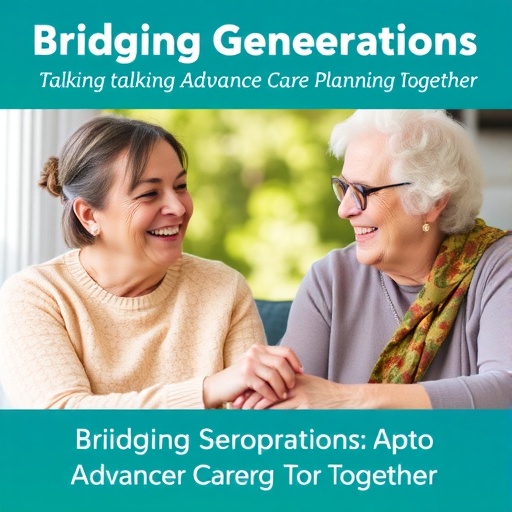
In a groundbreaking qualitative dyadic study set to reshape our understanding of family dynamics surrounding healthcare decisions, researchers have illuminated the intricate processes involved in intergenerational conversations about advance care planning (ACP) between older adults and their adult children. This pioneering investigation, published in BMC Geriatrics in 2026, dives deeply into the nuanced communications that often unfold when planning for future medical care, revealing vital insights with far-reaching implications for both clinical practice and gerontological policy.
Advance care planning has long been recognized as a critical component of ensuring that patients’ preferences for future medical treatment are known and honored, particularly as they near the end of life or face significant health challenges. However, despite its importance, the subject remains notoriously difficult for families to address. The study conducted by Lin, Kao, and Fan employs a qualitative dyadic methodology, engaging pairs of older adults and their adult children simultaneously, thereby capturing a rare, bidirectional perspective on how these conversations are initiated, sustained, and sometimes avoided.
The research hinges on the recognition that advance care planning is not simply a medical or legal process, but a profoundly relational and emotional one. Through careful thematic analysis of interviews conducted with multiple dyads, the authors uncover the delicate balance of respect, autonomy, and protection that defines these interactions. Their findings underscore how adult children often struggle to gauge the appropriate level of involvement, while older adults weigh their desire for independence against the reality of increasing vulnerability.
One striking revelation from the study is the identification of specific barriers that impede effective communication about ACP. These include fear of mortality, cultural taboos around discussing death, and uncertainty about the correct terminology and procedures involved in ACP. In some cases, participants expressed concern about causing distress or being perceived as intrusive, which frequently leads to conversations being postponed or never happening at all. This avoidance perpetuates a cycle of silence that can hinder informed decision-making and respect for patient preferences.
Conversely, the researchers also pinpoint facilitators that support richer dialogue. These include trust and openness in the parent-child relationship, prior exposure to health crises, and sometimes external prompts from healthcare providers or community programs. The presence of empathetic listening, validation of emotions, and clear explanations about the purpose and benefits of ACP emerged as critical elements that encouraged older adults and their children to engage meaningfully.
Technical insights from the study extend to the cognitive and emotional dynamics underlying these discussions. For example, older adults often engage in selective disclosure, sharing only what they believe their children can handle emotionally. Adult children, meanwhile, deploy varying communication strategies ranging from gentle probing to direct inquiry, reflecting differing styles of processing impending loss and responsibility. The interplay of these communication patterns suggests that tailored approaches may be necessary to foster constructive ACP conversations.
The implications for healthcare professionals are profound. The data suggest a need for clinicians to adopt a more family-centered approach when discussing advance care planning, recognizing the relational context and emotional landscape in which these decisions occur. Incorporating techniques to facilitate dialogue—not only with patients but with their families—may improve the uptake and effectiveness of ACP interventions. Training healthcare providers in communication skills that address intergenerational sensitivities could ultimately lead to care that is more aligned with patient values.
Social and cultural dimensions also play a pivotal role in shaping ACP communication. The study reveals variability in attitudes influenced by cultural norms around family hierarchy, filial piety, and death-related taboos. For instance, in some cultures, elders maintain decision-making authority, which may discourage open discussions, whereas in others, children assume a more active role. Understanding these cultural nuances is essential for designing ACP programs that respect diverse backgrounds and promote equity in end-of-life care.
Beyond the immediate family, the research points to broader psychosocial factors influencing advance care planning engagement. Issues such as health literacy, socioeconomic status, and prior experiences with healthcare systems shape individuals’ readiness and ability to participate in such talks. The dyadic approach highlights that communication interventions must be multifaceted, addressing not only informational gaps but emotional resilience and trust-building.
The methodological rigor of this study is notable, employing in-depth interviews and a dyadic framework that captures the symbiotic nature of familial communication processes. This approach offers a template for future research aiming to explore sensitive topics that necessitate mutual understanding and shared meaning. By engaging both older adults and their adult children, the authors achieve a comprehensive depiction of the challenges and opportunities inherent in intergenerational ACP discussions.
The study also sheds light on potential pathways to normalize advance care planning as a routine aspect of family life. The authors advocate for public health campaigns and community education initiatives that demystify ACP, destigmatize the subject of death, and encourage pre-emptive conversations. This paradigm shift could reduce the emotional burden and facilitate proactive decision-making, ultimately enhancing quality of life in later years.
In sum, Lin, Kao, and Fan’s qualitative dyadic study provides an unprecedented window into the delicate art of intergenerational communication about advance care planning. Their insights pave the way for more empathetic, culturally sensitive, and effective approaches to this critical aspect of healthcare. The findings serve as a clarion call to clinicians, policymakers, and families alike to prioritize open dialogue and shared understanding in navigating the complexities of aging and medical decision-making.
As the global population ages and healthcare systems grapple with the increasing demand for personalized and patient-centered care, this research arrives at a pivotal moment. It challenges us to rethink how we support families in planning for the future, emphasizing that successful advance care planning transcends documentation—it is ultimately about connection, respect, and preparing emotionally and practically for life’s final chapter.
The study’s implications extend beyond clinical settings, inviting collaboration across disciplines such as social work, psychology, and bioethics to create environments conducive to honest and compassionate conversations. This multidimensional approach could foster improvements in care outcomes and family satisfaction, transforming the landscape of elder care.
Future research inspired by this work may explore technological innovations that bridge communication gaps, such as digital platforms that facilitate shared decision-making or virtual family meetings. Additionally, longitudinal designs could track how ACP conversations evolve over time and how they impact both patient well-being and caregiver stress, offering further evidence to optimize support interventions.
Ultimately, this insightful exploration by Lin, Kao, and Fan serves as an essential contribution to understanding the human dimensions underpinning medical decision-making. It underscores that at the heart of advance care planning lies not only the desire to honor patient autonomy but also the profound human need for connection, clarity, and peace of mind within families facing uncertain futures.
Subject of Research: Intergenerational communication about advance care planning between older adults and their adult children.
Article Title: Intergenerational communication about advance care planning between older adults and their adult children: a qualitative dyadic study.
Article References:
Lin, TC., Kao, CY. & Fan, SY. Intergenerational communication about advance care planning between older adults and their adult children: a qualitative dyadic study. BMC Geriatr (2026). https://doi.org/10.1186/s12877-026-07375-0
Image Credits: AI Generated


