

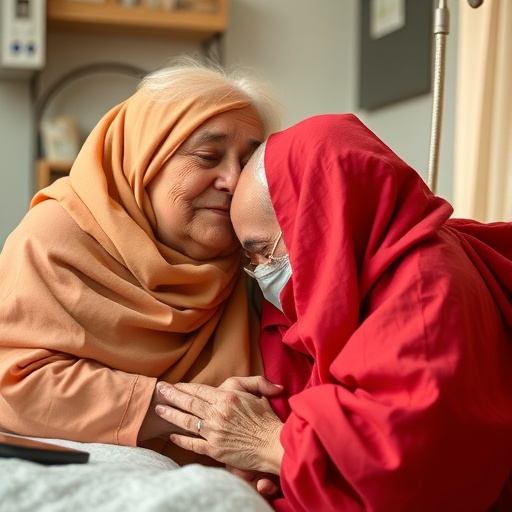
In recent years, the evaluation of healthcare quality has become a paramount concern globally, especially as populations age and chronic conditions become more prevalent. A groundbreaking study authored by Pakzad, Yazdi, Naji, and colleagues has shed new light on a critical yet underexplored dimension of healthcare quality: the gap between patient expectations and their actual perceptions of primary healthcare services. This research, focusing on older adults in Iran, offers deep insights into the disparity that exists between what elderly patients anticipate from their healthcare providers and what they actually experience. The study’s findings hold significant implications for healthcare systems worldwide, signaling a need for strategic reforms aimed at bridging this expectation-perception divide to improve patient satisfaction and health outcomes.
Primary healthcare acts as the first and most frequent point of contact for individuals within the healthcare system, managing common illnesses, preventive care, and chronic disease management. For older adults, whose healthcare needs are complex and multifaceted, the quality of primary care greatly influences their overall wellbeing. The Iranian study scrutinizes this phenomenon by investigating the quality of services through the lens of the elderly demographic, highlighting how their expectations often outperform their perceptions. This expectation-perception gap is not merely a subjective dissatisfaction but an indicator of systemic issues that can undermine the efficacy of healthcare delivery.
The methodology employed by the researchers involved detailed surveys and qualitative evaluations of Iranian older patients, assessing both the standards of care they anticipated and the realities they encountered. Utilizing robust statistical techniques, the team attempted to quantify this disparity, revealing a consistent trend: the older population frequently scored their healthcare experiences lower than what they had expected. This suggests a disconnect that goes beyond isolated incidents of care and reflects structural and procedural deficiencies within primary healthcare frameworks.
Delving into the technical aspects, the study operationalized ‘expectation’ as the standard or quality level that patients believe should be met, influenced by cultural norms, previous healthcare interactions, and societal health information. ‘Perception,’ conversely, was defined as the actual experience reported post-interaction with the healthcare system. By systematically comparing these two constructs across multiple care dimensions—such as accessibility, provider communication, technical competence, and empathetic engagement—the researchers identified specific domains where the greatest gaps are evident. Notably, communication barriers and perceived technical inadequacies stood out as critical areas where patient experience fell short.
One of the key technical insights from this research pertains to the role of communication in shaping patient perceptions of care quality. In Iran’s aging population, language nuances, cultural expectations around respect and attentiveness, and the degree of information sharing were pinpointed as factors severely impacting the patient’s perceived quality. The study underscores the necessity for healthcare providers to enhance not only their biomedical competencies but also their interpersonal interaction skills, which are integral to meeting patient expectations, particularly in geriatric care settings.
Furthermore, the investigation addresses how systemic limitations—such as resource constraints, time pressures on healthcare workers, and inadequate infrastructure—contribute to the perceptual gap. These structural bottlenecks impede comprehensive care delivery, leading to patient experiences that fail to align with their expectations. This insight introduces a valuable evaluative tool for policymakers and healthcare administrators, encouraging them to operationalize patient expectation measures as a metric for healthcare performance improvement.
These findings resonate beyond the Iranian context, as many countries grapple with similar challenges of delivering quality primary care to aging populations under resource constraints. The study’s revelations suggest that bridging the expectation-perception gap requires multifaceted interventions, including professional training, patient engagement strategies, and systemic reforms aimed at resource allocation and workflow optimization. By illuminating this gap, the research propels the global discourse on healthcare quality from purely clinical outcomes toward a more patient-centered approach.
In addition, the study provides evidence-based recommendations for designing targeted interventions that address the most critical discrepancies. These include bolstering communication strategies customized to older adults, investing in continuing education for primary care providers focused on geriatrics, and developing patient feedback mechanisms that allow iterative refinement of care delivery. Such interventions may catalyze a shift from a top-down healthcare model to a more reciprocal, expectation-aligned approach.
Remarkably, the expectation-perception gap also plays a pivotal role in influencing older adults’ healthcare utilization patterns. Negative experiences tend to decrease trust and patient engagement, resulting in delayed treatments, poorer adherence to medical advice, and ultimately, worse health outcomes. The study argues that narrowing this gap could lead to more proactive use of primary care services, improving preventive measures and chronic disease management among the elderly.
Moreover, the research applies advanced psychometric tools to measure patient expectations and perceptions, utilizing validated scales adapted for the Iranian culture. This methodological rigor enhances the credibility of the findings and establishes a replicable framework for similar studies in different healthcare contexts. The adaptation process involved linguistic and cultural validation, ensuring that survey instruments accurately captured local nuances in healthcare expectations and experiential reporting.
Contextually, Iran’s healthcare system features unique operational realities shaped by its socio-economic and demographic dynamics. The study provides a comprehensive background on these factors, including the growing aging population, the predominance of public healthcare providers, and prevalent health literacy levels among seniors. Understanding these contextual variables is vital to interpreting the expectation-perception gap and devising culturally sensitive solutions that resonate with local needs.
The significance of this study lies not only in quantifying a healthcare quality issue but also in framing it within the broader narrative of healthcare system responsiveness and patient-centered care innovation. The research advances the discourse by highlighting the urgency of incorporating patient expectations into quality improvement frameworks. This paradigm shift encourages healthcare systems to move beyond traditional clinical indicators and integrate patient-reported experiences as core performance metrics.
Critically, the study also underscores the ethical dimensions of healthcare delivery, advocating for respect, dignity, and humanism in interactions with older adults. The expectation-perception gap is conceptualized as a reflection of these ethical commitments, reinforcing that technical excellence alone is insufficient without compassionate, culturally competent care. This holistic perspective challenges healthcare practitioners and policymakers to rethink quality in more expansive terms.
In conclusion, the research conducted by Pakzad et al. serves as a clarion call to healthcare stakeholders worldwide. Its meticulous analysis of the expectation-perception gap in primary healthcare quality among Iranian older adults signals a universal challenge demanding urgent attention. The study’s integration of technical, cultural, and ethical dimensions offers a comprehensive roadmap for enhancing primary healthcare services tailored to aging populations. Embracing these insights promises to transform patient experiences and elevate the global standards of primary care delivery.
Subject of Research: The quality of primary healthcare services focusing on the disparity between patient expectations and perceived experiences among Iranian older adults.
Article Title: The expectation-perception gap in primary healthcare quality: a study of Iranian older adults.
Article References:
Pakzad, P., Yazdi, N., Naji, M.H. et al. The expectation-perception gap in primary healthcare quality: a study of Iranian older adults. BMC Geriatr (2026). https://doi.org/10.1186/s12877-026-07274-4
Image Credits: AI Generated
DOI: 10.1186/s12877-026-07274-4
Keywords: Primary healthcare quality, expectation-perception gap, elderly care, patient satisfaction, healthcare communication, Iran, geriatric healthcare, healthcare system responsiveness


