

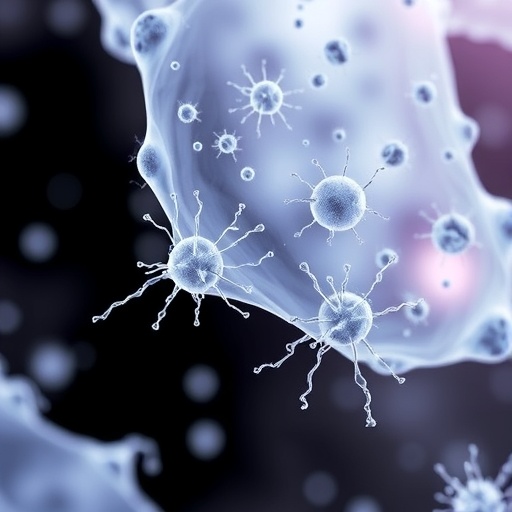
In a groundbreaking advancement poised to revolutionize immunotherapy, researchers at the University of California, Berkeley, led by molecular biologist Daniel Portnoy, have transformed the pathogenic bacterium Listeria monocytogenes into a formidable immune system stimulant with promising applications in cancer treatment. This innovative approach harnesses decades of foundational research into Listeria’s intricate interactions with mammalian host cells, converting a once-dangerous pathogen into a sophisticated immunotherapeutic agent.
Listeria monocytogenes is notorious for causing listeriosis, a severe infection characterized by fever, gastrointestinal symptoms, and in extreme cases, systemic conditions such as meningitis and sepsis. Central to Listeria’s virulence is its unique mechanism to escape degradation within host immune cells known as macrophages. Shortly after phagocytosis, Listeria avoids destruction by escaping the phagosome—a membrane-bound compartment designated for pathogen digestion—and invades the cytoplasm, where it exploits the host’s actin cytoskeleton to propel itself into adjacent cells. This cell-to-cell spread ensures immune evasion and rapid dissemination within the host.
Portnoy’s research, initiated nearly four decades ago, initially sought to understand these mechanisms at a molecular level. However, the fresh turn in his work comes from the insight that attenuated strains of Listeria, deficient in actin-based motility, could serve not just as weakened pathogens but as powerful modulators of the immune system. The original attenuated double-deleted strain, termed LADD, lacked two genes essential for actin nucleation, preventing bacterial spread and lowering virulence by over a thousandfold while still eliciting a robust immune response.
Despite promising preclinical results where LADD delivered tumor antigens to stimulate adaptive cytotoxic CD8 T cells, human clinical trials faced setbacks. The anticipated robust cytotoxic response seen in murine models did not translate effectively in patients with pancreatic cancer and mesothelioma, leading to halted studies and corporate restructuring. This challenge highlighted the complexity of human immune responses to intracellular pathogens and the limitations of narrowly targeting adaptive immunity alone.
In response, Portnoy’s vision evolved to focus on the innate immune system, particularly gamma delta (γδ) T cells, a versatile class of immune cells capable of recognizing a broad range of stressed or infected cells independently of classical antigen presentation. These γδ T cells exhibit direct cytotoxic activity against cancer cells and secrete cytokines that recruit and activate other critical immune effectors such as macrophages and natural killer (NK) cells. Recognizing this, Portnoy and collaborators engineered an improved Listeria strain, QUAIL (quadruple attenuated intracellular Listeria), that incorporates additional strategic deletions targeting metabolic enzymes involved in riboflavin-derived cofactor biosynthesis.
By disabling genes responsible for the synthesis of flavin mononucleotide (FMN) and flavin adenine dinucleotide (FAD), QUAIL cannot survive extracellularly due to the absence of these essential cofactors in the host’s extracellular environments. This metabolic auxotrophy confines the bacterium to the intracellular niche, dramatically enhancing its safety profile by preventing growth in the bloodstream, gastrointestinal tract, and gallbladder. Notably, this intracellular restriction minimizes the risk of colonization on medical implants, addressing a significant concern in cancer patients undergoing invasive therapies.
The implications of QUAIL extend far beyond safety. Preclinical studies demonstrate that, like LADD, QUAIL robustly activates the innate immune system and enhances γδ T cell populations, but its refined attenuation promises a more targeted, sustainable therapeutic window. Researchers anticipate that this approach could stimulate the body’s natural defenses against not only cancers but also persistent infections—including those caused by intracellular pathogens resistant to conventional treatments.
Translating this research to clinical applications, Laguna Biotherapeutics, founded by Portnoy and colleagues, is preparing to initiate trials in pediatric leukemia patients receiving unmatched bone marrow transplants. These patients are vulnerable to graft-versus-host disease and opportunistic infections due to immunosuppressive regimens aimed at preventing transplant rejection. Administration of QUAIL is hypothesized to invigorate γδ T cells, creating a multipronged defense that combats infection, immune rejection, and leukemia relapse simultaneously.
The strategic focus on innate immunity distinguishes the QUAIL platform from mainstream immunotherapies, which predominantly harness adaptive immunity through checkpoint inhibitors and antigen-specific T cell activation. Tumors often establish suppressive microenvironments that blunt adaptive responses, limiting therapeutic efficacy. In contrast, the innate immune activation provoked by QUAIL could overcome these suppressive barriers by invoking a broad, non-antigen-specific immune attack on damaged or stressed cells recognized by their distress signals—a hallmark of cancerous transformation and infections alike.
This broader immune engagement may also synergize with current immunotherapy regimens. As Jonathan Kotula, CEO of Laguna Biotherapeutics, notes, “Attenuated Listeria serves as a comprehensive orchestrator of immunity, motivating a full-spectrum immune response that complements and potentially enhances existing therapies.” The modularity and safety of QUAIL may allow it to integrate seamlessly into diverse treatment paradigms, expanding utility across hematological malignancies, solid tumors, and even infectious diseases such as tuberculosis and malaria.
Further reinforcing QUAIL’s promise, detailed mechanistic studies show that its intracellular lifecycle triggers an array of innate immune signals, including cytokine cascades and antigen presentation pathways, which together create an immune milieu hostile to malignant cells. By confining bacterial proliferation inside cells and eliminating extracellular growth, QUAIL minimizes systemic side effects while maintaining potent immunostimulatory capabilities.
The journey from pathogenic menace to therapeutic marvel epitomizes the evolving interface between microbiology and oncology. Decades of fundamental research into Listeria’s cell biology have now culminated in a novel immunotherapeutic strategy that leverages the body’s ancient, innate defense systems to fight some of the most challenging diseases. As QUAIL progresses toward human clinical trials, it symbolizes a new frontier where engineered microbes and advanced immunology converge to reshuffle the deck against cancer and infectious diseases.
The research team acknowledges the pivotal contributions of graduate students, postdoctoral fellows, and collaborative institutions that have collectively propelled this vision forward. Supported by the National Institutes of Health and Laguna Biotherapeutics, this work blends fundamental science with translational ambition, heralding a future where tailored microbiome-derived therapies may become mainstays of personalized medicine and immuno-oncology.
In closing, the development of QUAIL and its capacity to robustly stimulate gamma delta T cells showcases the innovative potential residing in microbial biology. By turning a harmful bacterium into a safe and effective agent to awaken the immune system’s latent power, this research paves the way for transformative cancer therapies that transcend conventional paradigms and offer hope for patients worldwide.
Subject of Research: Animals
Article Title: (Not provided)
News Publication Date: 31-Dec-2025
Web References:
- https://dx.doi.org/10.1128/mbio.03652-25
- https://mcb.berkeley.edu/labs/portnoy/
- https://www.lagunabio.com/
- https://journals.asm.org/doi/10.1128/mbio.03652-25
- https://www.biorxiv.org/content/10.1101/2025.10.13.682223v1
References:
- Portnoy et al., mBio, 2025, DOI:10.1128/mbio.03652-25
- Rivera-Lugo R. et al., BioRxiv, 2025
Image Credits: Creative Commons License 3.0, courtesy of the American Society for Cell Biology
Keywords: Listeria monocytogenes, immunotherapy, gamma delta T cells, innate immunity, cancer therapy, intracellular pathogen, bacterial engineering, QUAIL strain, marrow transplant, immuno-oncology


