

A groundbreaking advancement in biopharmaceutical preservation is poised to revolutionize global healthcare logistics by overcoming the enduring “cold chain” challenge that constrains the accessibility and stability of protein-based therapeutics and diagnostics. A research team from the University of Oxford’s Department of Engineering Science has developed and validated an innovative drying technique, termed matrix-assisted room-temperature (MART) drying, that stabilizes functional proteins at ambient temperatures by encapsulating them in a sugar-based glass matrix. This method circumvents the costly, energy-intensive requirements of refrigeration and freeze-drying, presenting profound implications for the storage and transport of biologics, particularly in resource-limited and remote settings.
The cold chain infrastructure — a system of low-temperature storage and transport — remains a significant bottleneck in the global distribution of vaccines, enzymes, and diagnostic reagents. These protein-based products are inherently sensitive to temperature fluctuations, often degrading quickly if not maintained under strict refrigeration. The financial and environmental costs of this refrigeration are enormous, especially in developing countries where unreliable electricity supply causes frequent cold chain failures and high product wastage. The Oxford team’s MART drying technology addresses these challenges by enabling long-term stability of proteins without the need for freezing or refrigeration.
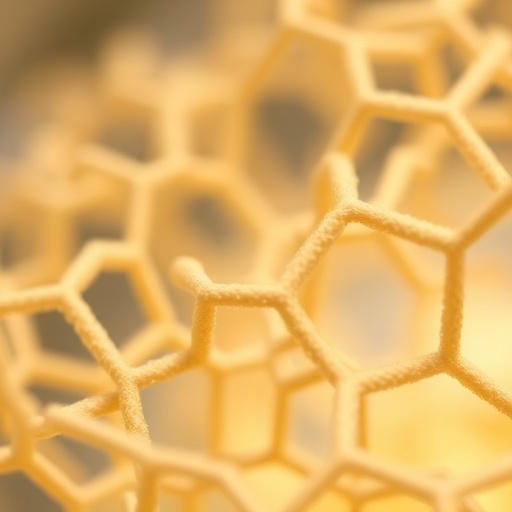
Published in the esteemed journal Engineering, the study led by Professor Zhanfeng Cui outlines the matrix-assisted drying process that mixes proteins with a sugar cocktail — specifically trehalose and dextran — and deposits the solution onto a soft cellulose fiber matrix. This matrix not only serves as a physical scaffold but also plays an instrumental role in forming microscopic capillary bridges during drying, which gently immobilize proteins within a stabilizing, sugar-derived glass. The drying process itself is conducted under mild conditions either by circulating dry air (MART-DA) or under vacuum (MART-V), completely eliminating the harsh freezing steps common in lyophilization that frequently damage delicate biomolecules.
Mechanistically, this technique achieves protein stabilization by harnessing the unique properties of the sugar matrix to maintain the native conformation of sensitive proteins during drying and subsequent storage. The trehalose and dextran sugars replace water molecules surrounding the proteins, forming hydrogen bonds that safeguard the tertiary and quaternary structure critical to biological activity. The chosen biocompatible cellulose fiber substrate facilitates a uniform distribution and thin film formation of the sugar-protein mixture, creating robust capillary bridges that encase each protein molecule within a protective vitrified state at room or slightly elevated temperatures (~30 °C).
The efficacy of MART drying was rigorously validated across multiple protein targets with varying structural complexities and thermal sensitivities. The enzyme lactate dehydrogenase (LDH), crucial in metabolic assays, retained an impressive >90% enzymatic activity after six months when stored at 25 °C, a performance equaling conventional frozen storage. Similarly, fibroblast growth factor 2 (FGF-2), which plays a pivotal role in stem cell proliferation and tissue regeneration, remained fully bioactive after a week of storage at 40 °C. Remarkably, when reconstituted, the MART-dried FGF-2 promoted stem cell growth on par with FGF-2 preserved at ultra-low temperatures (−80 °C). This bodes well for embedding growth factors into advanced wound dressings without cold-chain support.
Perhaps most striking is the successful thermostabilization of the COVID-19 RT-LAMP diagnostic reagent mix, which comprises enzymes reverse transcriptase and Bst 2.0 polymerase. After being MART-dried and stored at 40 °C for one week, the reagents retained sufficient sensitivity to detect viral RNA at clinically relevant levels. This demonstration underscores the broad applicability of MART drying to complex enzymatic cocktails essential for modern nucleic acid diagnostics, potentially enabling distributed testing in under-resourced regions without refrigeration.
MART drying outperforms traditional freeze-drying techniques on several fronts. The vacuum-assisted method can complete drying in approximately three hours, a substantial reduction from the 24 hours or more typical of lyophilization. By eliminating freezing and reducing processing complexity, MART drying consumes significantly less energy, translating into lower operational costs and reduced environmental impact. The use of a soft cellulose fiber matrix overcomes the brittleness and fragility associated with glass fiber matrices in previous prototypes, enhancing handling safety and enabling direct integration into biomedical devices.
Beyond supply chain simplification, the room-temperature stability enabled by MART drying could decentralize storage and deployment of sensitive biologics, extending the reach of advanced therapeutics and diagnostics to rural and low-income settings lacking infrastructure currently mandated by cold chain logistics. The technology’s scalability and compatibility with existing manufacturing workflows further enhance its translational potential, highlighting a new paradigm for sustainable biopharmaceutical preservation.
Scientifically, the development offers fresh insight into protein stabilization mechanisms within sugar glasses and advances the field of biomaterial engineering with its soft matrix design. This work supports a paradigm shift from dependence on cold storage toward ambient stabilization strategies, encouraging ongoing exploration into alternative excipients and matrix materials that preserve biological function while simplifying supply logistics.
Importantly, the research qualifies MART drying as a versatile platform that could be tailored for a wide array of sensitive biologics, from enzymes and growth factors to vaccines and nucleic acid diagnostics. The capability to maintain bioactivity at elevated temperatures addresses critical unmet needs in global health, particularly highlighted by the COVID-19 pandemic’s demand for distributed, temperature-resilient diagnostic tools.
As protein therapeutics continue to expand in complexity and demand, the ability to stabilize these molecules outside cold chains represents a transformative advance. This research spearheaded by the Oxford team not only promises to reduce wastage and cost but also to democratize access to life-saving medicines and diagnostics through robust storage solutions adaptable to challenging environments worldwide.
The full open-access report, titled “Thermostabilizing Functional Proteins with Matrix-Assisted Room-Temperature Drying,” authored by Yejiong Yu, Siqi Dai, Johnny Xiangyi Zhou, Wei E. Huang, and Zhanfeng Cui, was published in the journal Engineering on February 9, 2026. This pivotal work marks a major leap toward reimagining biopharmaceutical preservation for a sustainable and equitable healthcare future.
Subject of Research: Protein stabilization, biopharmaceutical preservation, ambient drying technology
Article Title: Thermostabilizing Functional Proteins with Matrix-Assisted Room-Temperature Drying
News Publication Date: February 9, 2026
Web References:
https://doi.org/10.1016/j.eng.2025.08.045
https://www.sciencedirect.com/journal/engineering
Image Credits: Yejiong Yu et al.
Keywords
Protein stabilization, MART drying, ambient temperature preservation, biopharmaceuticals, lyophilization alternative, sugar glass matrix, cellulose fiber matrix, enzymatic activity retention, COVID-19 diagnostics, cold chain disruption, thermostability, biocompatible excipients


