

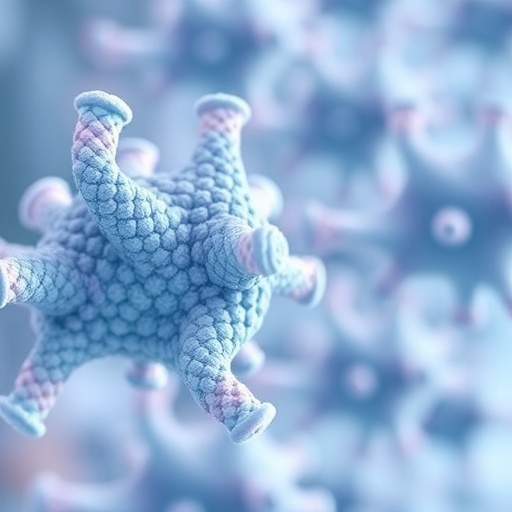
In a groundbreaking advancement that challenges long-standing paradigms in drug discovery, researchers at IRB Barcelona have unveiled a novel mechanism enabling therapeutic targeting of intrinsically disordered proteins (IDPs)—a class of proteins historically deemed “undruggable” due to their lack of stable, well-defined structures. This revelation pioneers a transformative approach to treating diseases such as various cancers and neurodegenerative disorders, where IDPs are critically implicated but have hitherto remained elusive targets.
Intrinsically disordered proteins evade conventional drug design strategies because they do not adopt a permanent three-dimensional conformation. Instead, they exist as dynamic ensembles of flexible structures, rendering traditional lock-and-key binding models ineffective. The research, led by Dr. Xavier Salvatella, overturns this dogma by demonstrating that during transient oligomerization—when multiple protein copies cluster—they momentarily assume semi-organized states that can be selectively recognized and modulated by small molecules.
The study, published in Science Advances, provides a detailed biophysical characterization of these fleeting conformations. Using sophisticated analytical tools, including nuclear magnetic resonance (NMR) spectroscopy and cellular assays, the team shows that a specific small molecule can intercalate into these temporarily rigidified condensates formed by IDP oligomers. This interaction induces an increase in the material rigidity of the condensates, effectively impeding the dysfunctional activity normally propagated by the protein assemblies.
Dr. Salvatella elucidates that the dynamic nature of IDPs should no longer be viewed as an insurmountable barrier. Instead, their propensity to form transiently ordered oligomeric states opens previously unrecognized therapeutic windows. These “moments of vulnerability” arise during protein assembly, creating binding pockets that a drug can exploit, thereby enabling targeted molecular intervention where none existed before.
The complexity of IDPs lies in their plasticity; their structure fluctuates rapidly, complicating the identification of stable druggable sites. However, this research reveals that as individual IDP molecules congregate, collective interactions stabilize certain structural motifs. Such transient, intermediate oligomeric states manifest emergent properties distinct from their monomeric counterparts, including novel binding surfaces critical for therapeutic targeting.
A pivotal advancement made by Dr. Stasė Bielskutė-García and colleagues involves elucidating the molecular mechanism underpinning this modulation. Their findings suggest that by increasing the condensates’ rigidity, the small molecule effectively ‘locks’ IDPs into non-functional states, halting pathological pathways dependent on their dynamic assembly. This mechanistic insight not only clarifies why this compound functions as it does but also informs the rational design of future drugs tailored to bind transient states in intrinsically disordered regions.
Scarce therapeutic options currently exist for diseases heavily driven by disordered proteins, notably aggressive cancers such as small-cell lung cancer and gastrointestinal malignancies. This innovative strategy ushers in a new dimension in drug discovery—one that capitalizes on the dynamic biophysical landscape of IDPs rather than being hindered by it. The ability to pharmacologically manipulate such proteins addresses a critical unmet medical need.
Capitalizing on these insights, IRB Barcelona has spun off Nuage Therapeutics, a pioneering biotechnology company dedicated to developing therapeutics that exploit the transient structural windows of IDPs. Nuage Therapeutics applies a highly specialized drug discovery platform designed to identify and optimize molecular candidates capable of selectively binding these fleeting conformations, setting the stage for breakthrough therapies across oncology and beyond.
Looking forward, Nuage Therapeutics envisions broadening its therapeutic portfolio by deploying this paradigm to diverse diseases characterized by protein disorder. By expanding the toolbox for targeting protein disorder, the company aims to become a leader in this novel field, potentially revolutionizing treatment strategies where conventional approaches have failed.
The study is a testament to the power of fundamental scientific research to catalyze transformative medical innovations. The collaboration between IRB Barcelona, the Max Planck Institute for Molecular Genetics, and the University of Florence underscores the interdisciplinary efforts required to decode the complex behavior of IDPs and harness them for therapeutic gains.
This work was supported by an array of prestigious funding bodies, including the Spanish Ministry of Science, Innovation and Universities, the Agency for Management of University and Research Grants (AGAUR), “la Caixa” Foundation, the Spanish Association Against Cancer (AECC), the Mark Foundation for Cancer Research, and the European Research Council (ERC). Their support affirms the critical importance of investing in cutting-edge basic research with the potential for high-impact clinical translation.
By unlocking the ability to drug intrinsically disordered proteins through their oligomerization-dependent transient states, this study not only pioneers a new frontier in molecular pharmacology but also offers hope for patients with conditions that have challenged traditional drug discovery efforts. The findings herald a new era in which the once “undruggable” may become druggable, fundamentally transforming biomedical science and therapeutic options.
Subject of Research: Intrinsically Disordered Proteins and Their Targeting by Small Molecule Drugs
Article Title: The key to attacking “undruggable” proteins: IRB Barcelona reveals a breakthrough drug mechanism
News Publication Date: March 3, 2026
Web References: https://dx.doi.org/10.1126/sciadv.adz74
References: Science Advances, DOI 10.1126/sciadv.adz74
Image Credits: IRB Barcelona
Keywords: Cancer, Cancer treatments, Proteins, Disordered regions, Target proteins, Intrinsically Disordered Proteins, Oligomerization, Drug discovery, Molecular pharmacology, Small-cell lung cancer, Gastrointestinal cancers


