

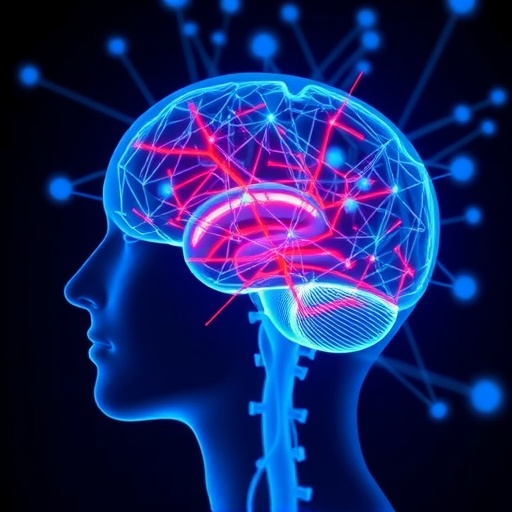
Emerging research published in Translational Psychiatry suggests that specific brain network characteristics observable in early adolescence may serve as predictors for the subsequent initiation of alcohol use. This pioneering study delves into the neural substrates that precede the behavioral onset of alcohol consumption during this critical developmental period, bridging neuroscientific inquiry with public health implications aimed at early intervention and prevention strategies.
Adolescence is a tumultuous period characterized by pronounced neurobiological changes and heightened vulnerability to substance use initiation. Understanding the trajectory from brain development to behavior remains a central challenge in neuroscience and psychiatry. In this context, the study led by Byrne, Visontay, and Devine et al. employs advanced neuroimaging techniques alongside sophisticated network analysis to identify brain connectivity patterns that occur before the first experience of alcohol consumption.
Their methodology centers on the mapping of functional brain networks using resting-state functional magnetic resonance imaging (rs-fMRI). Rs-fMRI captures spontaneous neural activity, revealing how different regions of the brain communicate in the absence of task-driven stimuli. By examining adolescents who had not yet started drinking, the researchers were able to identify distinctive configurations in brain network features that later correlated with early alcohol initiation. This approach provides a window into the intrinsic brain connectivity that might predispose individuals to substance use.
One of the key findings highlights alterations in the connectivity within circuits implicated in reward processing, executive function, and emotional regulation. Specifically, irregularities were noted in the prefrontal cortex—a region instrumental in decision-making and impulse control—and its communication pathways with limbic structures such as the amygdala. Such findings underscore the neural basis of risk-taking behaviors and suggest that aberrant network dynamics could underlie susceptibility to early alcohol consumption.
Furthermore, the study reveals that these connectivity profiles are detectable well before behavioral manifestations, implying that neurobiological markers may offer predictive power for substance use risk assessment. This temporal precedence is critical, as it opens avenues for early identification and targeted preventative interventions tailored to at-risk youth populations.
By integrating multivariate pattern analysis, the authors were able to construct predictive models with impressive accuracy. These models utilized functional connectivity metrics to stratify individuals based on the likelihood of initiating alcohol use within a certain time frame. The implications for personalized medicine are profound, as such predictive capacity might inform clinical decisions and public health policies directed at minimizing the onset of alcohol use disorders.
Moreover, this work cautions against simplistic or purely behavioral screening methods traditionally used in adolescent substance use prevention. Instead, a nuanced neurobiological perspective may enhance our understanding of the interplay between brain maturation and environmental influences, enabling a more comprehensive approach to risk evaluation.
This research also contributes to the growing literature on neurodevelopmental trajectories and health-risk behaviors, positing that brain network architectures are not merely associated with but potentially mechanistic in the pathway toward early alcohol use. Such mechanistic insights are invaluable for developing novel therapeutic targets that disrupt or modify vulnerable neural circuits.
Notably, the study controlled for confounding variables such as socioeconomic status, family history of substance use, and comorbid psychiatric symptoms, bolstering the robustness of the identified brain network predictors. This careful design affirms that the observed connectivity patterns are intrinsic neurobiological features rather than epiphenomena associated with external risk factors.
Importantly, the ethical considerations embedded in such predictive neuroimaging research are also discussed. The authors emphasize the responsibility of integrating these findings with sensitivity to privacy, potential stigmatization, and the need for supporting participants identified as at risk, advocating for frameworks that balance scientific advancement with ethical stewardship.
Moving forward, the implications of this research resonate deeply within the neuroscience and public health spheres. By contributing to a neurobiologically-grounded framework for understanding adolescent substance use initiation, it sets a precedent for integrating brain network analytics into broader models of addiction vulnerability.
In summary, this groundbreaking study elucidates the brain network signatures that predate adolescent alcohol initiation, offering novel insights into the neurodevelopmental underpinnings of risk behaviors. This could transform preventative strategies, enabling early, brain-based identification of at-risk youths, and ultimately stem the tide of alcohol-related morbidity and mortality linked to early onset of drinking.
The potential for future research is vast, encompassing longitudinal studies to track the evolution of these networks through adolescence, explorations into how environmental factors modulate these neural patterns, and trials testing interventions aimed at normalizing aberrant connectivity.
As we deepen our understanding of the brain’s role in shaping behavior, such integrative approaches pave the way for breakthroughs in predictive psychiatry, transforming the landscape of adolescent health management from reactive to proactive paradigms.
Subject of Research: Brain network features as predictors of early alcohol initiation in adolescence
Article Title: Brain network features predating early alcohol initiation in adolescence
Article References:
Byrne, H., Visontay, R., Devine, E.K. et al. Brain network features predating early alcohol initiation in adolescence. Transl Psychiatry (2026). https://doi.org/10.1038/s41398-026-03906-w
Image Credits: AI Generated


