

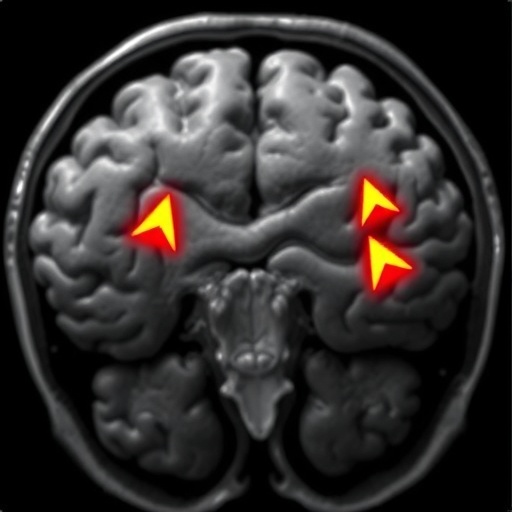
Neonatal encephalopathy remains one of the most daunting challenges in modern neonatal medicine, with its complex interplay of causes and profound implications for long-term neurodevelopmental outcomes in affected infants. Recent advances in neuroimaging now promise to refine the predictive landscape, offering clinicians a powerful tool to anticipate neurological trajectories and tailor interventions accordingly. A groundbreaking study by Anarna, Gano, and Selvanathan, recently published in Pediatric Research, meticulously explores the potential of brain imaging modalities to serve as early predictors of neurodevelopmental impairment in neonates afflicted with encephalopathy, a revelation that could revolutionize both diagnostics and therapeutics in neonatal care.
Neonatal encephalopathy, characterized clinically by disturbed neurological function in the earliest days of life, often results from hypoxic-ischemic insults, infections, or metabolic disturbances. The heterogeneity of these insults complicates prognosis and management, making the need for reliable predictive markers exceedingly critical. Traditional assessments have relied heavily on clinical examinations and biochemical markers, which, while valuable, fall short in prognostic precision. Brain imaging techniques, including magnetic resonance imaging (MRI) and advanced neuroimaging protocols like diffusion tensor imaging (DTI), have emerged as pivotal tools in delineating the extent and nature of brain injury with remarkable accuracy.
This study delves into the application of sophisticated MRI sequences to map cerebral injury patterns at a microstructural level. By visualizing the integrity of white matter tracts and identifying regions of ischemic damage, researchers can now infer the severity of injury with a granularity previously unattainable. Notably, diffusion-weighted imaging (DWI), which captures the movement of water molecules along neuronal fibers, reveals areas of cytotoxic edema indicative of acute ischemic injury, enabling early and sensitive detection of brain lesions.
Furthermore, the authors emphasize the prognostic power of combining structural imaging with functional assessments such as magnetic resonance spectroscopy (MRS). MRS quantifies metabolite concentrations like N-acetylaspartate (NAA), lactate, and choline, metabolic fingerprints that correlate strongly with neuronal health and injury. In neonates with encephalopathy, deviations from normative metabolite ratios have shown robust associations with adverse neurodevelopmental outcomes, establishing MRS as a biomarker for functional integrity.
Crucially, the research underscores that timing of imaging is paramount. Imaging within the first week post-insult captures the acute phase of brain injury wherein interventions might be optimized. Imaging beyond this window, while useful for chronic injury assessment, may miss the therapeutic window wherein neuroplasticity and repair are most dynamic. This temporal sensitivity of brain imaging enhances its utility not just as a diagnostic tool but as a guide for clinical decision-making.
The team also incorporated machine learning algorithms to interpret complex imaging data sets, heralding a new era of precision medicine in neonatology. These models synthesize multiple imaging parameters, from lesion location and extent to metabolite levels, producing individualized risk profiles that outperform traditional prognostic indices. Such predictive modeling offers hope for personalized interventions, ensuring that infants at highest risk receive timely, targeted therapies.
Importantly, the implications of this research extend beyond mere prediction. Early identification of infants likely to develop neurodevelopmental disabilities enables proactive rehabilitation strategies. For instance, infants identified at risk for cerebral palsy or cognitive impairments through imaging can be enrolled in early intervention programs, capitalizing on neuroplasticity to mitigate long-term deficits and improve quality of life.
The study also candidly discusses the challenges inherent in translating advanced imaging techniques into routine clinical practice. Limitations include the need for sedation in some infants, the availability of high-field MRI scanners in neonatal units, and the requirement for specialized expertise in image analysis. However, these barriers are increasingly surmountable with technology proliferation and interdisciplinary collaboration between radiologists, neurologists, and neonatologists.
This pioneering work also opens avenues for future research focused on refining imaging biomarkers and integrating them with genomics and electrophysiology. Combining multimodal data streams could yield a composite biomarker with unprecedented predictive accuracy, enabling clinicians to decode the complex neurobiological substrates underlying encephalopathy-related injury.
Additionally, the authors advocate for longitudinal studies that track imaging findings against developmental milestones through infancy and early childhood. Such longitudinal correlations will cement the role of brain imaging as the cornerstone of prognostic paradigms and therapeutic tailoring in neonatal encephalopathy.
In summary, the integrative neuroimaging strategies presented by Anarna and colleagues represent a watershed moment in neonatal brain injury research. By illuminating the pathways from acute injury to chronic impairment, these imaging modalities furnish a roadmap for early identification and intervention, holding promise to transform outcomes for vulnerable neonates worldwide.
As this research continues to evolve, it stands to empower clinicians with precision tools to not only foresee neurodevelopmental challenges but also to strategically combat them. The integration of advanced imaging into clinical protocols underscores the potential of medical imaging as a game-changing asset in pediatric neurological care.
With ongoing technological advancements, including portable MRI units and enhanced image-processing software, the standard of care for neonatal encephalopathy could soon incorporate routine brain imaging as a cornerstone of bedside evaluation. Such integration would democratize access to predictive diagnostics, particularly in resource-limited settings where early intervention remains critical yet often delayed.
This paradigm shift also raises important ethical considerations regarding prognostic disclosure and decision-making in the neonatal intensive care unit. Clinicians will need to navigate these complexities with sensitivity, ensuring that imaging-derived predictions are contextualized within holistic care plans involving families.
Ultimately, the compelling evidence presented in this seminal paper charts a promising course toward the goal of reducing the global burden of neurodevelopmental disabilities stemming from neonatal encephalopathy. Early and accurate prediction via brain imaging portends a future where tailored interventions can markedly enhance the developmental trajectories of the most vulnerable infants.
Subject of Research: The use of brain imaging techniques to predict neurodevelopmental outcomes in neonates with encephalopathy.
Article Title: Brain imaging as a predictor of neurodevelopmental outcomes in neonatal encephalopathy.
Article References:
Anarna, K., Gano, D. & Selvanathan, T. Brain imaging as a predictor of neurodevelopmental outcomes in neonatal encephalopathy. Pediatr Res (2025). https://doi.org/10.1038/s41390-025-04696-5
Image Credits: AI Generated


