

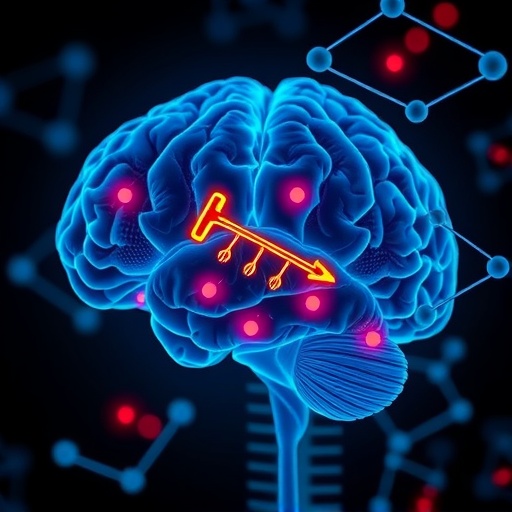
In the relentless quest to unravel the enigmatic mechanisms underlying depression and improve therapeutic outcomes, a groundbreaking study has emerged from the collaborative efforts of neuroscientists led by Wang, Zhang, Wang, and their team. Published recently in Nature Communications, this innovative research explores the intersection of neural circuitry and psychological biomarkers within the prefrontal cortex (PFC) and the bed nucleus of the stria terminalis (BNST), offering profound insights into how these physiological markers can predict the effectiveness of depression treatments. Such findings could revolutionize personalized psychiatric care, advancing beyond current trial-and-error approaches that often prolong patient suffering.
Depression, a debilitating mental disorder affecting hundreds of millions worldwide, defies simple categorization due to its heterogeneous nature. Traditional approaches to treatment invariably rely on broad-spectrum antidepressants or psychotherapy, frequently without clear predictors of response, leading to a frustrating cycle of multiple interventions before satisfactory remission is achieved. Against this backdrop, the identification of robust biomarkers that link brain physiology and neuropsychological profiles with treatment response is a pivotal step toward precision psychiatry—tailoring interventions to the biological state of individual patients.
Central to Wang and colleagues’ investigation is the intricate circuitry connecting the prefrontal cortex and the bed nucleus of the stria terminalis. The PFC is well-known for its role in executive functions, decision-making, and emotion regulation, while the BNST is increasingly recognized for its involvement in stress responses and anxiety-related processes. Previous animal and human studies have suggested aberrations in this circuit could underpin depressive symptoms, yet direct physiological measures of this interaction in humans and their predictive value for treatment outcomes remained elusive until now.
Employing cutting-edge neuroimaging combined with electroencephalographic (EEG) recordings, the researchers measured the functional connectivity and electrophysiological signatures between the PFC and BNST in a cohort of patients diagnosed with major depressive disorder (MDD). Additionally, comprehensive neuropsychological assessments were conducted to quantify cognitive and emotional parameters, establishing a multidimensional profile of each participant. This integrative approach allowed the team to correlate neurobiological and behavioral markers to eventual therapeutic responses over a longitudinal follow-up spanning several months.
One of the pivotal discoveries was that specific patterns of PFC-BNST connectivity, characterized by distinct oscillatory activities in theta and gamma frequency bands, reliably predicted whether patients would respond favorably to standard antidepressant therapy. Individuals exhibiting enhanced synchrony in these rhythms between the two regions showed significantly greater symptom improvement. Conversely, those with disrupted coupling tended to experience poorer outcomes, highlighting these oscillatory biomarkers as potential indicators of treatment-resilience or susceptibility.
Moreover, the neuropsychological profiles that accompanied these physiological signatures further enriched the predictive model. Patients with preserved executive function and adaptive emotional regulation capacities were more likely to benefit from pharmacological interventions. This synergy between brain connectivity and cognitive-emotional function suggests the interplay of structural and functional brain health as a determinant of therapeutic efficacy, grounding psychiatric treatment strategies in tangible neurobiological realities.
The implications of these findings extend beyond mere prediction. By illuminating specific neural circuits and dynamics that underpin responsiveness to treatment, the study opens avenues for targeted neuromodulation therapies. Techniques such as transcranial magnetic stimulation (TMS) or deep brain stimulation (DBS) could be refined to modulate the PFC-BNST circuit, correcting dysregulated rhythms and enhancing treatment response for individuals identified as non-responders to conventional drugs.
Importantly, the methodology employed in this research provides a scalable framework for future biomarker development. The combination of high-resolution neuroimaging and real-time EEG monitoring, paired with rigorous cognitive evaluation, constitutes a powerful platform for dissecting the neural basis of psychiatric disorders. The ability to non-invasively capture dynamic brain states and relate them to clinical trajectories marks a transformative advance in mental health research.
Furthermore, this study challenges the conventional symptom-centric models of depression. By underscoring the heterogeneity of neurobiological profiles even among those meeting diagnostic criteria, it advocates for a paradigm shift towards biologically informed subtypes of depression. Such stratification aligns with recent trends advocating for precision medicine in psychiatry, eschewing one-size-fits-all approaches in favor of nuanced, individualized care.
The robustness of the reported biomarkers was confirmed through rigorous statistical validation and replication across independent patient samples, lending credibility and generalizability to the conclusions. Notably, the researchers controlled for confounding variables such as medication history, comorbidities, and demographic factors, reinforcing that the observed connectivity patterns were intrinsic predictors rather than artifacts.
Another fascinating aspect of the study is its potential to predict not only treatment efficacy but also the trajectory of depressive episodes. The researchers observed that variations in PFC-BNST network dynamics corresponded with fluctuations in symptom severity over time, implying a role for these physiological markers in monitoring disease progression and relapse risk. Such real-time tracking could facilitate early intervention and maintenance strategies, reducing chronicity.
The findings also stimulate a reevaluation of the neuropsychological dimensions of depression. By linking specific cognitive-emotional constructs with neural circuit function, the study integrates disparate domains of psychiatric research into a cohesive model. This holistic view enhances understanding of how mood disorders manifest and persist, guiding more precise therapeutic targeting.
Operationalizing these insights into clinical practice will necessitate further development of accessible, cost-effective diagnostic tools capable of assessing PFC-BNST connectivity and related biomarkers. Advances in portable EEG devices and machine learning algorithms for pattern recognition suggest a promising future where such evaluations could become routine components of psychiatric assessment, empowering clinicians with data-driven decision-making aids.
Looking ahead, the integration of genetic and molecular data with these physiological and neuropsychological markers could refine predictive accuracy even further. Understanding how genetic predispositions influence PFC-BNST circuit function and treatment response could unlock personalized interventions at multiple biological levels, from gene therapy to circuit-level modulation.
In summary, the pioneering work by Wang, Zhang, Wang, and collaborators provides compelling evidence that physiological and neuropsychological biomarkers within the prefrontal–bed nucleus of the stria terminalis circuit serve as powerful predictors of therapeutic outcomes in depression. By bridging the gap between brain function and clinical response, this research heralds a new era in psychiatry, where tailored interventions guided by intricate neural signatures hold the promise of transforming the lives of millions afflicted by this pervasive mental health condition.
The realization of this vision depends on continued interdisciplinary collaboration, technological innovation, and a commitment to translating neuroscience discoveries into tangible clinical benefits. As the field moves forward, such integrative approaches will be indispensable in conquering the complexity of depression and delivering on the promise of neuroscience-driven personalized mental health care.
Subject of Research: Depression; Neural circuitry involving prefrontal cortex and bed nucleus of the stria terminalis; Biomarkers predicting therapeutic outcomes
Article Title: Prefrontal–bed nucleus of the stria terminalis physiological and neuropsychological biomarkers predict therapeutic outcomes in depression
Article References:
Wang, L., Zhang, Y., Wang, Y. et al. Prefrontal–bed nucleus of the stria terminalis physiological and neuropsychological biomarkers predict therapeutic outcomes in depression. Nat Commun 16, 10034 (2025). https://doi.org/10.1038/s41467-025-65179-z
Image Credits: AI Generated
DOI: https://doi.org/10.1038/s41467-025-65179-z


