

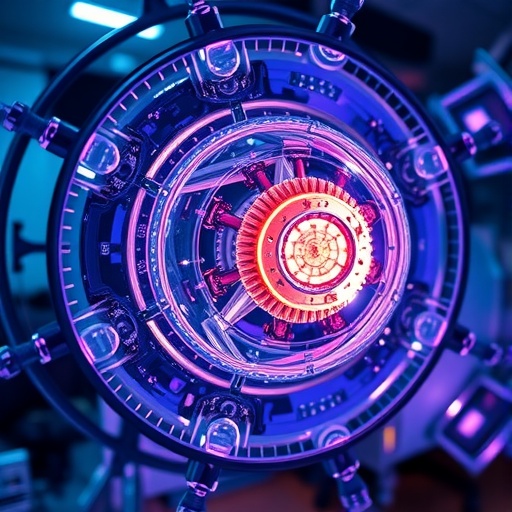
In the relentless battle against malignant gliomas, among the deadliest and most aggressive brain tumors, a beacon of hope is emerging from an innovative therapeutic approach: Boron Neutron Capture Therapy (BNCT). Despite decades of progress in neurosurgery, chemotherapy, and conventional radiotherapy, the prognosis for patients diagnosed with glioblastoma remains grim, with most surviving barely over a year post-diagnosis. Recurrent tumors compound this challenge, leaving patients with scant effective treatment avenues and dismal outcomes. BNCT holds promise as a revolutionary strategy that precisely targets malignant cells while preserving the integrity of surrounding healthy brain tissue, signaling a paradigm shift in neuro-oncology.
At its core, BNCT exploits a uniquely targeted radiological reaction. The therapy begins with administering a boron-containing compound that preferentially accumulates in tumor cells. This selective uptake is fundamental, allowing for precision targeting when the tumor site is subsequently irradiated with a neutron beam. Upon interaction with neutrons, the boron atoms undergo a nuclear capture reaction, yielding high-energy alpha particles and lithium nuclei. These particles possess strikingly short path lengths—on the order of a cell diameter—ensuring destruction is almost exclusively confined within the tumor cells harboring boron. This specificity contrasts starkly with the indiscriminate cellular damage typical of conventional radiotherapy, offering hope for more effective tumor eradication accompanied by significantly reduced collateral damage.
A comprehensive and meticulously conducted systematic review recently published in the journal Research synthesizes several decades of global clinical experience with BNCT in treating malignant gliomas. Spearheaded by Dr. Chunhong Wang of Peking University and Drs. Zhigang Liu and Xiao Xu of Southern Medical University, the review consolidates data from numerous clinical trials and case series involving adult patients across diverse tumor types, including newly diagnosed, recurrent, and treatment-resistant gliomas. Their analysis integrates varied treatment methodologies, encompassing multiple boron delivery agents—most notably boronophenylalanine—as well as an evolution in neutron source technologies ranging from reactor-based systems to more accessible accelerator-driven neutron generators.
One of the most striking revelations from this exhaustive scrutiny is BNCT’s potential to improve survival outcomes beyond the reach of conventional modalities. Median overall survival for patients with recurrent malignant gliomas frequently surpassed historic expectations, indicating not only slowed tumor progression but also durable remissions in a subset of individuals. Equally important, progression-free survival metrics paralleled these encouraging trends, underscoring BNCT’s capacity to impose meaningful disease control in an otherwise refractory clinical context. This outcome is remarkable considering that recurrent gliomas notoriously exhibit resistance to standard therapies, highlighting BNCT’s novel mechanism of action as a critical advantage.
The underpinning biological rationale—discussed in depth by Dr. Wang—centers on BNCT’s ability to eradicate heterogeneous tumor populations, including both rapidly dividing proliferative cells and the typically elusive, quiescent subpopulations residing in hypoxic niches. Unlike photons or charged particles which affect tissue indiscriminately, the neutron capture process is inherently selective, primarily impacting cells enriched with boron compounds. Furthermore, the therapeutic boron agents demonstrate minimal systemic toxicity and side effects, enhancing patient tolerance and potentially enabling repeated treatment cycles—a crucial consideration given the relapsing nature of malignant gliomas.
Beyond glioblastoma, the review intriguingly illustrates BNCT’s therapeutic promise in an array of other high-grade intracranial neoplasms. Anaplastic gliomas and malignant meningiomas responded favorably to this modality, indicating potential broader applicability across histologies traditionally burdened with poor outcomes. Additionally, preliminary data extend BNCT’s utility to extracranial malignancies such as head and neck carcinomas, malignant melanomas, and certain hepatic tumors, underscoring a versatile platform technology with expansive oncologic relevance.
Technological advances have dramatically catalyzed BNCT’s clinical maturation. Historically reliant on cumbersome nuclear reactors as neutron sources, early BNCT was constrained by limited availability, logistical challenges, and significant infrastructural demands. Contemporary development of compact, hospital-friendly accelerator-based neutron sources represents a pivotal breakthrough, facilitating more widespread clinical adoption and enabling integration into routine oncology care. These compact systems maintain neutron flux efficiency while reducing environmental and radioprotection concerns, thereby enhancing accessibility for patients suffering from recurrent malignant brain tumors.
The heterogeneity in clinical trial design, boron compounds utilized, treatment protocols, and neutron dosimetry presents ongoing challenges. Studies vary widely in sample sizes and endpoints, which complicates cross-comparison and definitive efficacy conclusions. Despite these limitations, the convergent evidence across independent investigations provides a compelling signal that BNCT merits further detailed exploration under rigorous, standardized clinical trial frameworks. Only through such structured prospective research can treatment regimens be optimized and BNCT’s precise clinical roles delineated.
Dr. Liu highlights not only the survival benefit but the observed enhancements in patient quality of life during and after BNCT. Reduced neurotoxicity compared to traditional radiochemotherapy permits preservation of neurological function, a critical aspect given the devastating impact of brain tumors on cognition and daily living. This qualitative improvement supports BNCT’s potential as not just a life-extending intervention but one that sustains meaningful functional independence, an often underappreciated but vital metric in neuro-oncology therapeutics.
The nuclear physics underlying BNCT is elegant yet demanding, consisting of the boron-10 isotope capturing thermal neutrons, thereby triggering an exothermic reaction that produces high linear energy transfer (LET) particles. The alpha particles and lithium nuclei released have ranges of roughly 5 to 9 micrometers—comparable to cell diameters—enabling lethal damage concentrated within the tumor while sparing adjacent healthy cells. This molecular precision transforms BNCT into a form of biologically targeted radiotherapy, blending pharmacologic tumor selectivity with fundamental nuclear reaction physics to overcome microenvironmental challenges such as hypoxia and cellular quiescence.
The growing body of clinical evidence alongside technological innovations suggest BNCT could redefine the therapeutic landscape for otherwise intractable brain cancers. Not merely an incremental advance, this modality embodies a fundamental shift marrying nanoscopic cellular targeting with macroscopic treatment planning. If ongoing and future trials validate these promising findings through standardized protocols, BNCT may soon join the frontline arsenal against malignant gliomas, transforming prognoses and rekindling hope for patients confronted with these devastating tumors.
As Dr. Xu emphasized in concluding remarks, the journey toward BNCT’s full clinical integration requires carefully orchestrated, large-scale trials that harmonize boron delivery agents, neutron source parameters, and dosing schedules. Such efforts would provide the robust evidence base essential for regulatory approval and mainstream adoption. The science and technology are aligning—now the clinical research must follow suit to translate BNCT’s theoretical promise into routine lifesaving reality.
In summary, BNCT emerges from this thorough review as a trailblazing modality—one that combines innovative nuclear medicine principles with cutting-edge radiation physics to achieve selective tumor cell eradication. Its unique mechanism, favorable safety profile, and encouraging preliminary clinical outcomes position it as a beacon of hope in the harsh landscape of malignant glioma therapy. With continued multidisciplinary collaboration and rigorous clinical evaluation, BNCT may soon revolutionize how oncologists combat one of the most formidable brain cancers, offering patients not just prolonged survival but renewed quality of life.
Subject of Research: Not applicable
Article Title: Advances in Clinical Trials of Boron Neutron Capture Therapy
News Publication Date: 8-Jan-2026
Web References: DOI 10.34133/research.0988
References: Systematic review published in Research journal, January 2026
Image Credits: Not provided
Keywords: Boron Neutron Capture Therapy, BNCT, malignant glioma, glioblastoma, targeted radiotherapy, neutron capture reaction, cancer therapy, accelerator-based neutron source, boronophenylalanine, clinical trials, neuro-oncology, high-grade brain tumors


